Curating
Denise Hawrysio’s curatorial practice is an extension of her work as an artist, treating the exhibition format as a site for social experiment and conceptual investigation. Rather than adopting a conventional curatorial stance, she often creates ‘cultural laboratories’ — frameworks that challenge definitions of authorship and the gallery space itself. In the early 1990s, she ran the Malania Basarab Gallery from a council flat in South London, a project that utilised ‘double codings and disrupted expectations’ (City Limits) to mimic the "casually posh internationalism" of the blue-chip gallery world. Despite its location, the space was noted for a "polish and professionalism" (Time Out) that challenged the boundaries between the domestic and the institutional.
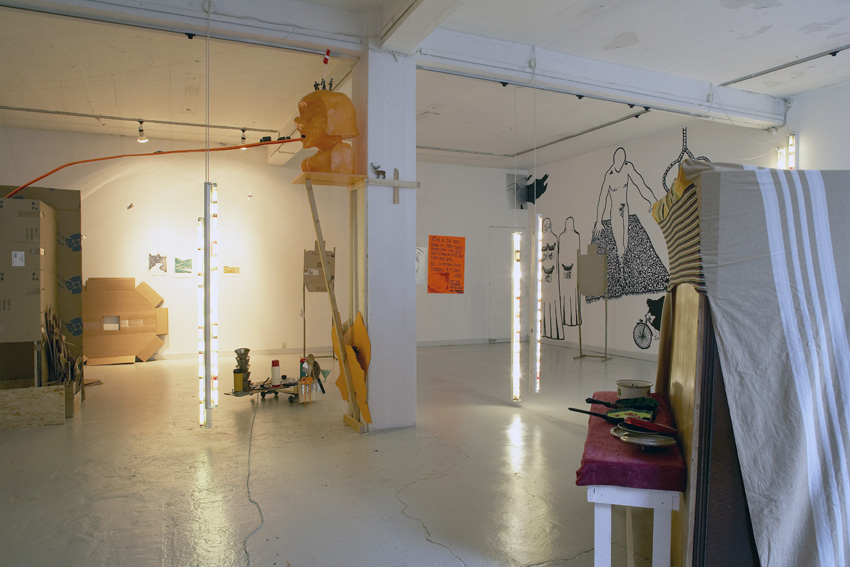
A central pillar of this practice is 15/1, a conceptual framework for an exhibition at Malania Basarab in 1992 and subsequently realised with different groups of artists at 1,000,000mph in London’s East End (2004) and the O-Overgaden Institute of Contemporary Art in Copenhagen (2005). Grounded in Dadaist and Situationist traditions, the project invited fifteen artists to intervene sequentially in a space, creating a "profound overlapping" (Art Monthly) that resisted the closure of conventional exhibitions. This process-led methodology — where the final outcome is determined by a collective "battle of wills" or "empathic coalition" — mirrors the logic of her own print and film work, where external events are allowed to dictate the finished form.
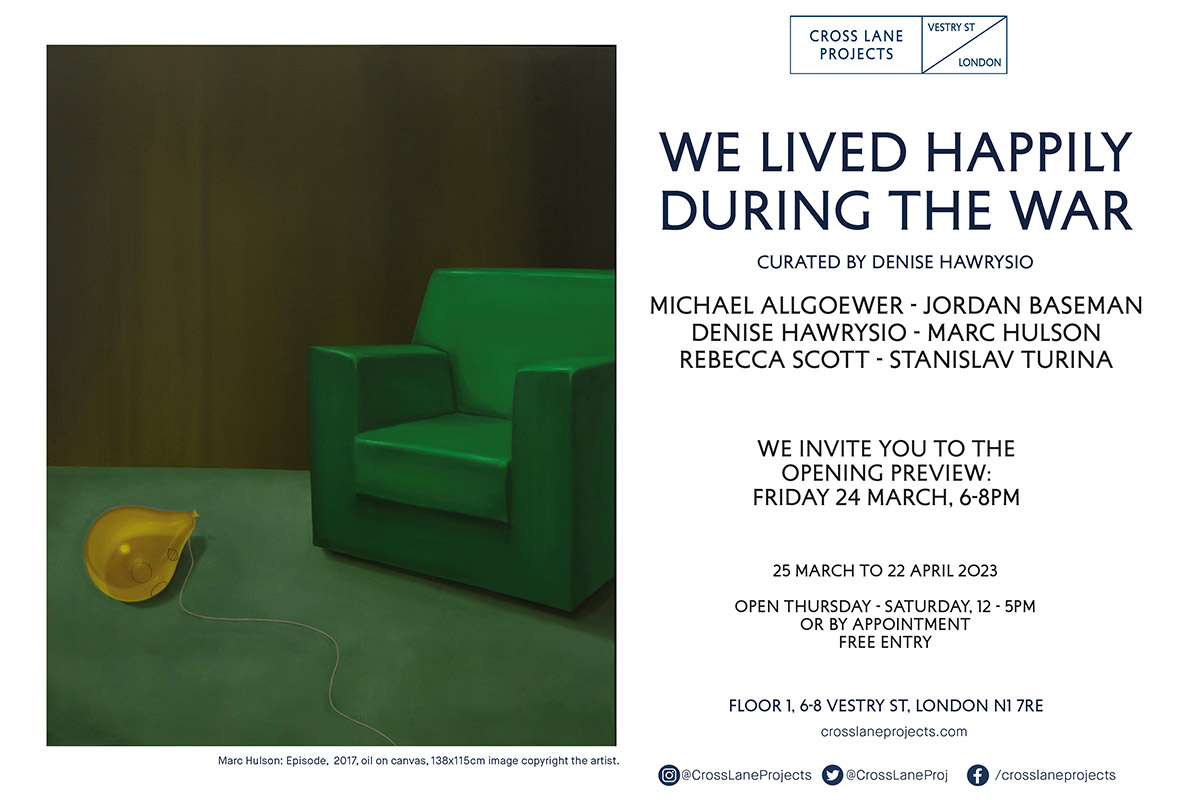
More recently, her curation has explored the intersection of the personal and the political, as seen in We Lived Happily During the War (Cross Lane Projects, 2023). By navigating themes of cognitive dissonance, grief, and trauma, she continues to explore what Nicolas Bourriaud describes as "ways of living and models of action within the existing real world."