About
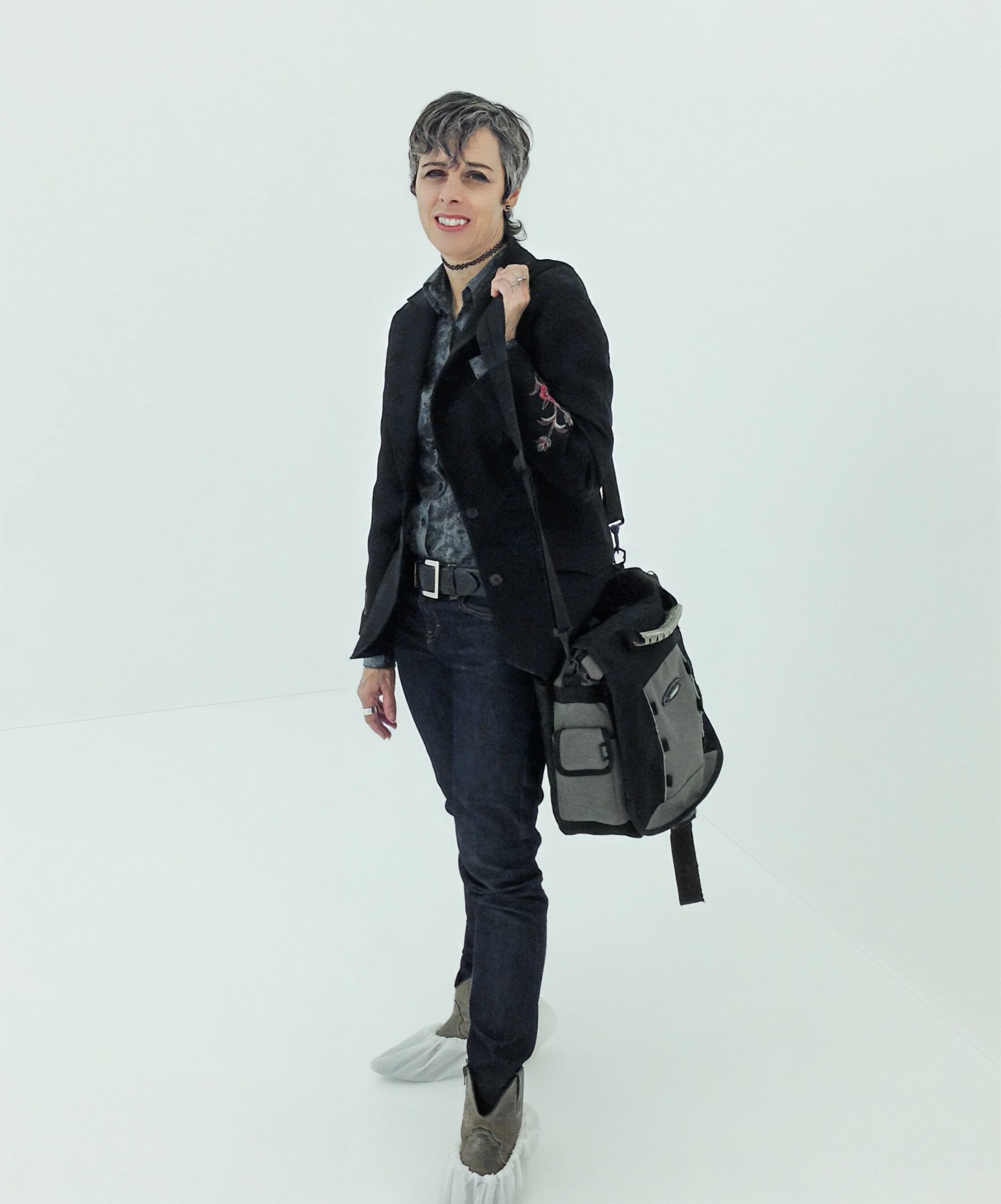
Denise Hawrysio's practice is situated between the UK and Canada, reflecting a career that moves fluidly across geographical and conceptual boundaries. Her work operates at the intersection of conceptualism, social engagement, and site-specific intervention; while projects often originate in the logic of the “imprint” — an obsession with the direct physical mark as both a technical process and a political stance — they frequently expand into film, installation, artist’s books, and prints to form unconventional, and often unpredictable, conceptual configurations.
Formative Influences
The foundation of Hawrysio's practice lies in a rigorous interrogation of the mark — not merely as a technical byproduct of printmaking, but as a site of physical and political intervention. At Queen’s University, Canada, this manifested as a departure from traditional Fine Art practice toward a conceptual engagement with process. Influenced by the “social sculpture” of Joseph Beuys, she began to view art as an open-ended process capable of materialising through actions and non-art situations.
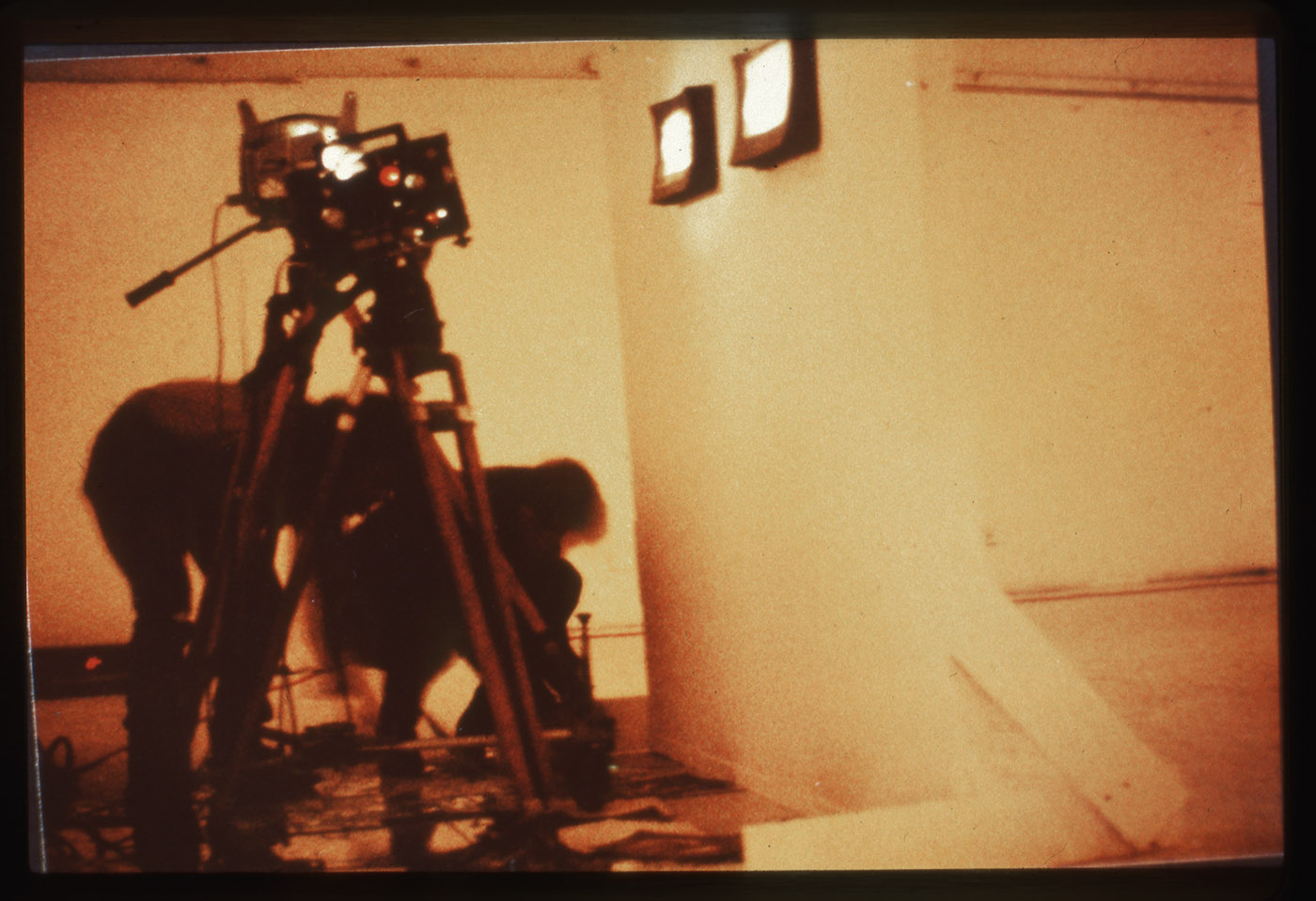
This trajectory was further refined at the San Francisco Art Institute, a renowned centre for
experimental art, where she engaged with ideas of the gallery as a performative site. Under the
influence of figures such as Vito Acconci and Tom Marioni, Hawrysio began to move beyond the frame,
exploring the deconstruction and dematerialisation of the art object. During this period, she started
treating the etching plate as a temporal device — a method of measuring duration
and exposure to movement rather than a static surface for reproduction.
This shift was equally informed by an exposure to structural and expanded filmmaking through tutors Janis Crystal Lipzin
and Gunvor Nelson, leading to a series of final MFA projects that integrated film and print within
site-specific installations.
London
Moving to London in the mid-1980s, Hawrysio’s work assumed an overtly critical dimension through the Malania Basarab Gallery. Operated from her own flat, this conceptual project sought to dissolve the barriers between private life and public discourse, fostering a collaborative environment that questioned the institutional gallery system.
This interrogative approach to site and system has informed a series of international projects and exhibitions, including those at Künstlerhaus Bethanien (Berlin), Uppsala Konstmuseum (Sweden), Dare-Dare (Montréal), and O-Overgaden (Copenhagen). Across these contexts, her work continues to address the condition of the viewer and the cultural politics of identity through direct, often collaborative, interventions.
Transdisciplinary Framework
The transdisciplinary nature of Hawrysio’s work is driven by a movement between mediums where a single enquiry manifests in diverse forms. The logic of the print — defined by pressure, contact, and the evidence of an act — remains a consistent thread throughout her output. In her three-dimensional work, the gallery itself is often treated as a sculptural substrate, subject to the same physical pressures as a printing plate.
These architectural interventions create a dialogue between destruction and formal precision. By treating duration as a critical element, the work reveals perception as an “act of becoming,” where the physical environment is transformed into a state of cognitive dissonance. Whether through the direct impression of objects or the “touch” of the artist, the work maintains a tension between the visceral evidence of an act and a refined, minimal aesthetic.
Recognition and Pedagogy
Denise Hawrysio has been awarded fellowships and residencies at the MacDowell Colony, the Banff Centre for the Arts, the University of British Columbia, and NSCAD University. Her work is represented in major public collections, including the Victoria and Albert Museum (London), the National Gallery of Canada, Yale University, the Ryerson Image Centre, and Tate Britain.
Her commitment to experimental practice extends to her pedagogical work; she has taught at the Architectural Association of Great Britain, University of British Columbia, and University of the Arts London.