Malania Basarab Gallery
Founded in 1990 by Denise Hawrysio, Malania Basarab Gallery operated as a kind of cultural laboratory within the context of a council flat in the Elephant & Castle district of South London. The project was an extension of Hawrysio’s own practice, utilising the exhibition format as a site for social experiment, conceptual investigation, and artistic collaboration. By appropriating the conventions of the designer gallery within a deprived urban housing estate, the space functioned through “double codings and disrupted expectations,” mimicking the “casually posh internationalism” of the blue-chip art world.
Despite its domestic setting, the gallery was defined by a meticulous professionalism that extended from the presentation of the work and the gallery interior to the design of its invitation cards. This intentional polish served to challenge the boundaries between the institutional and the domestic, dislocating the assumed audience and questioning traditional definitions of authorship and private space.
Malania Basarab Gallery was, in itself, a conceptual artwork — an independent intervention that promoted the collaborative and social aspects of artistic production. The programme focused on site-specific projects that formally explored critical issues with a sense of precision and wit, featuring a sequence of exhibitions by artists from Britain, Canada, and across Europe, including Anya Gallacio, Bill Burns, Jårg Geismar, Amikam Toren, Adam Chodzko, Sean Dower, and Graham Ramsey.
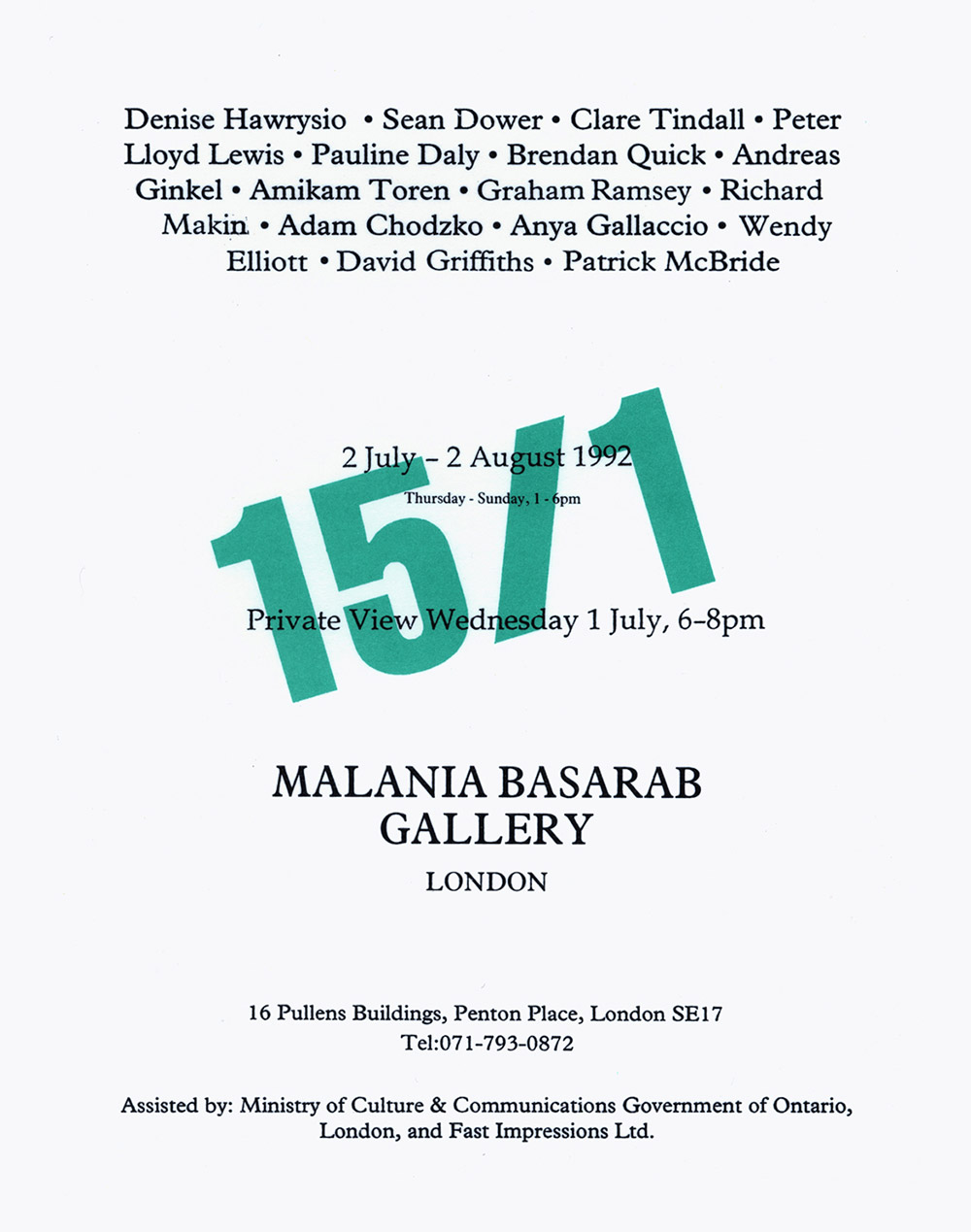
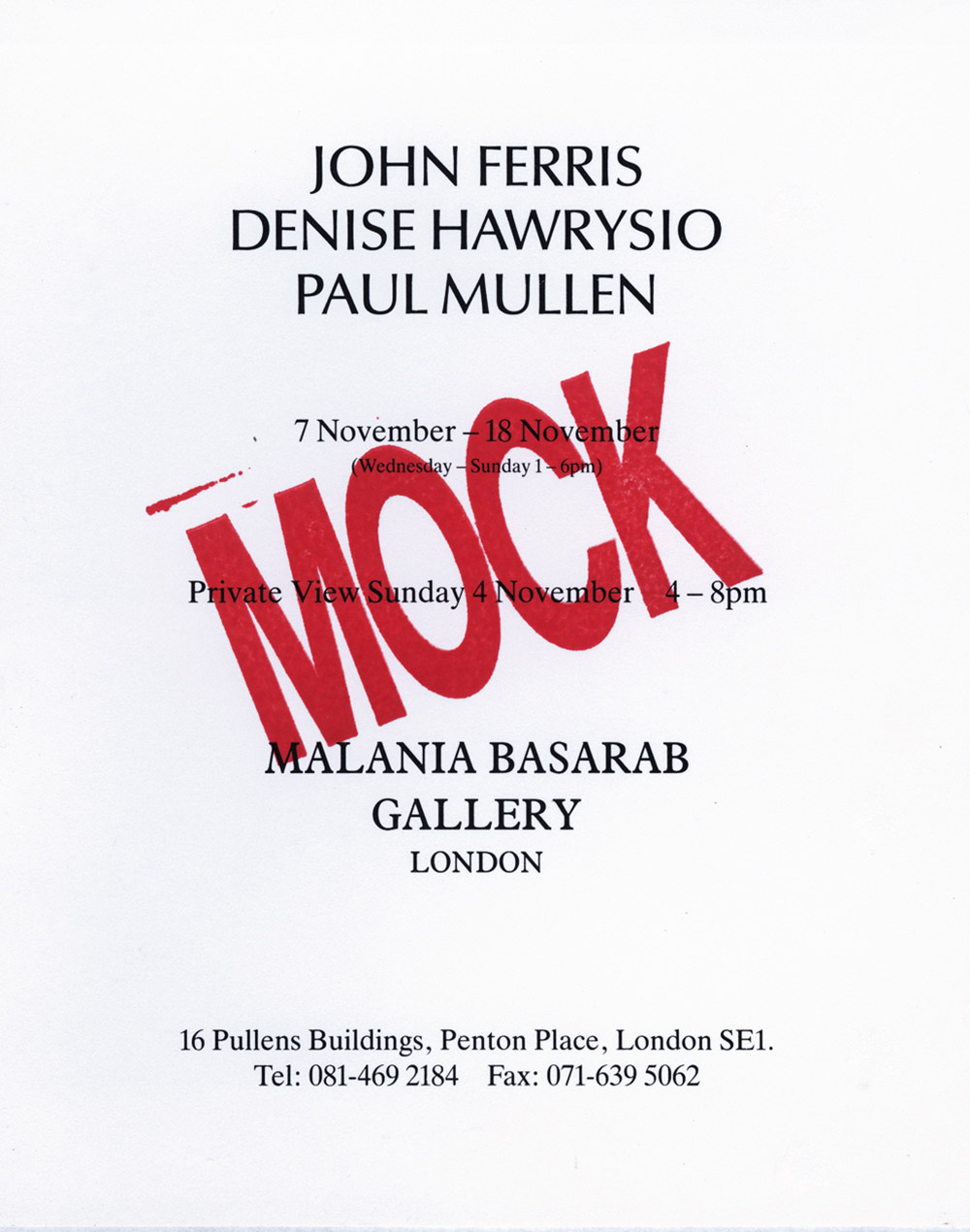
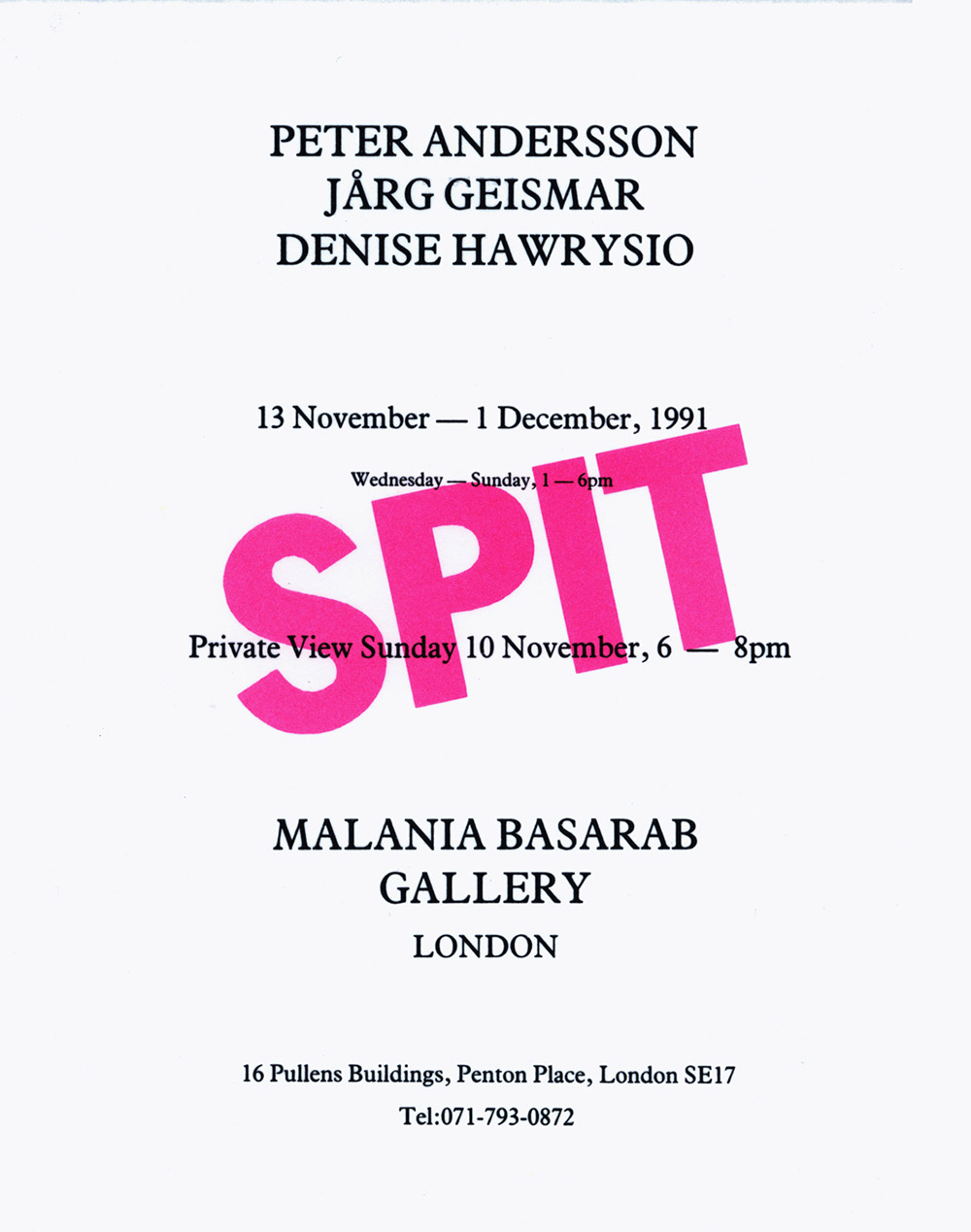
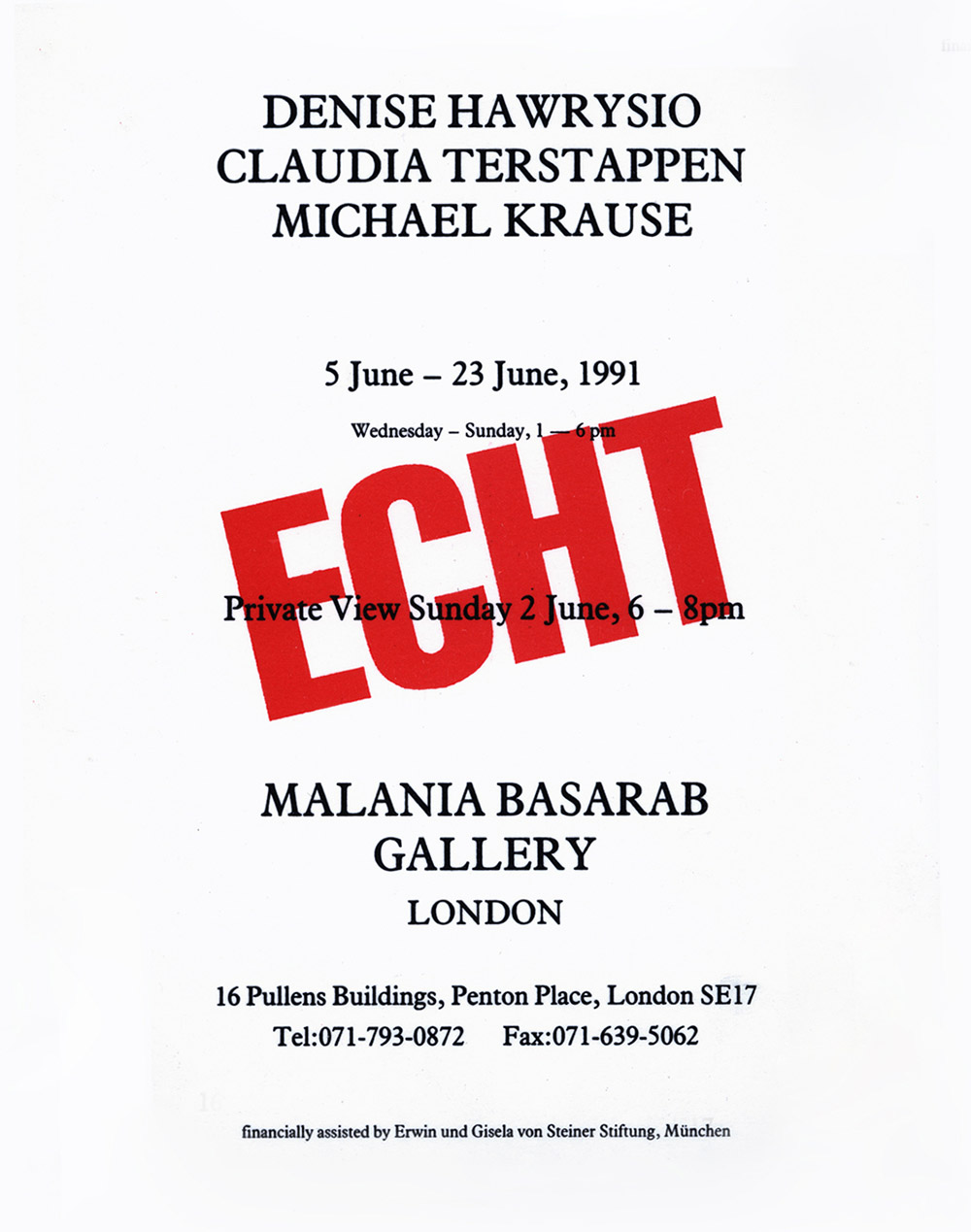
Early shows such as MOCK and ECHT aggressively challenged the visitor’s engagement with the artwork, using “consciously inauthentic” gallery tropes and surveillance devices to deconstruct the relationship between curator, artist, and audience. This trajectory continued through projects like SPIT, which utilised minimal found objects and elaborate texts, and 15/1, a 30-day collaborative installation where fifteen artists worked in a continuous sequence, with the potential freedom to modify or even destroy the work of their predecessors.
Through these “openly problematic” identities, the gallery established an enviable reputation as a focal point for innovative practice, garnering critical acclaim for its independence and its commitment to the combined sense of provocation and mutual co-operation.
15/1
Adam Chodzko, Pauline Daly, Sean Dower, Wendy Elliott, Anya Gallaccio, Andreas Ginkel, David Griffiths, Denise Hawrysio, Peter Lloyd Lewis, Richard Makin, Patrick McBride, Brendan Quick, Graham Ramsey, Clare Tindall, Amikam Toren
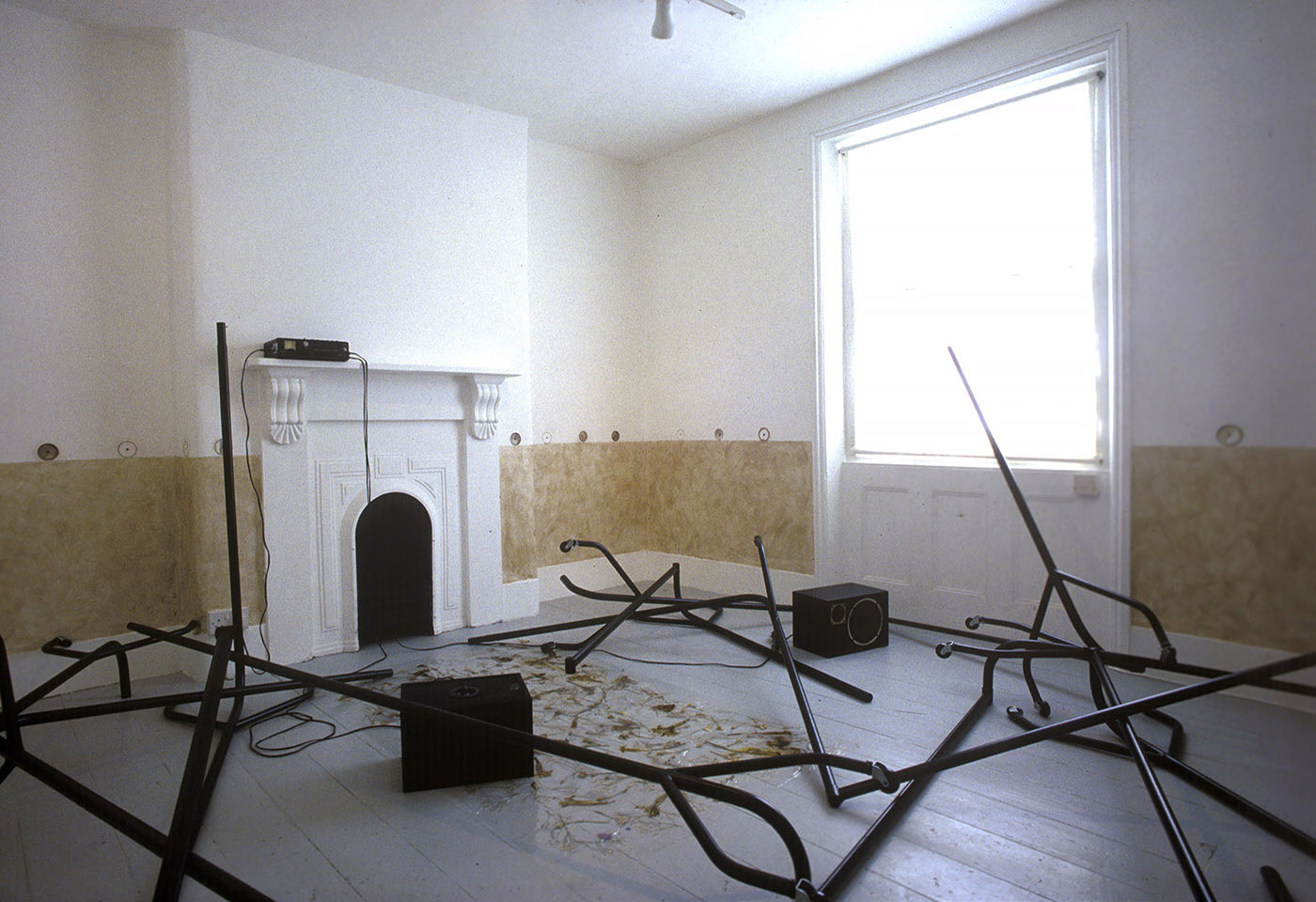
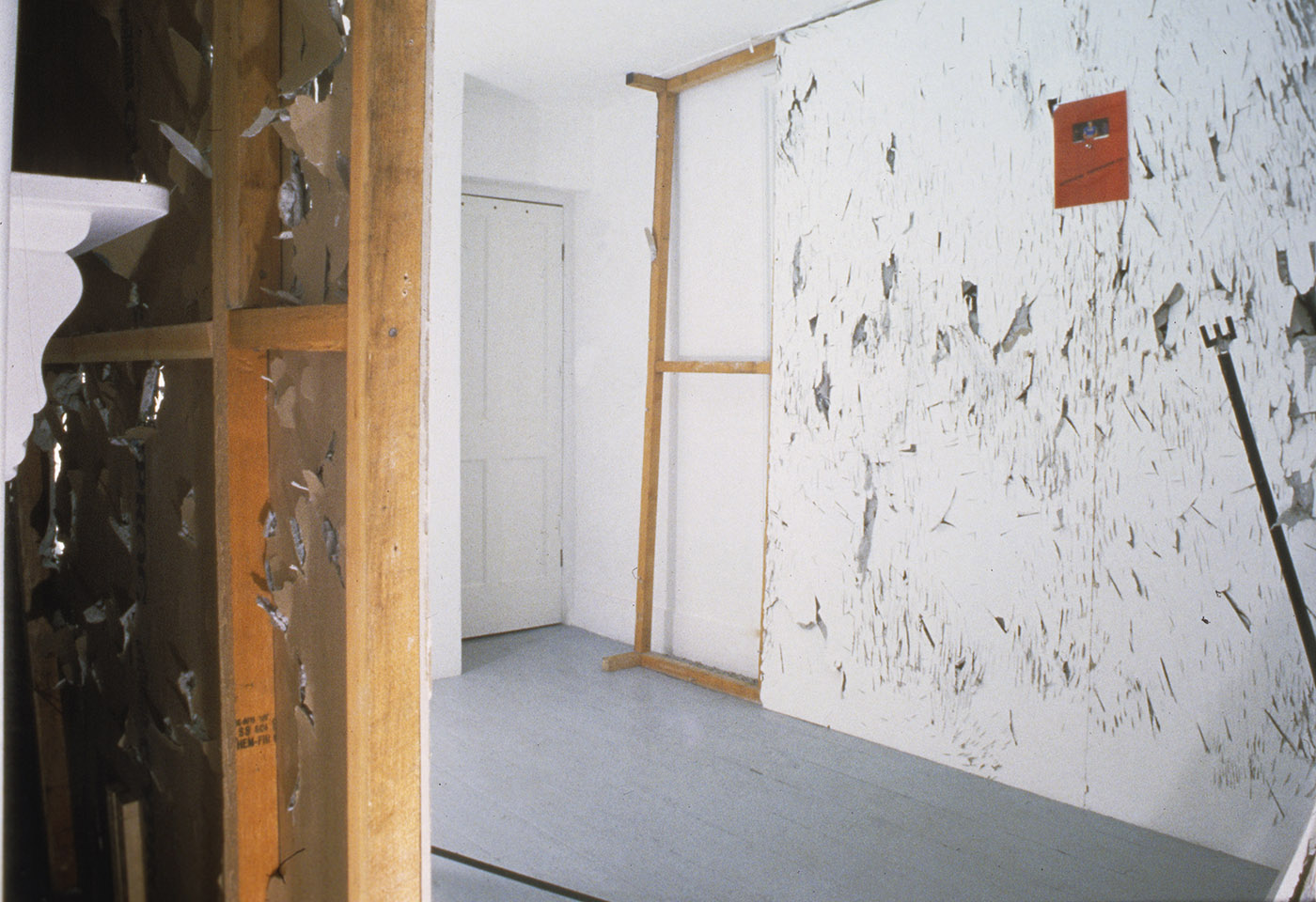
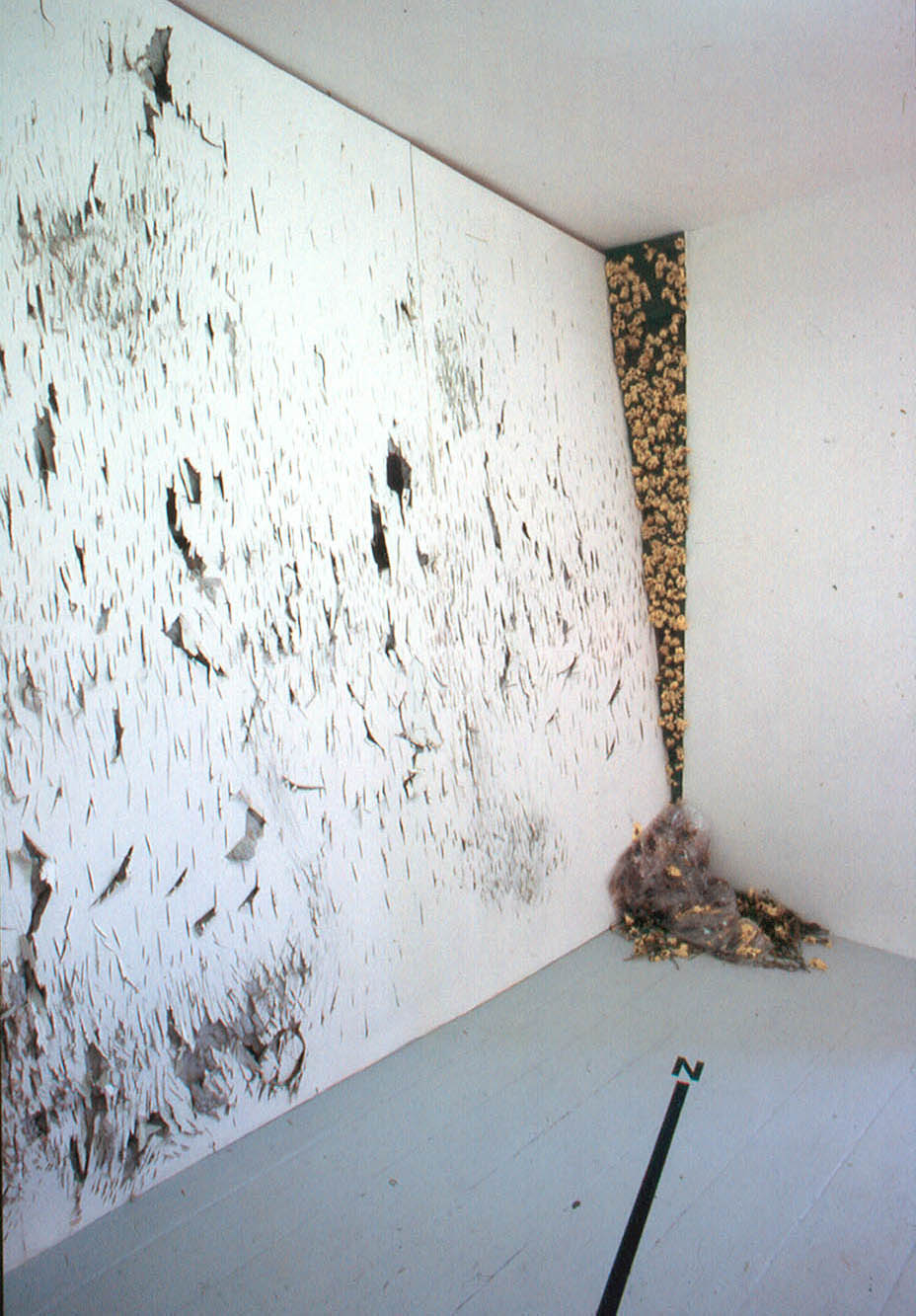
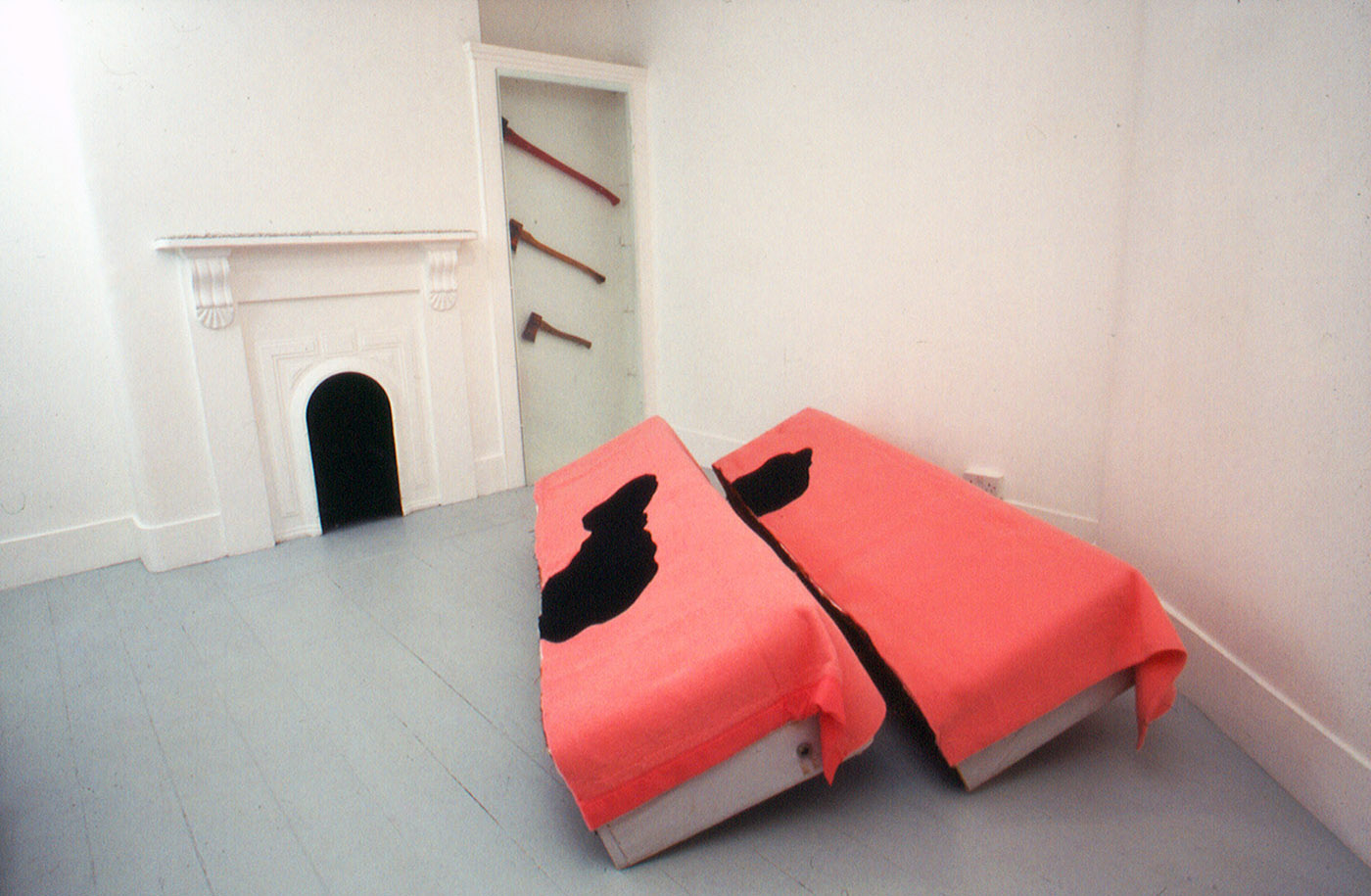
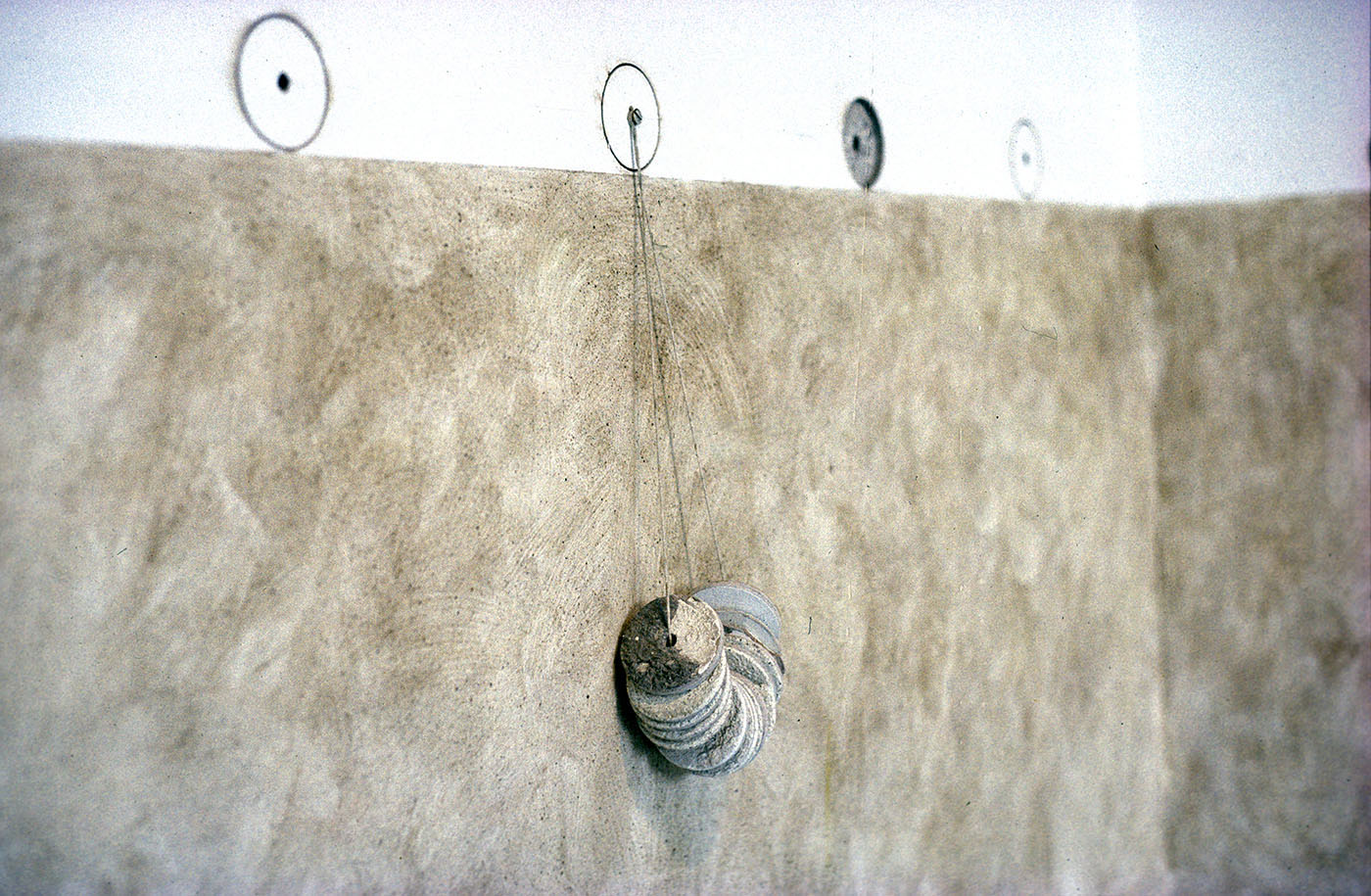
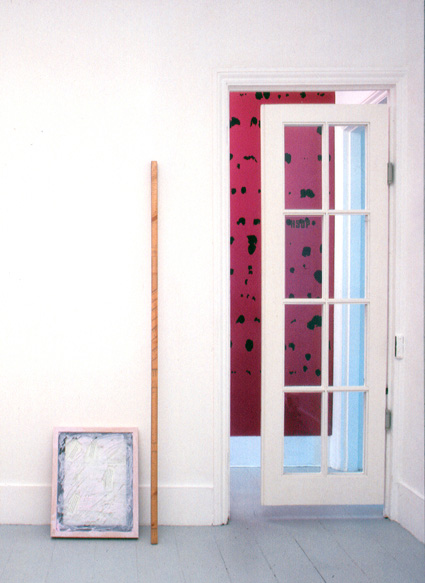
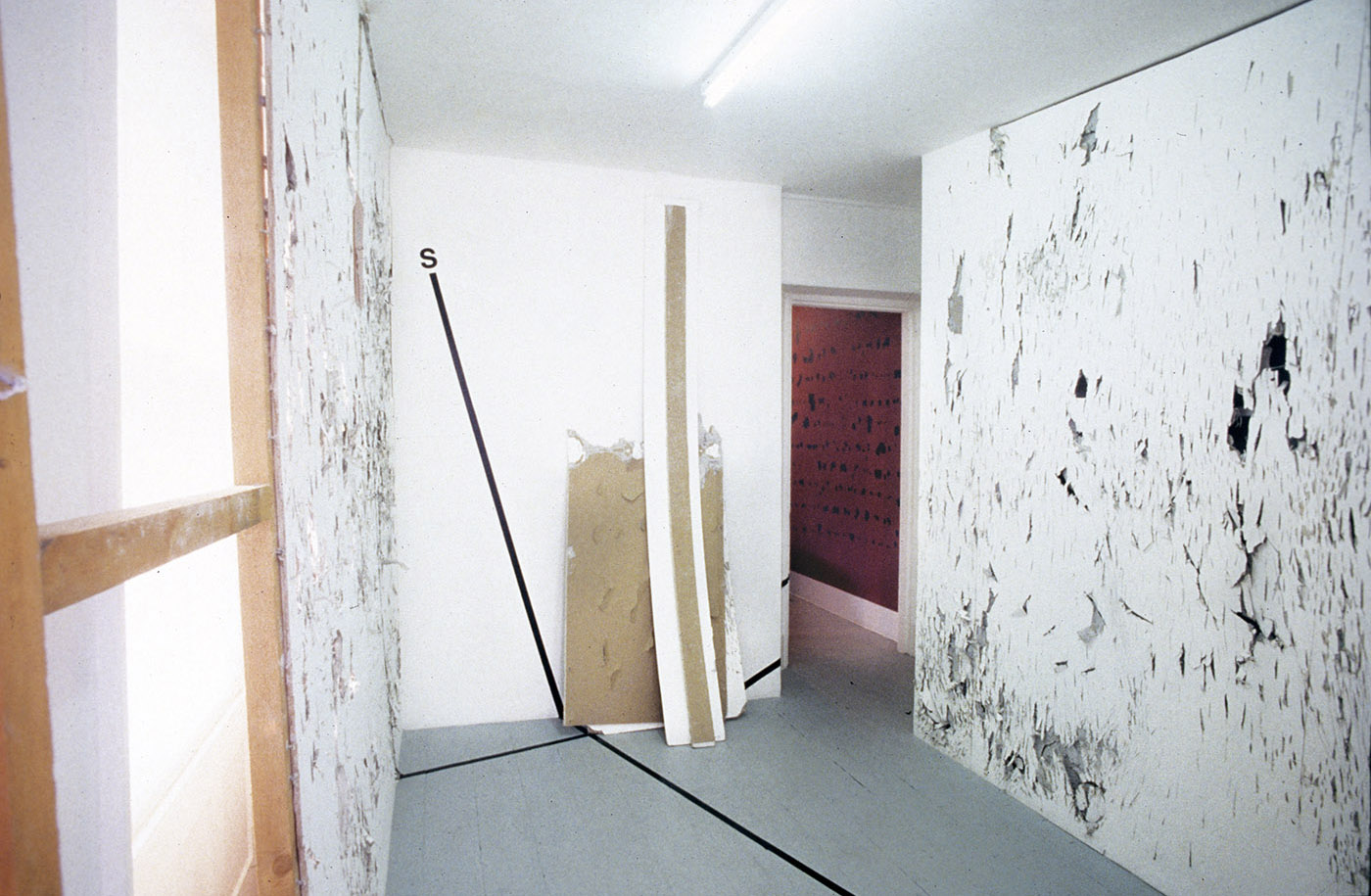
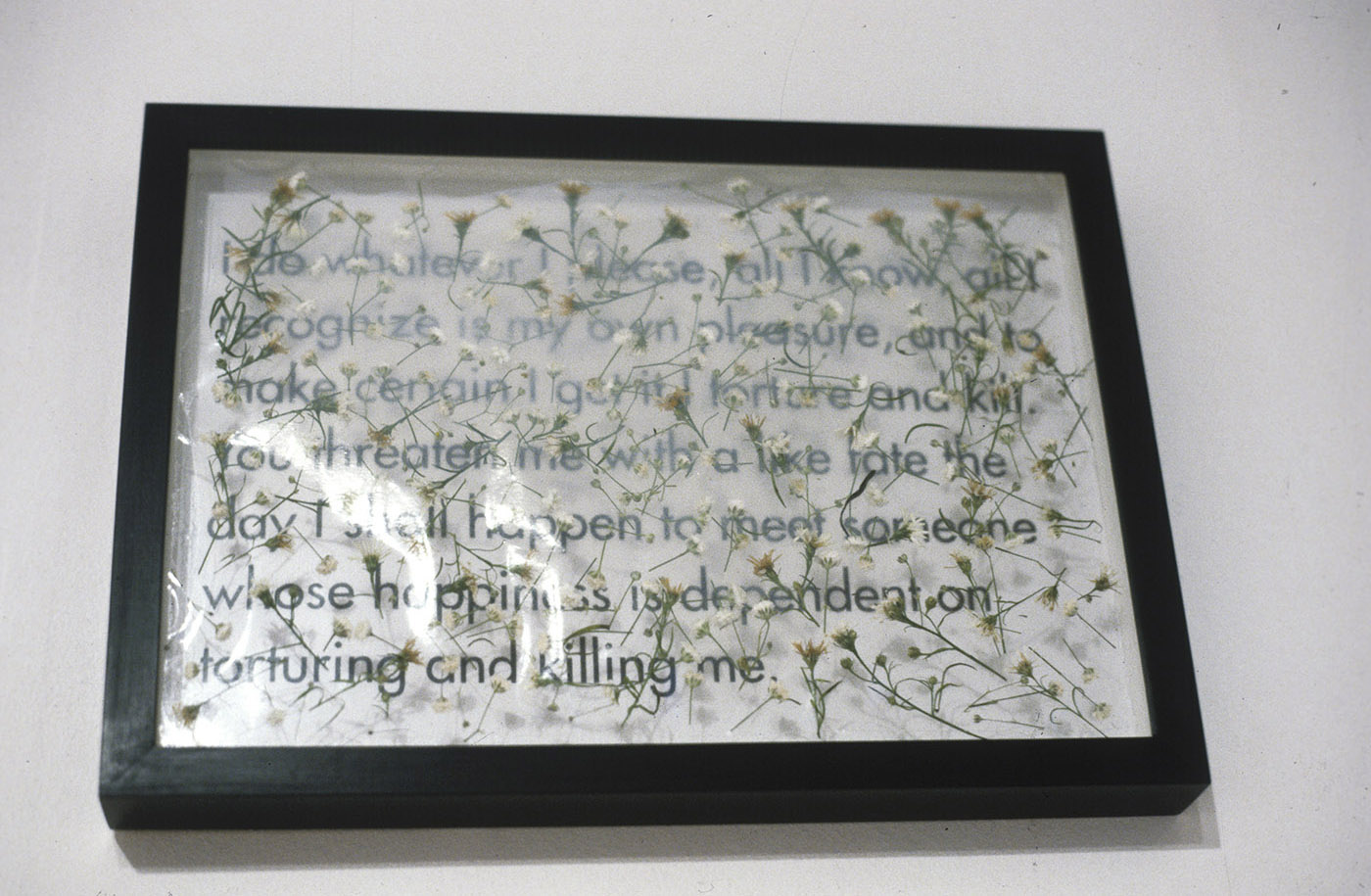
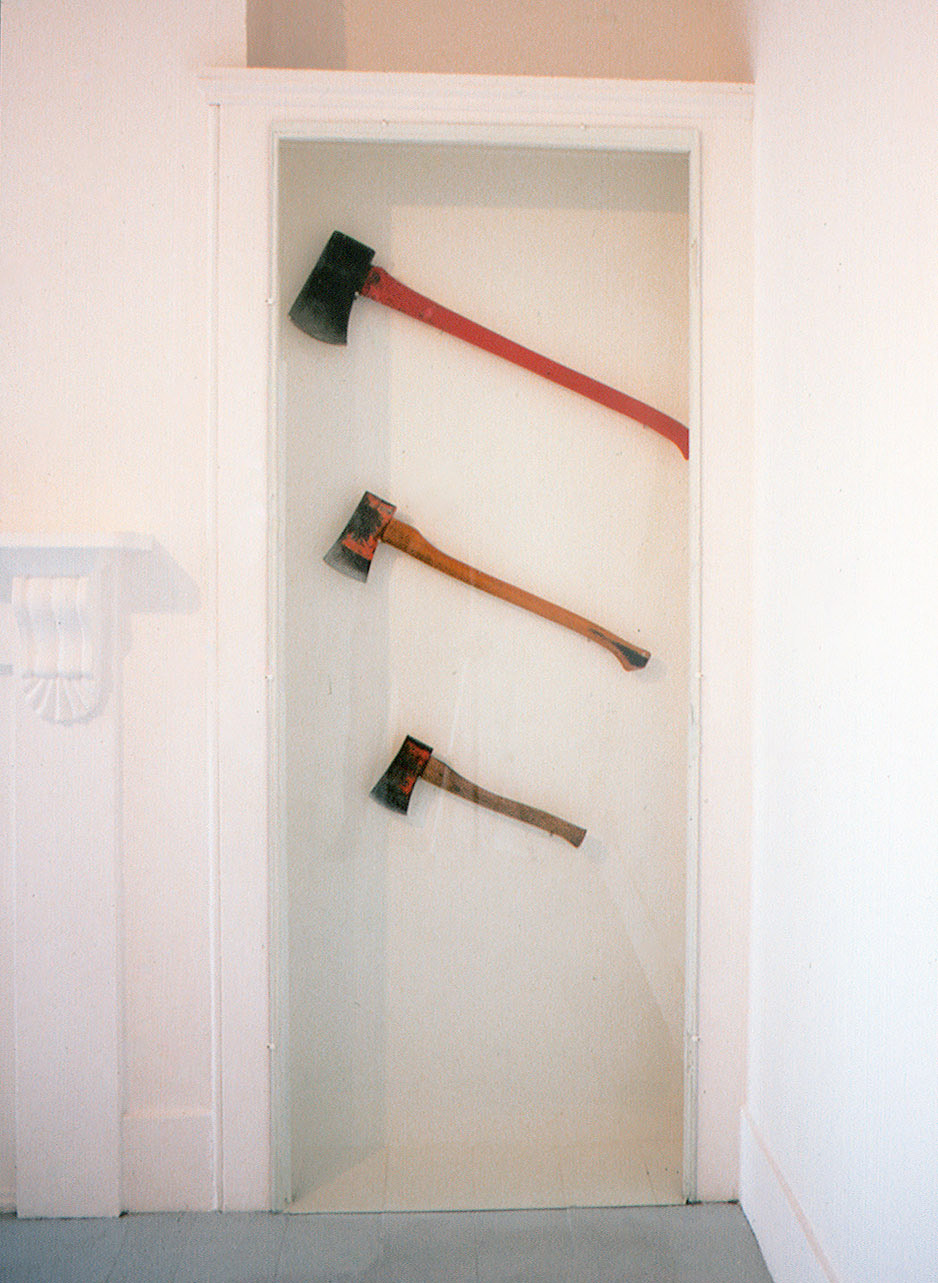
Devised as a form of social experiment emerging from the traditions of Dada and Situationism, 15/1 was arguably the most significant exhibition at Malania Basarab Gallery — a project described by City Limits as being “as ingenious as the gallery” itself. The installation transformed the space into a cultural laboratory intended to manifest ideas about individuality, community and identity. By prioritising process over fixed outcomes, the project constructed a framework to explore the tensions between collaboration and competition, conflict and dialogue.
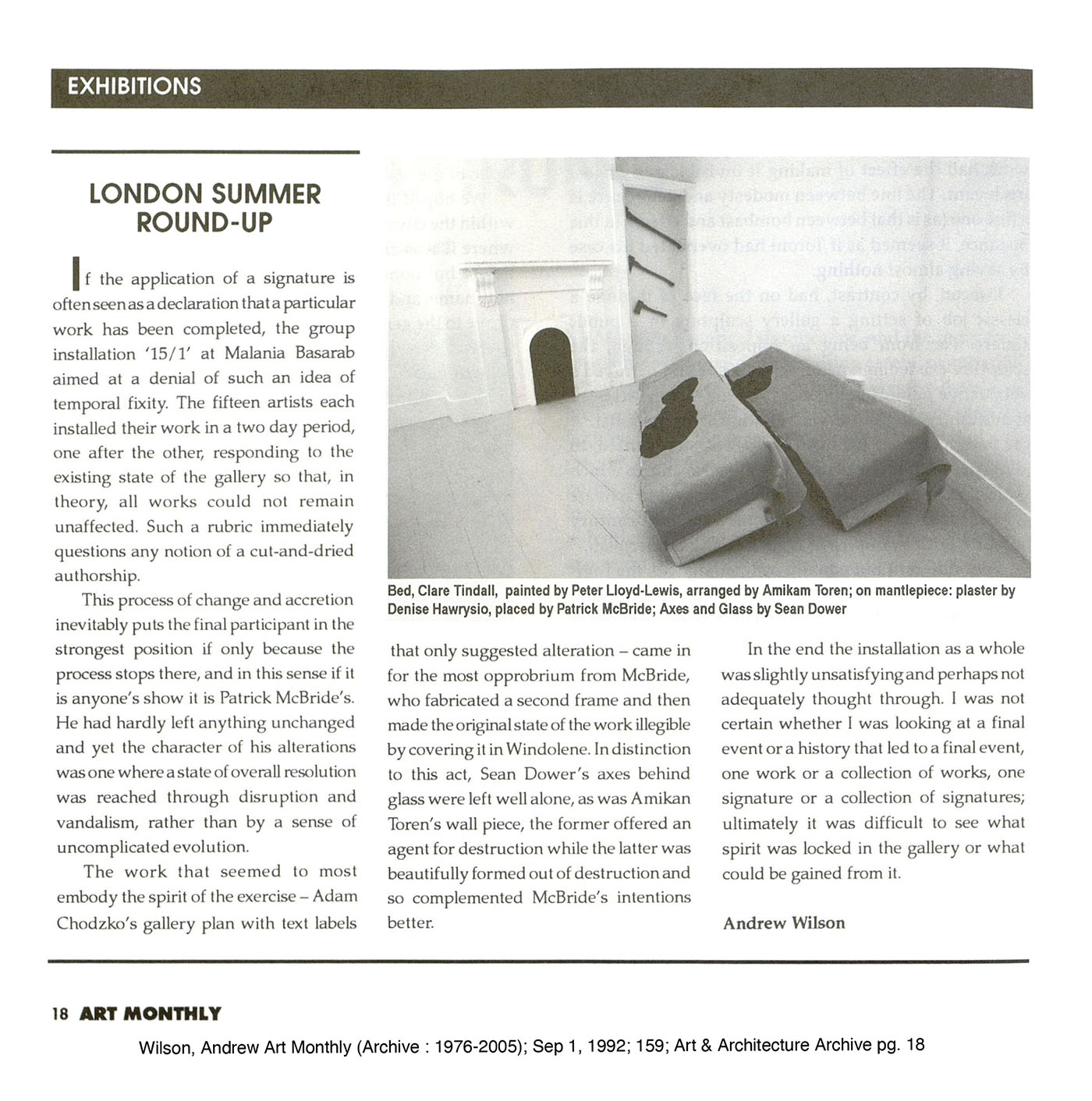
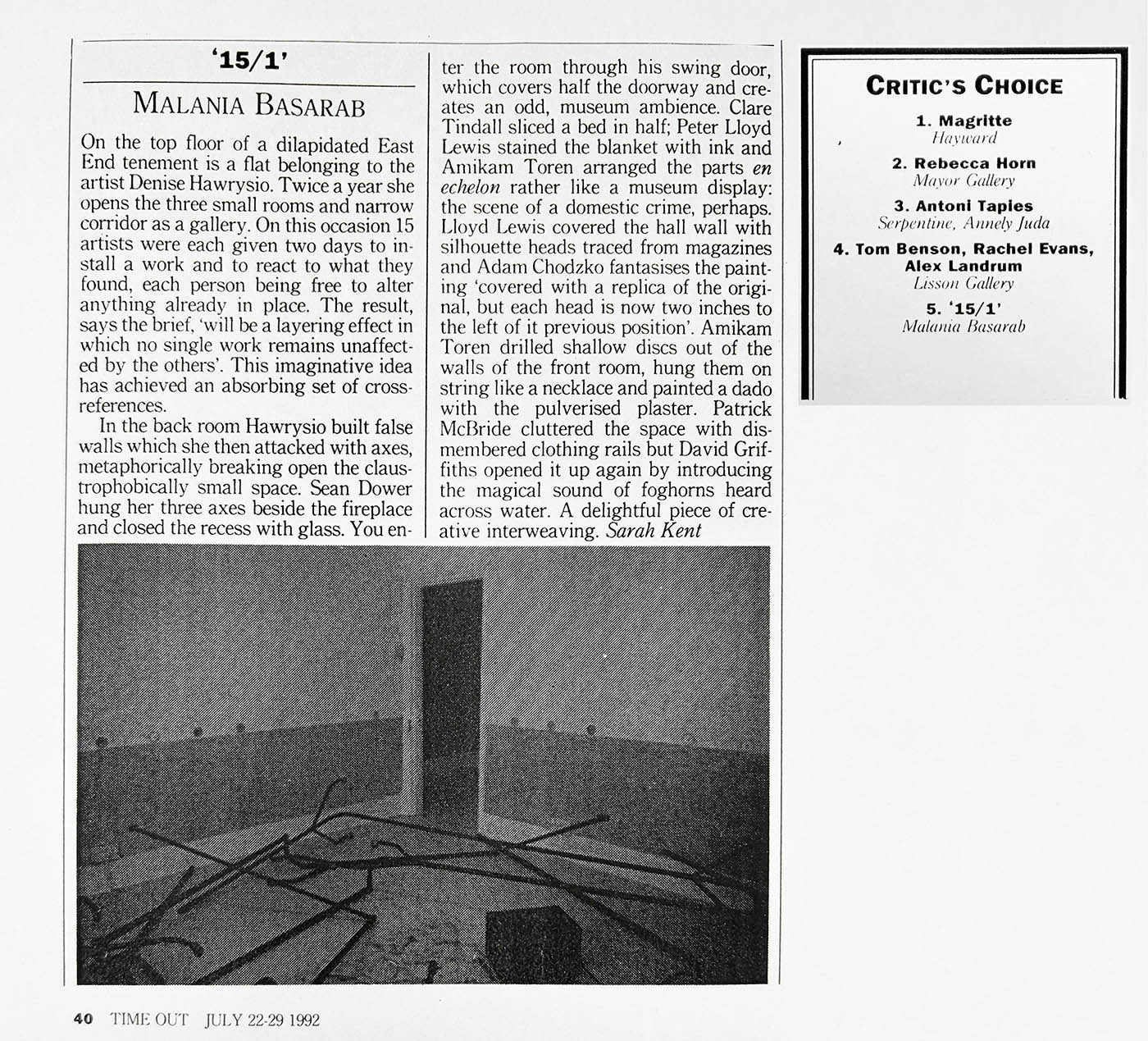
The core premise involved fifteen artists who were each given two days to work in — and respond to the existing conditions of — the gallery. While participants were “free to alter or respond to anything done by the preceding artists,” the process was governed by one strict rule: “the work of other artists cannot be removed from the gallery”. Art Monthly noted that this “process of change and accretion” aimed for a “denial of temporal fixity”, creating a rubric that “questions any notion of a cut-and-dried authorship”. The project functioned as what Bourriaud terms a “model of action within the existing real world”, successfully questioning accepted definitions of success and failure, process and closure.
What resulted was that some works acquired a certain patina provided by another hand, or were moved or even obliterated. As a result, 15/1 conveyed a sense of infinite possibility — there was none of the sense of closure associated with conventional exhibitions. Which leads naturally to a question that needs asking regularly: ‘who is an exhibition for?’ 15/1 raised the taboo subject of the implicit egotism that operates within every exhibition…
Anya Gallaccio added a filmy surface to other people’s works, and Denise set about demolishing a plasterboard wall with such fury that the work has stuck in my mind for 10 years. — Emma Dexter, 100 Reviews Backwards
The show seemed to be, on the one hand, about trust, mutuality and comradeship, whilst on the other it was about deviousness, one-upmanship and in some instances plain spitefulness. (A microcosm of the art world no less.) Which of course made for a great spectacle for the viewer, akin to hearing your grandmother swear or watching nuns fight. — Matthew Higgs, 100 Reviews Backwards
The project was later re-staged in London as 15/1(2) and in Copenhagen as 15/1(3).
Press

Mock
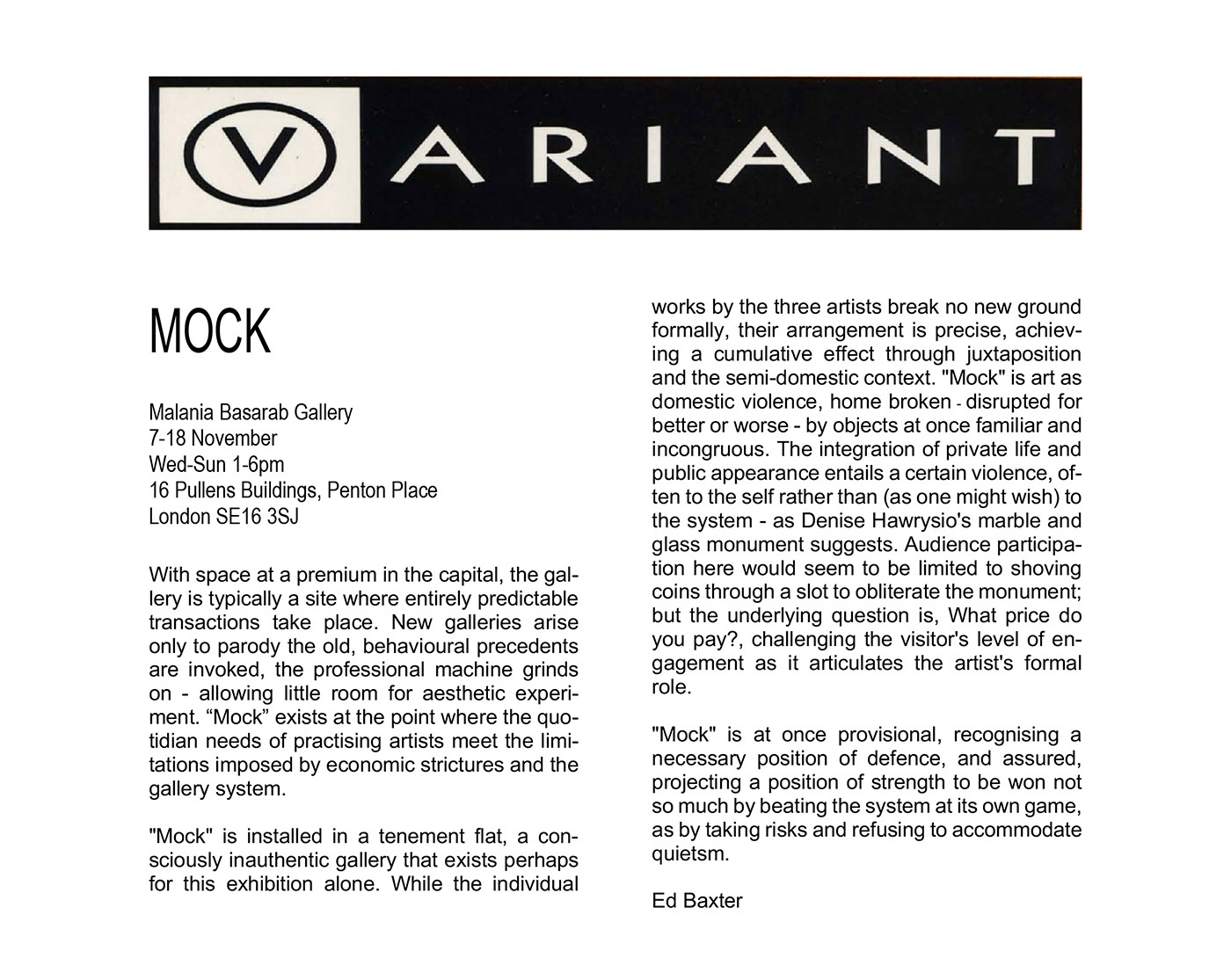
MOCK exists at the point where the quotidian needs of practising artists meet the limitations imposed by economic strictures and the gallery system. It is at once provisional, recognising a necessary position of defence, and assured, projecting a position of strength to be won not so much by beating the system at its own game, as by taking risks and refusing to accommodate quietism. — Ed Baxter, Variant
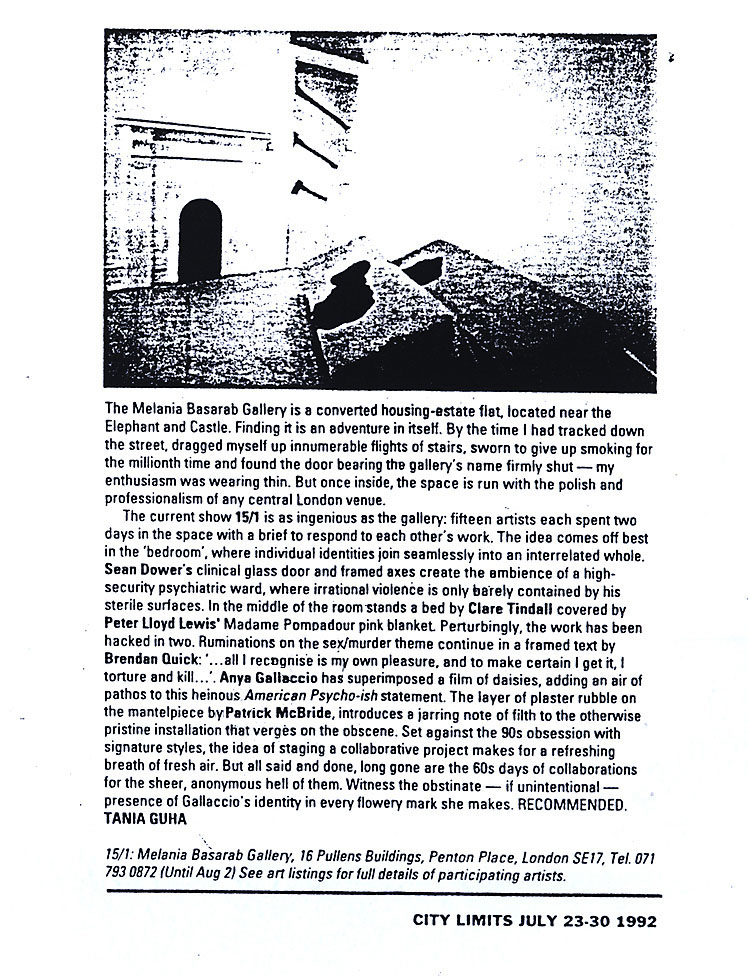
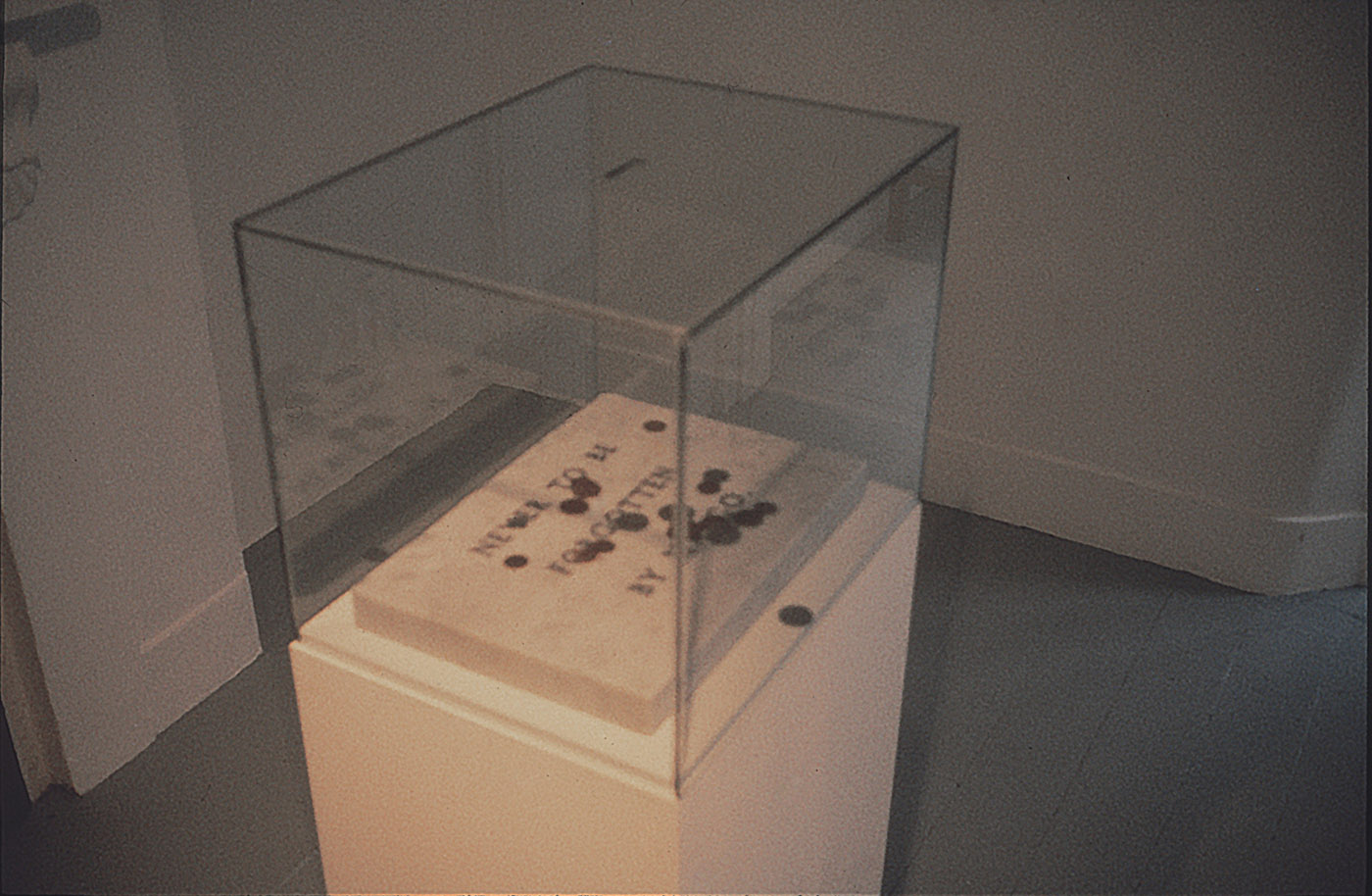
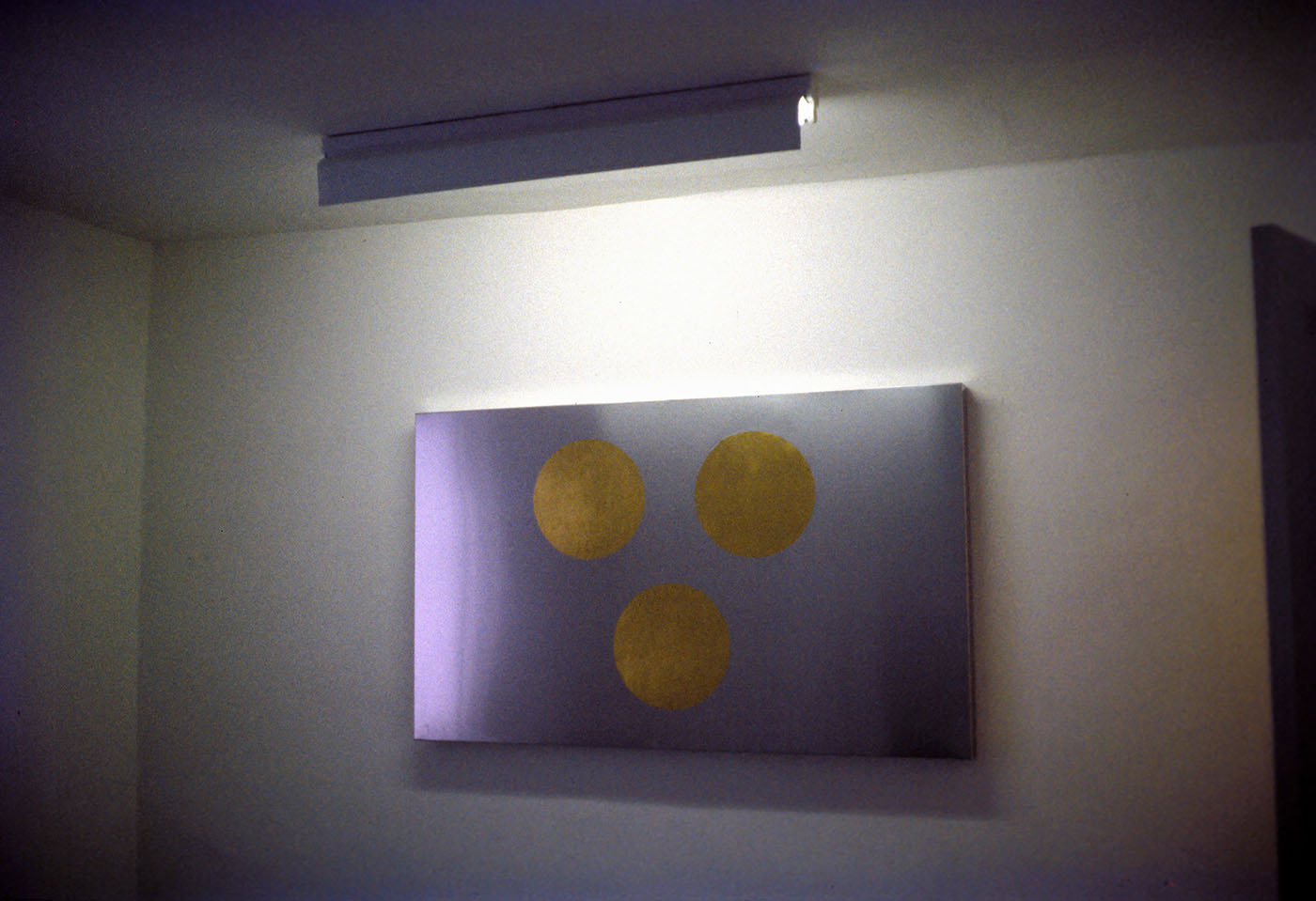
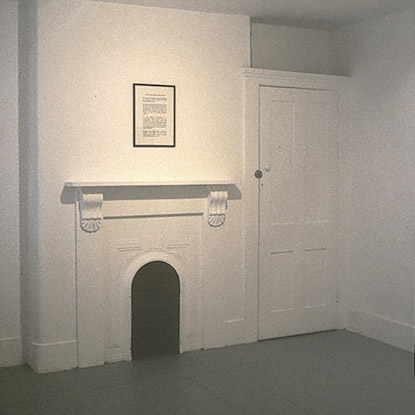
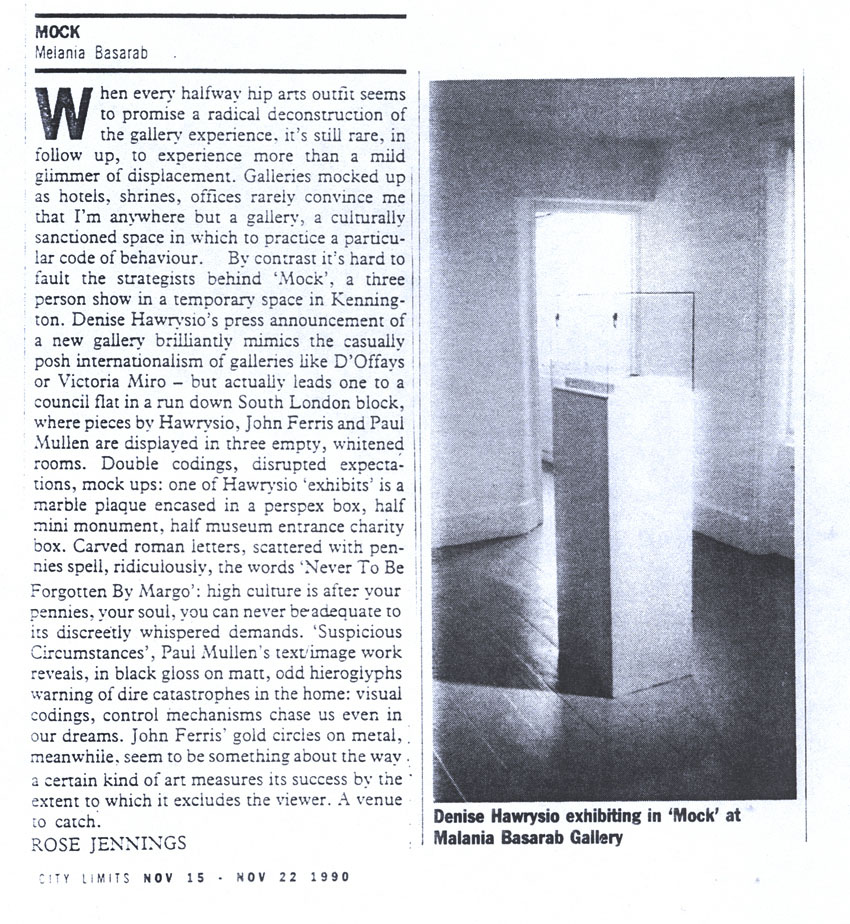
It’s hard to fault the strategists behind MOCK, a three person show in a temporary space in Kennington. Denise Hawrysio’s press announcement of a new gallery brilliantly mimics the casually posh internationalism of galleries like D’Offays or Victoria Miro — but actually leads one to a council flat in a run down South London block, where pieces by Hawrysio, John Ferris and Paul Mullen are displayed in three empty, whitened rooms. Double codings, disrupted expectations, mock ups: one of Hawrysio’s ‘exhibits’ is a marble plaque encased in a perspex box, half mini monument, half museum entrance charity box. Carved roman letters, scattered with pennies spell, ridiculously, the words ‘Never To Be Forgotten By Margo’: high culture is after your pennies, your soul, you can never be adequate to its discreetly whispered demands. ‘Suspicious Circumstances’, Paul Mullen’s text/image work reveals, in black gloss on matt, odd hieroglyphs warning of dire catastrophes in the home: visual codings, control mechanisms chase us even in our dreams. John Ferris’ gold circles on metal, meanwhile, seem to be something about the way a certain kind of art measures its success by the extent to which it excludes the viewer. A venue to catch. — Rose Jennings, City Limits
Press
Spit
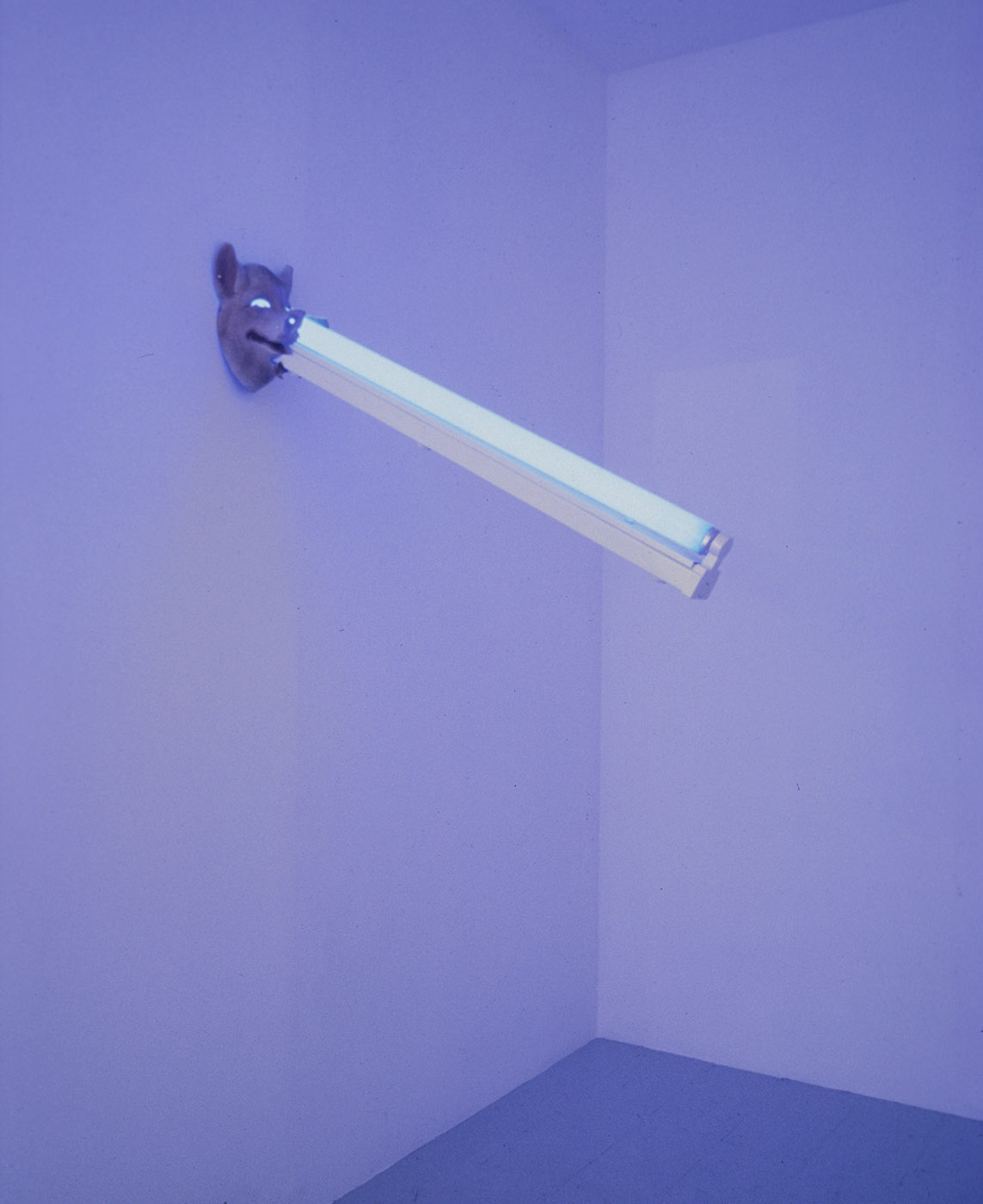
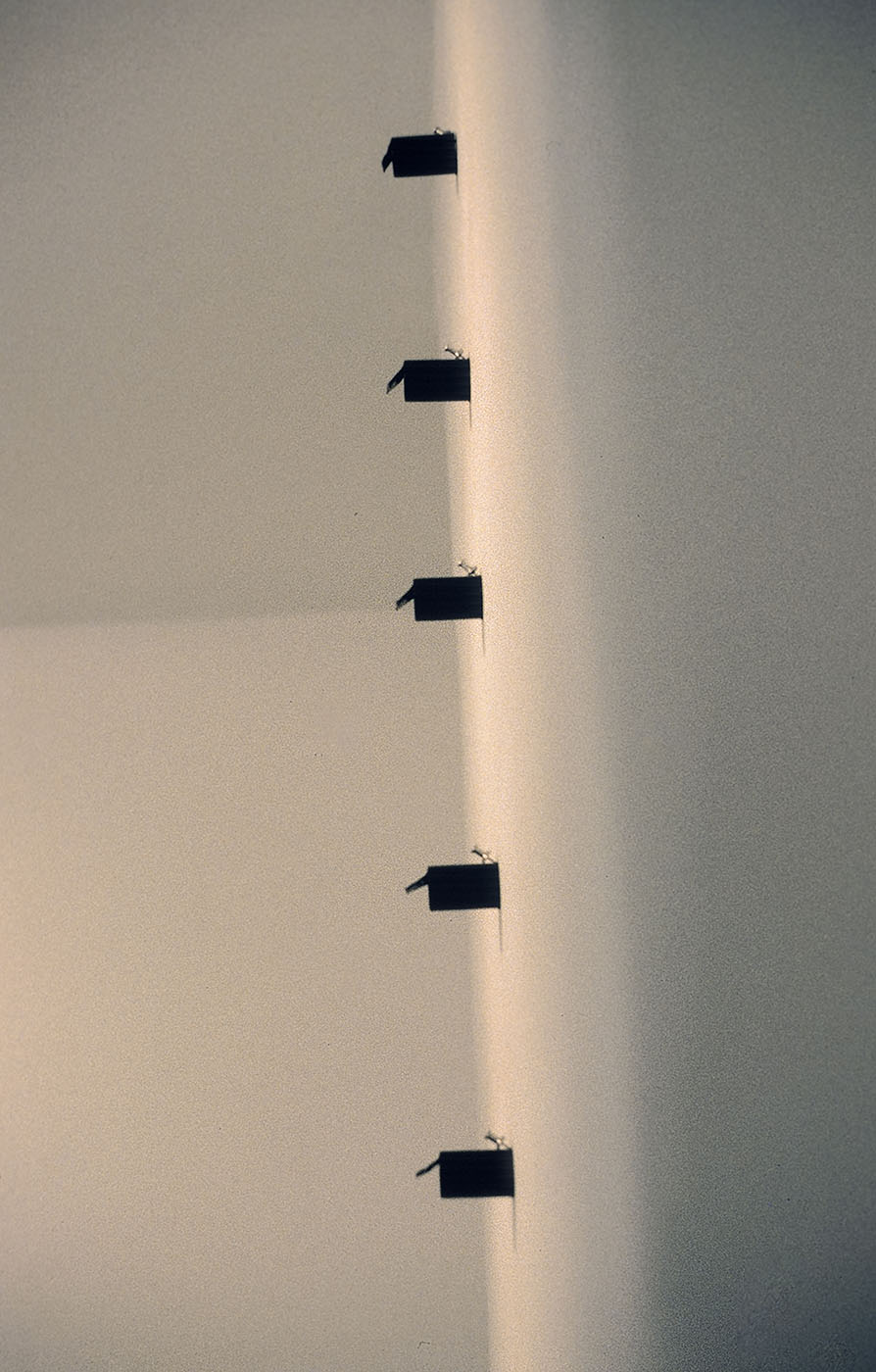
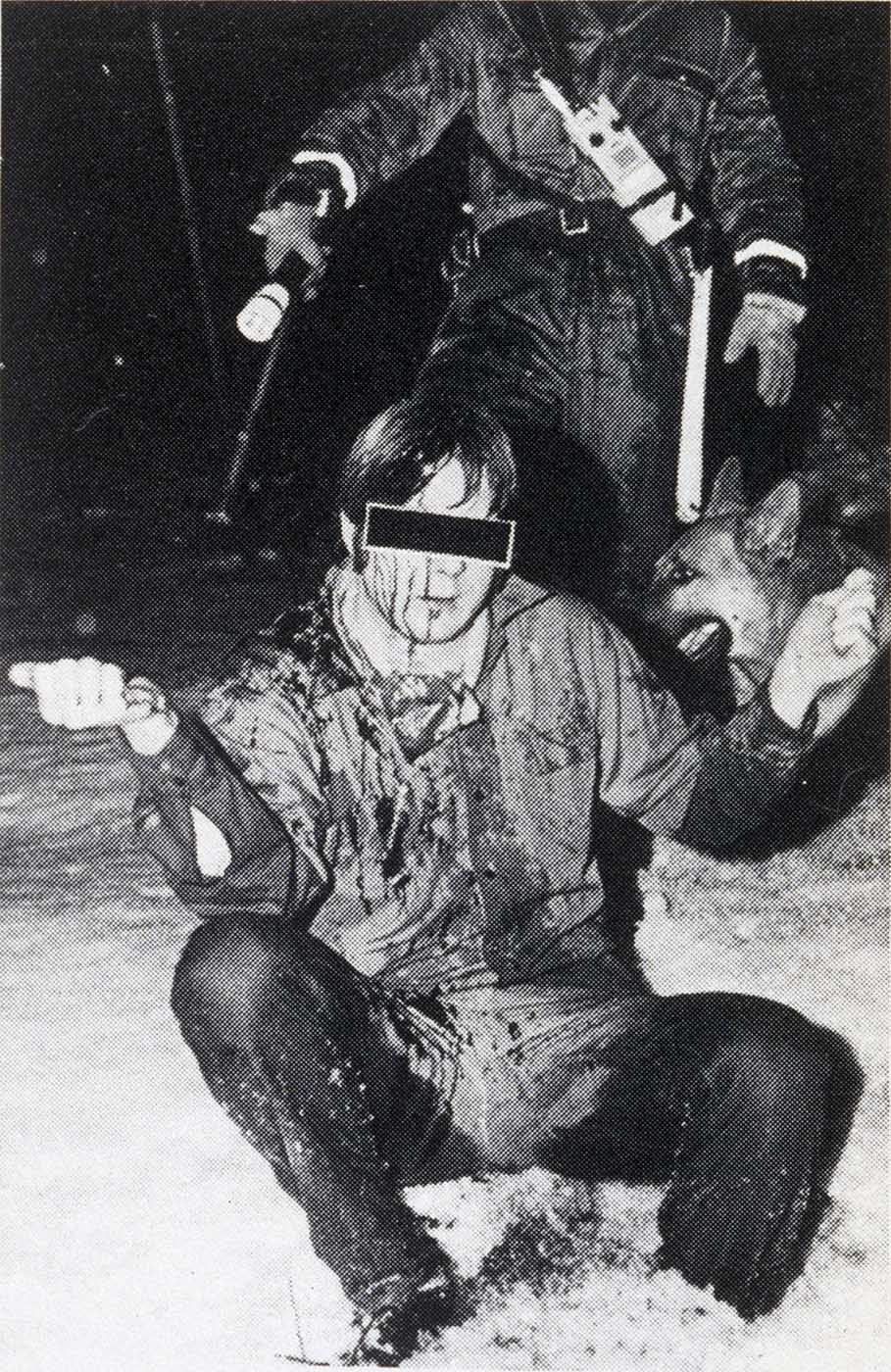
Denise Hawrysio is showing a pig’s head mask with a purple fluorescent tube coming out of (stuffed into?) its mouth. This, she says, offends some men. Blimey. Jårg Geismar’s ‘Smilies’ consists of camera film canisters pinned to the wall. There are hatches cut in them so that you can peer in and see pictures of young women’s faces. Peter Andersson has the best found (well, bought) object: a leather gag from an S&M shop. He also has a fascination with yashmaks.
There are hidden messages everywhere, but who really cares? The real problem with this show is that the objects here have no presence. They are treated as pieces in a mental game, and only then as physical things. My advice is to go to the Tate instead and see the paintings of Gerhard Richter, which have lots to say about contemporary art and show extreme intelligence — far more subversive than all this nonsense. — David Lillington, Time Out
Press
Strip
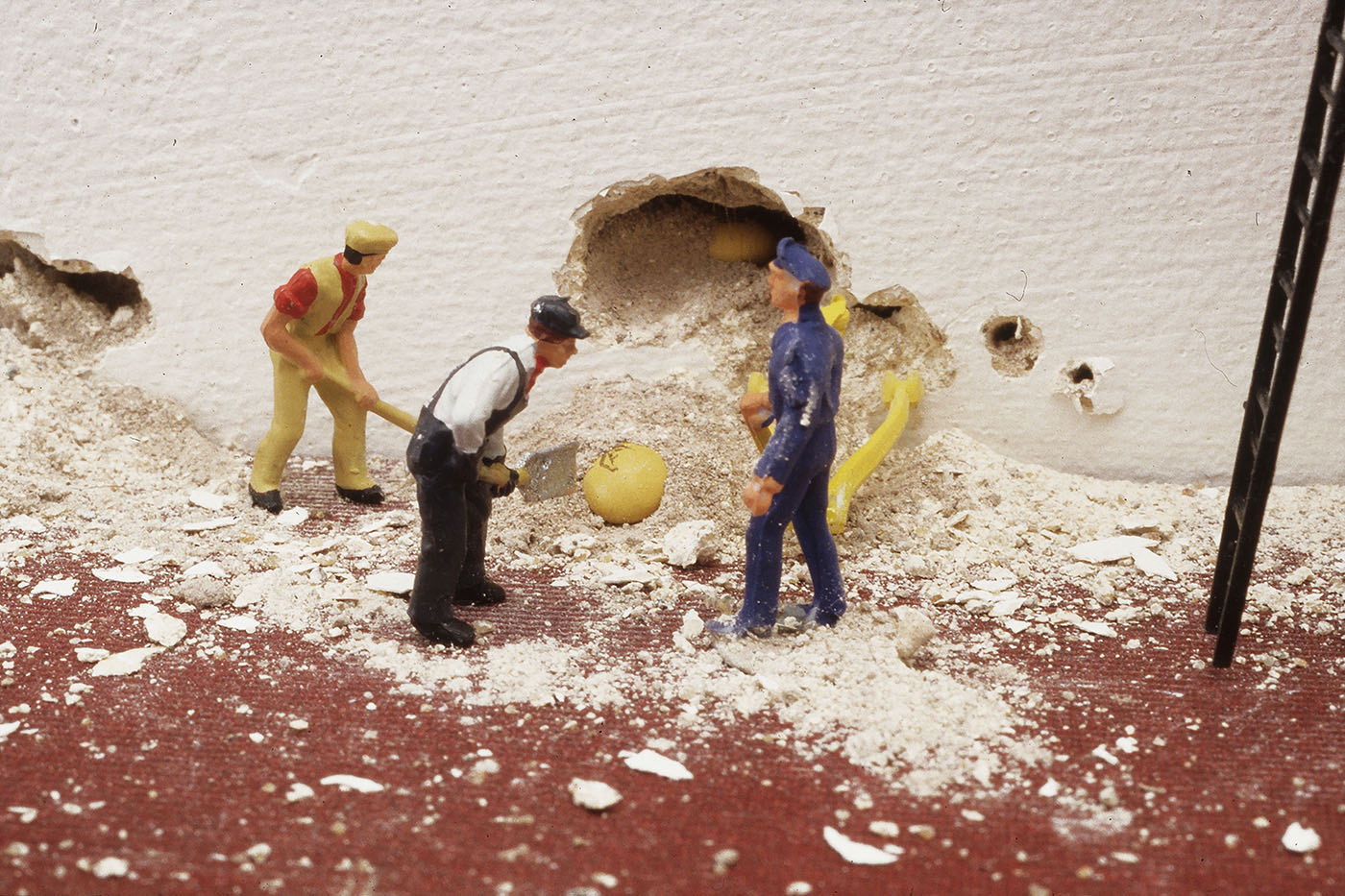
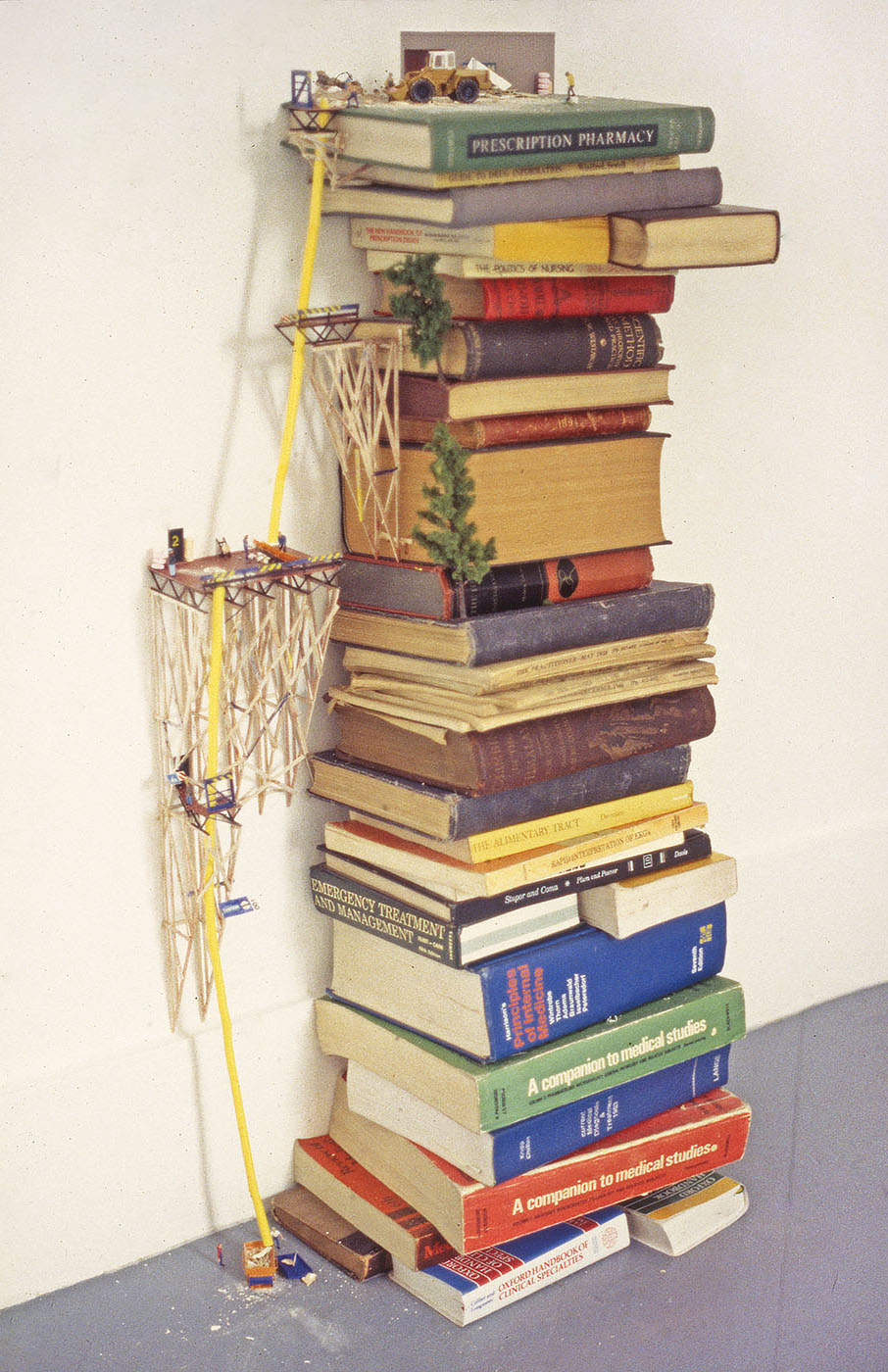
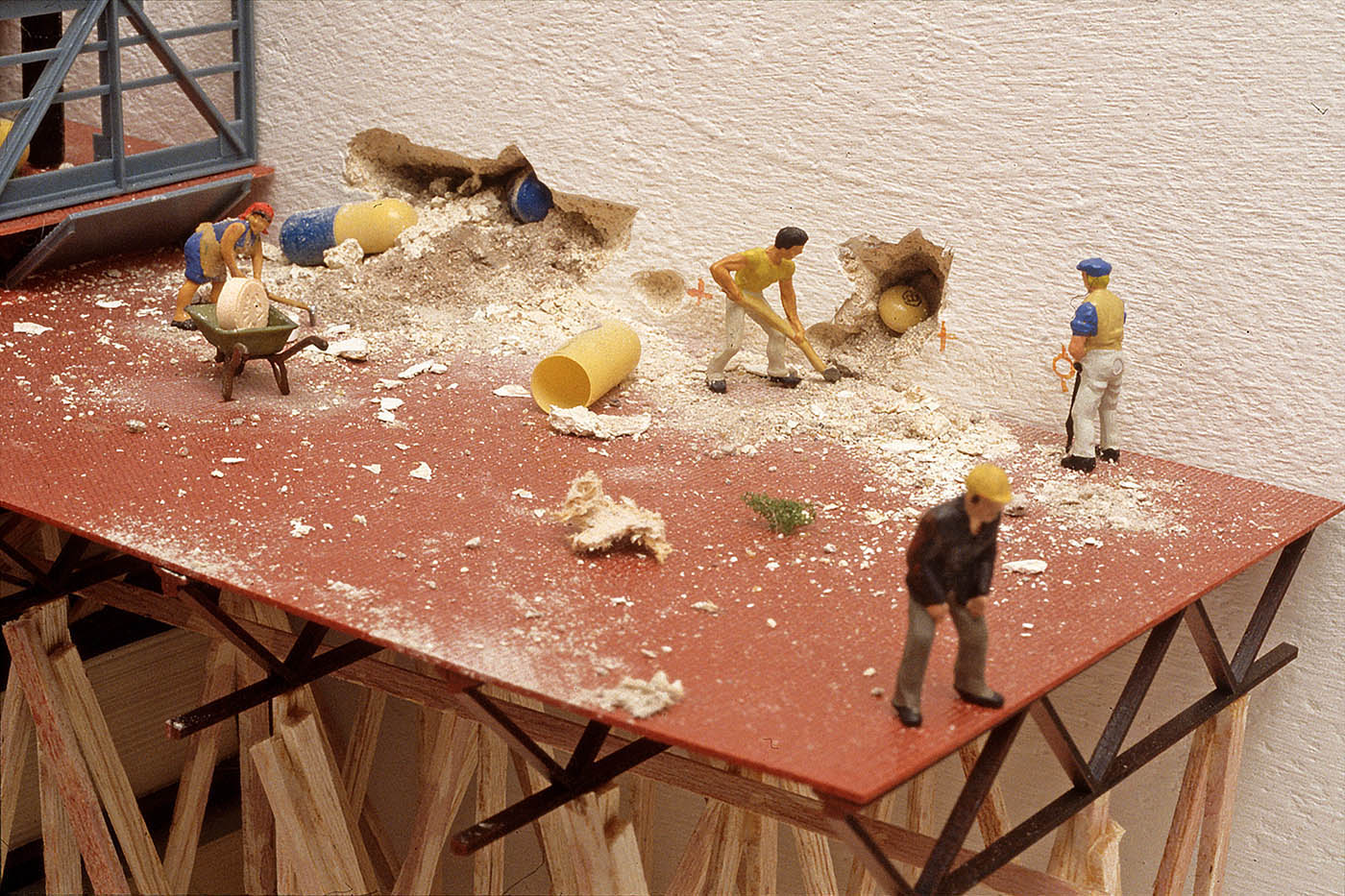
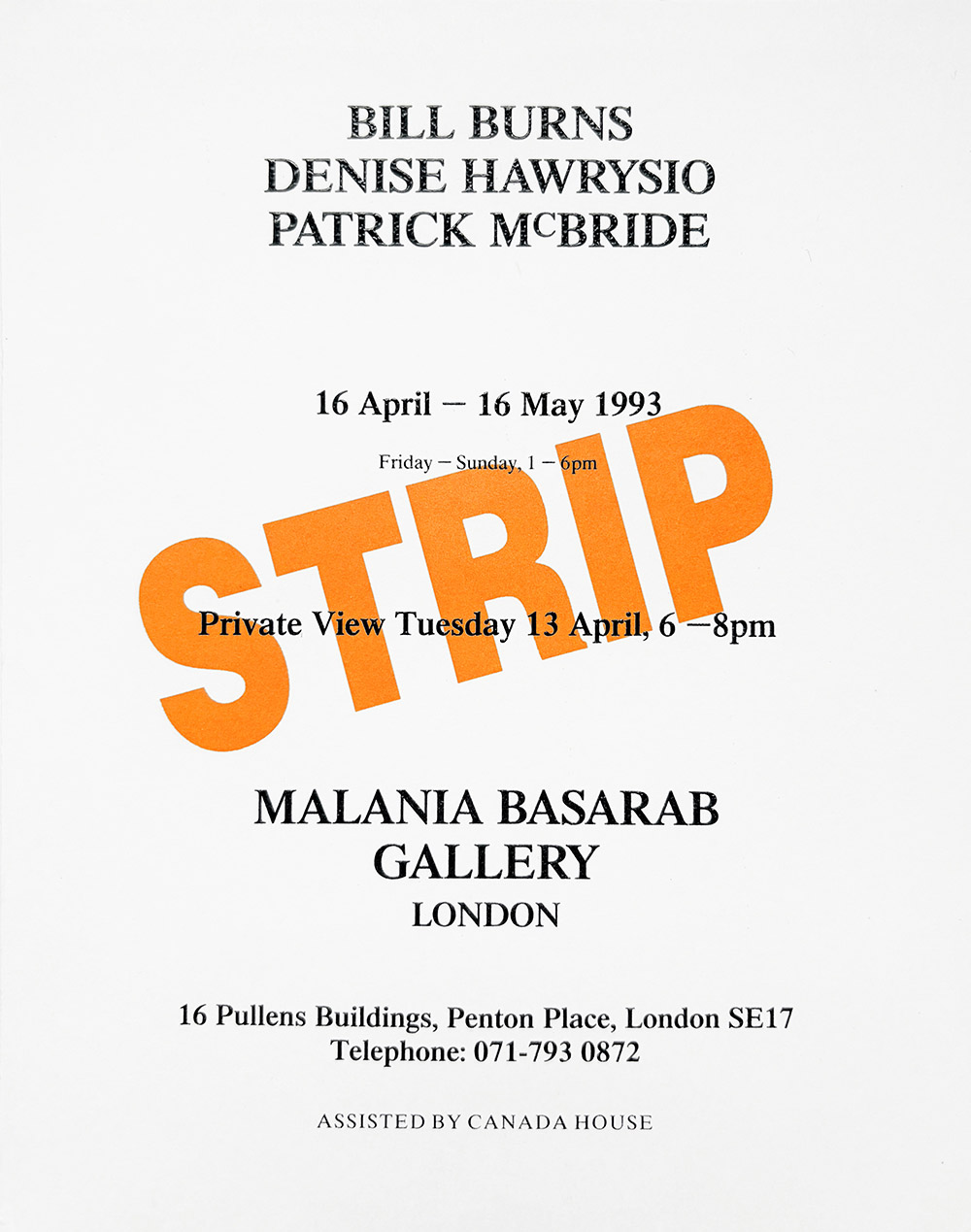
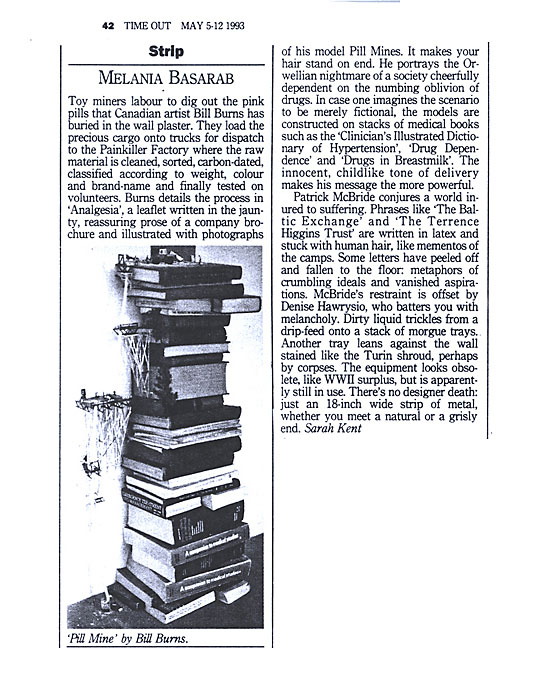
Toy miners labour to dig out the pink pills that Canadian artist Bill Burns has buried in the wall plaster. They load the precious cargo onto trucks for dispatch to the Painkiller Factory where the raw material is cleaned, sorted, carbon-dated, classified according to weight, colour and brand-name and finally tested on volunteers. Burns details the process in ‘Analgesia’, a leaflet written in the jaunty, reassuring prose of a company brochure and illustrated with photographs of his model Pill Mines. It makes your hair stand on end. He portrays the Orwellian nightmare of a society cheerfully dependent on the numbing oblivion of drugs. In case one imagines the scenario to be merely fictional, the models are constructed on stacks of medical books such as the ‘Clinician’s Illustrated Dictionary of Hypertension’, ‘Drug Dependence’ and ‘Drugs in Breastmilk’. The innocent, childlike tone of delivery makes his message the more powerful.
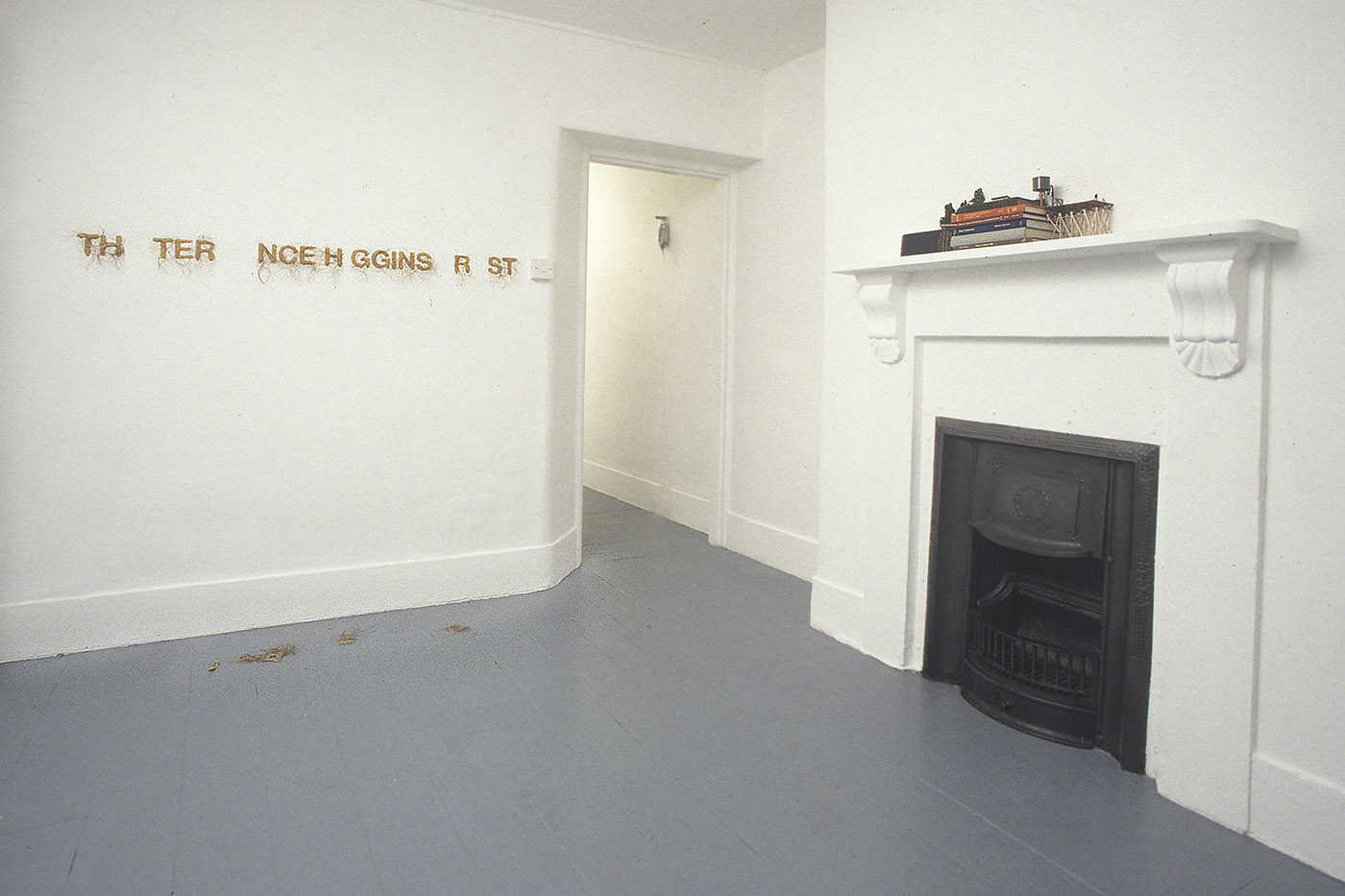
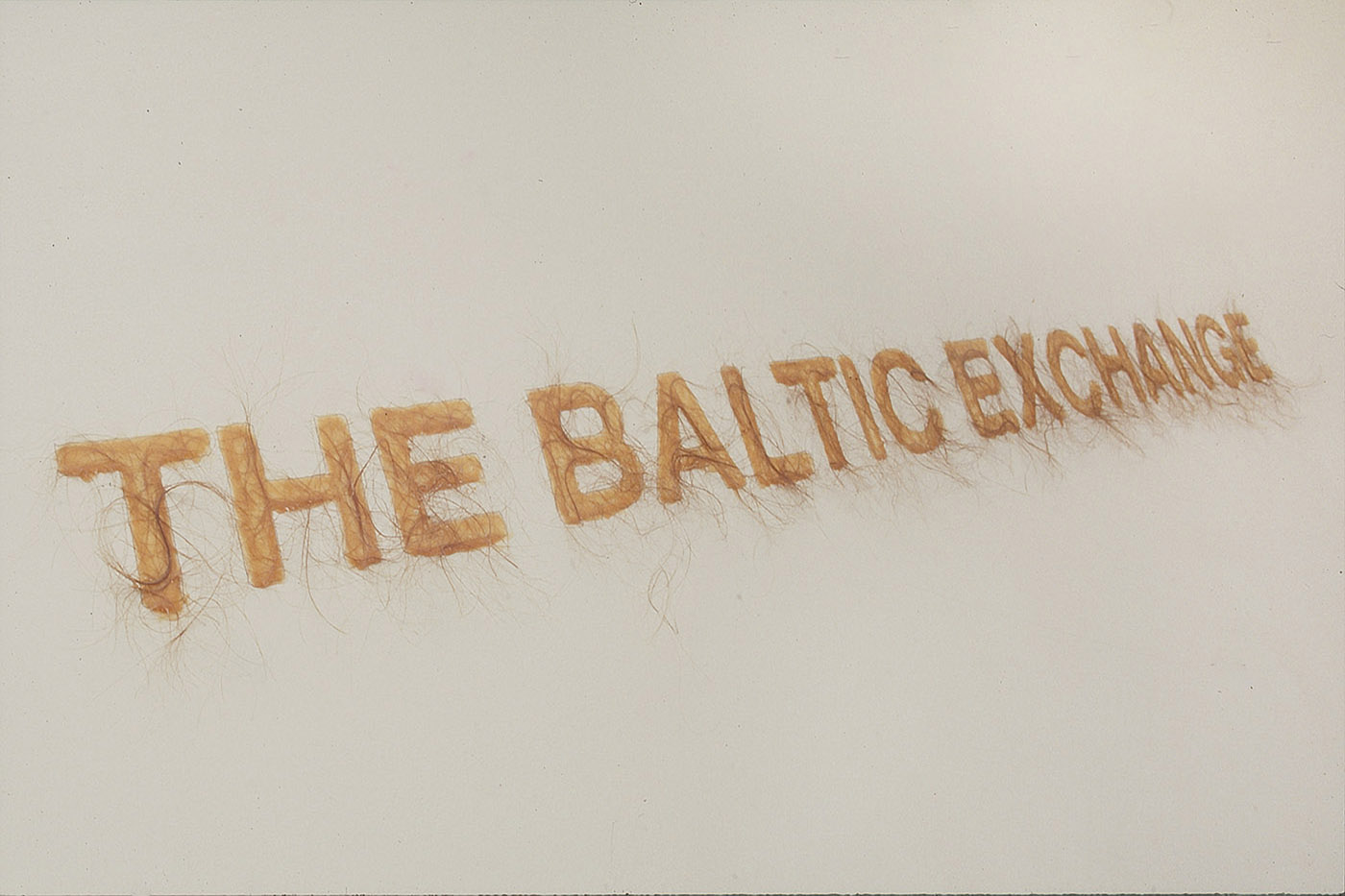
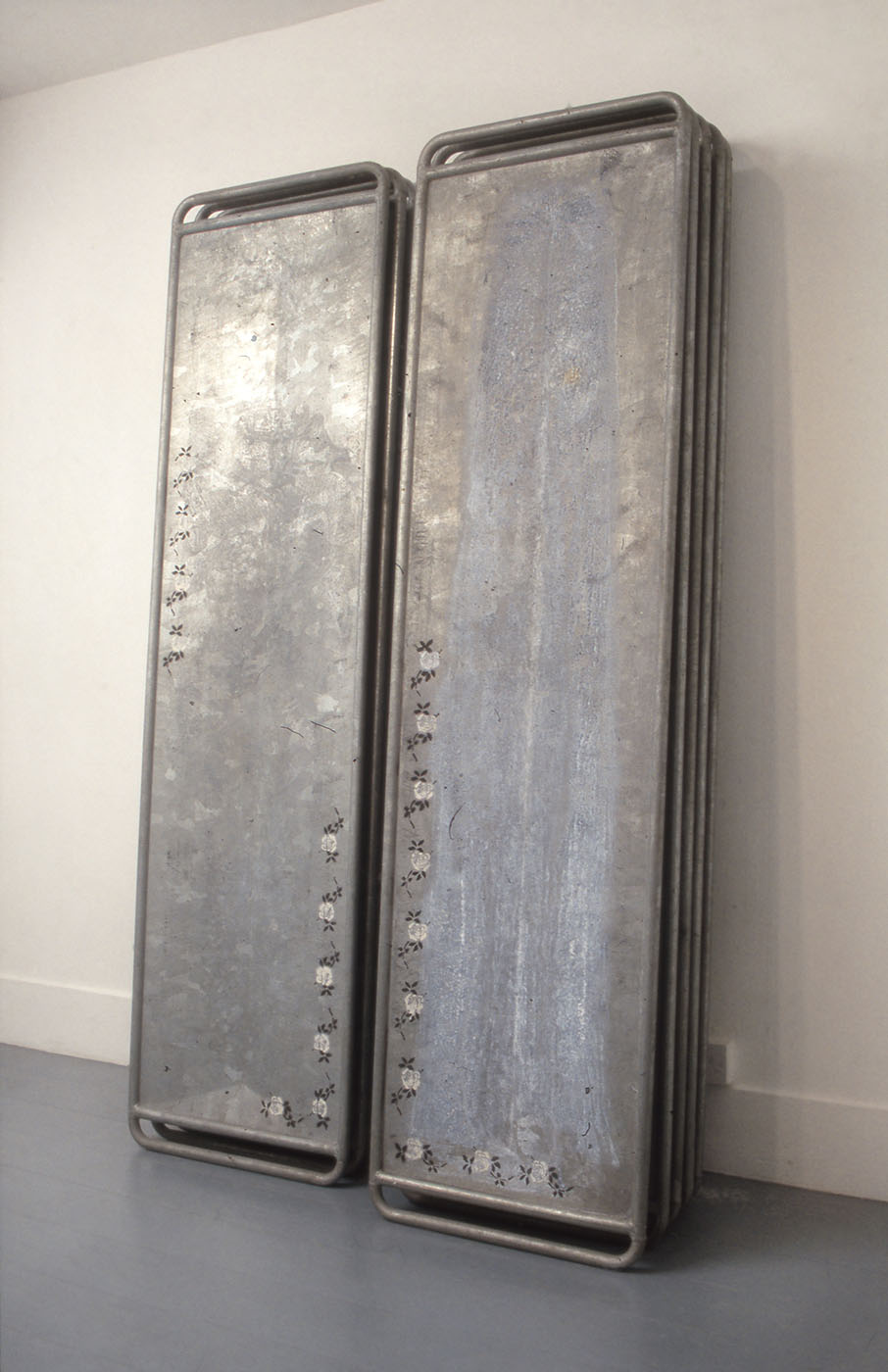
Patrick McBride conjures a world inured to suffering. Phrases like ‘The Baltic Exchange’ and ‘The Terrence Higgins Trust’ are written in latex and stuck with human hair, like mementos of the camps. Some letters have peeled off and fallen to the floor: metaphors of crumbling ideals and vanished aspirations. McBride’s restraint is offset by Denise Hawrysio, who batters you with melancholy. Dirty liquid trickles from a drip-feed onto a stack of morgue trays. Another tray leans against the wall, stained like the Turin shroud, perhaps by corpses. The equipment looks obsolete, like WWII surplus, but is apparently still in use. There’s no designer death: just an 18-inch wide strip of metal, whether you meet a natural or a grisly end. — Saran Kent, Time Out
Press
Echt
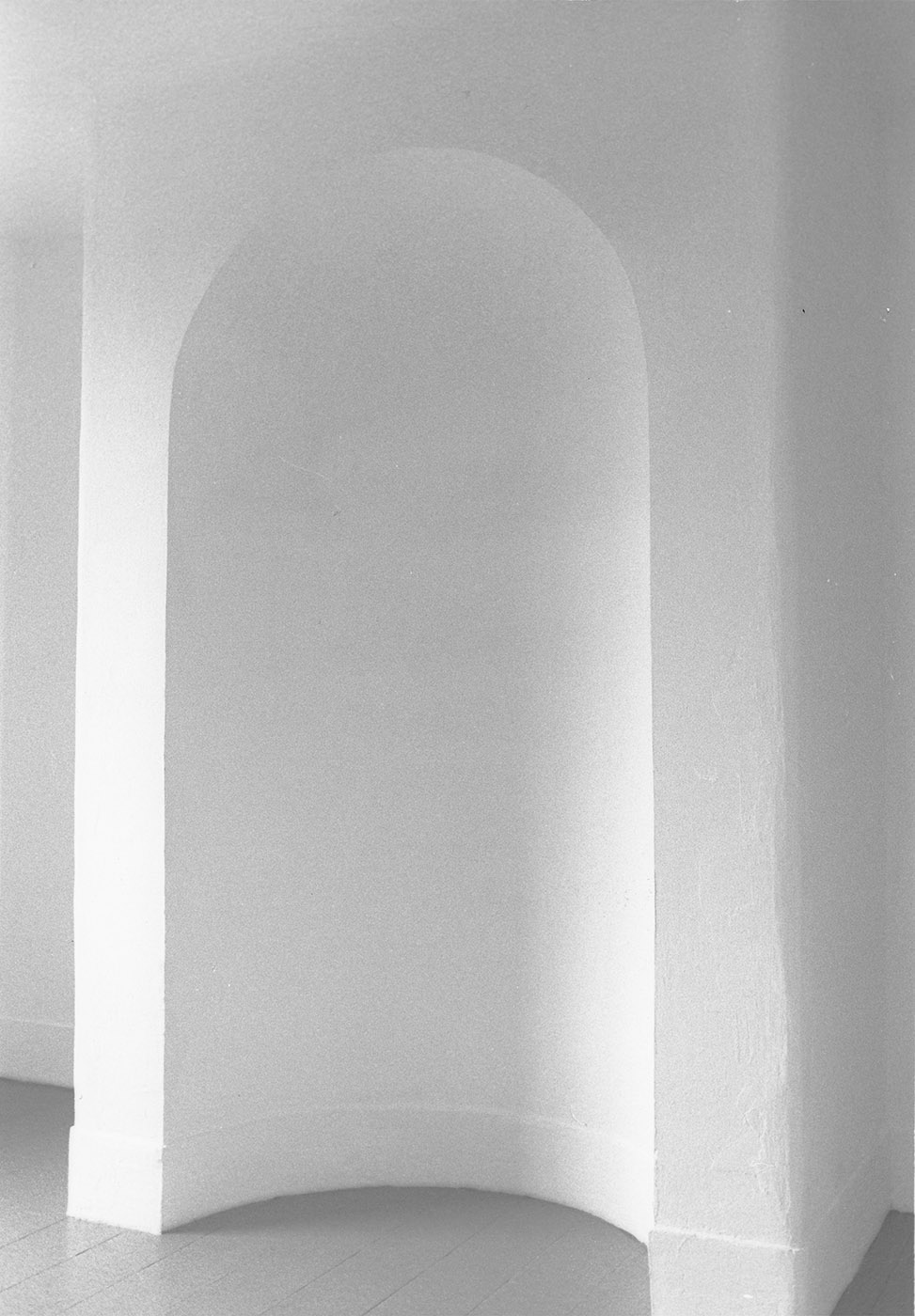
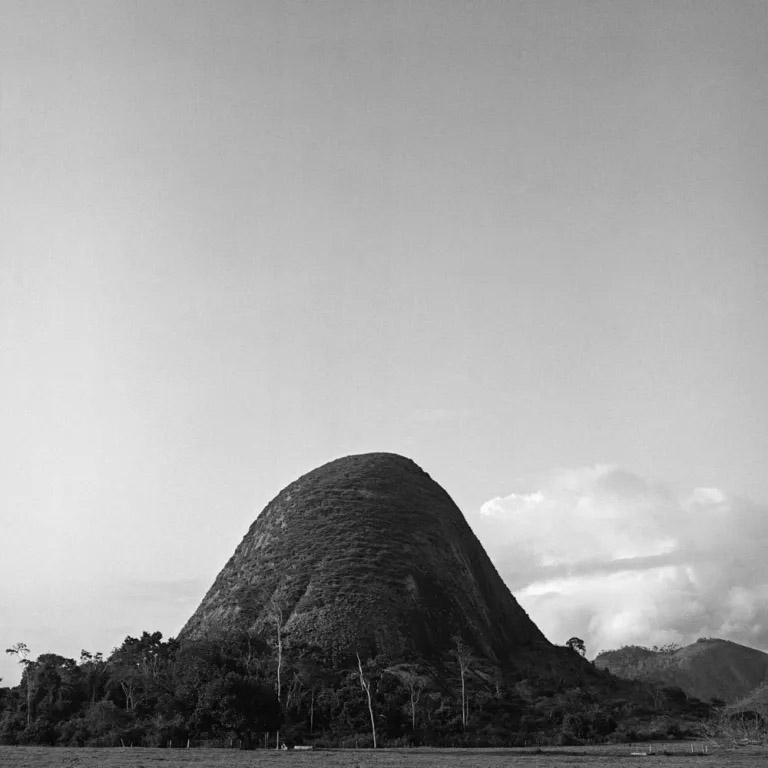
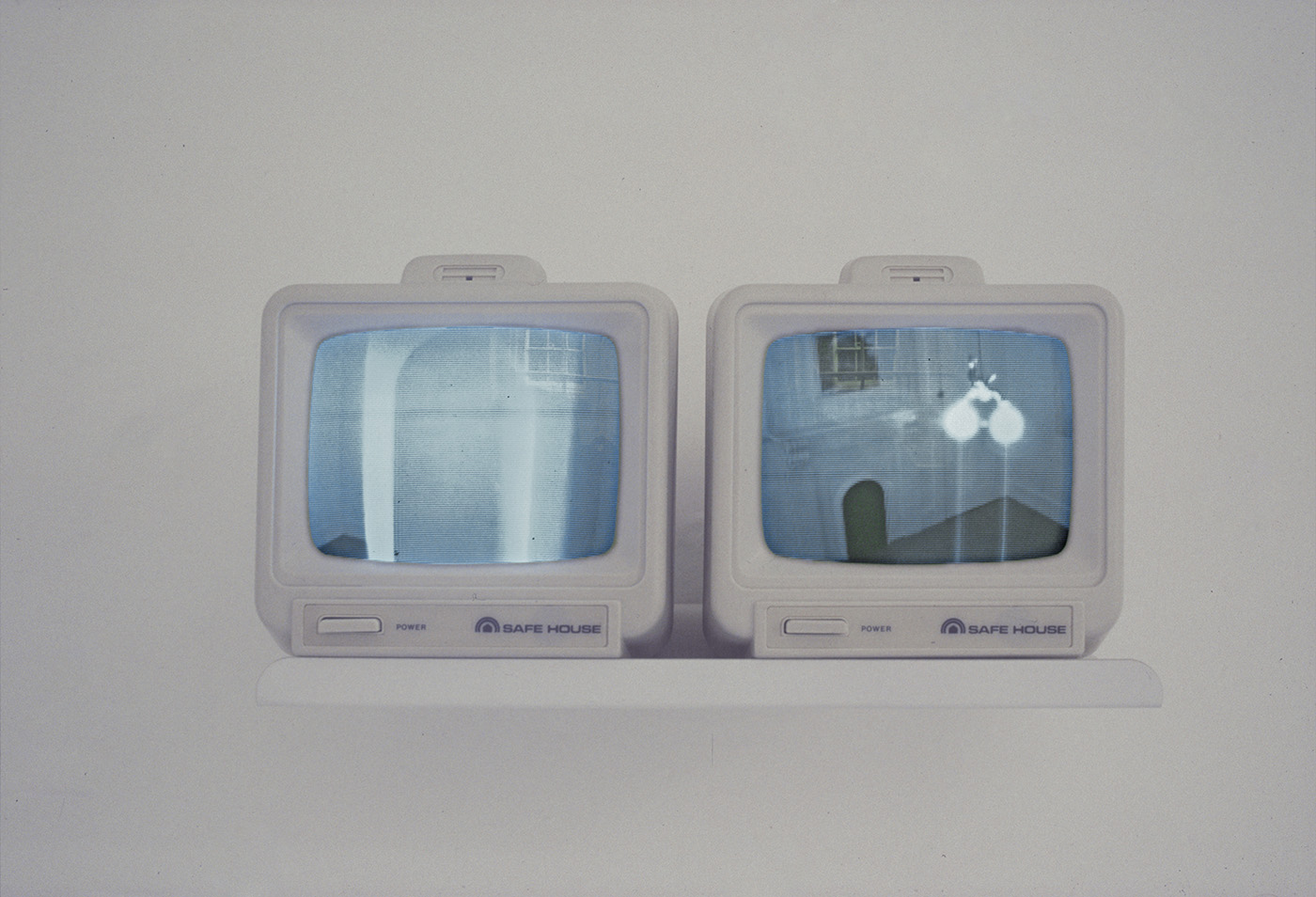
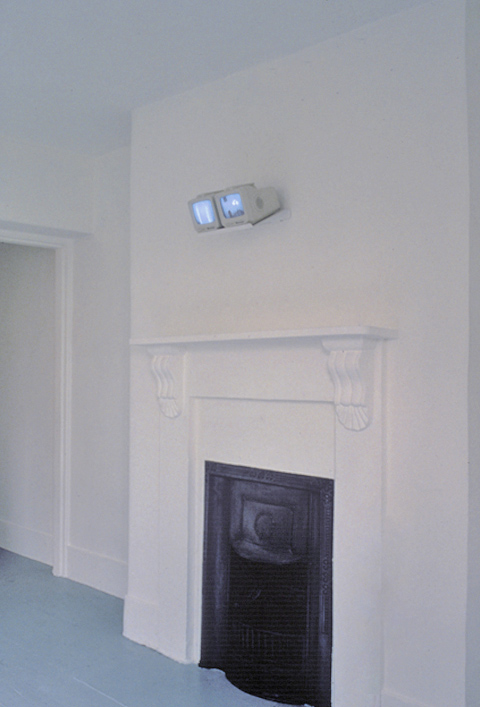
ECHT, the German word for “real”, featured Denise’s work in dialogue with two German artists, photographer Claudia Terstappen and sculptor Michael Krause. Denise’s CCTV system monitored the other works as well as registering the presence of visitors without recording them.
Illegal Eviction
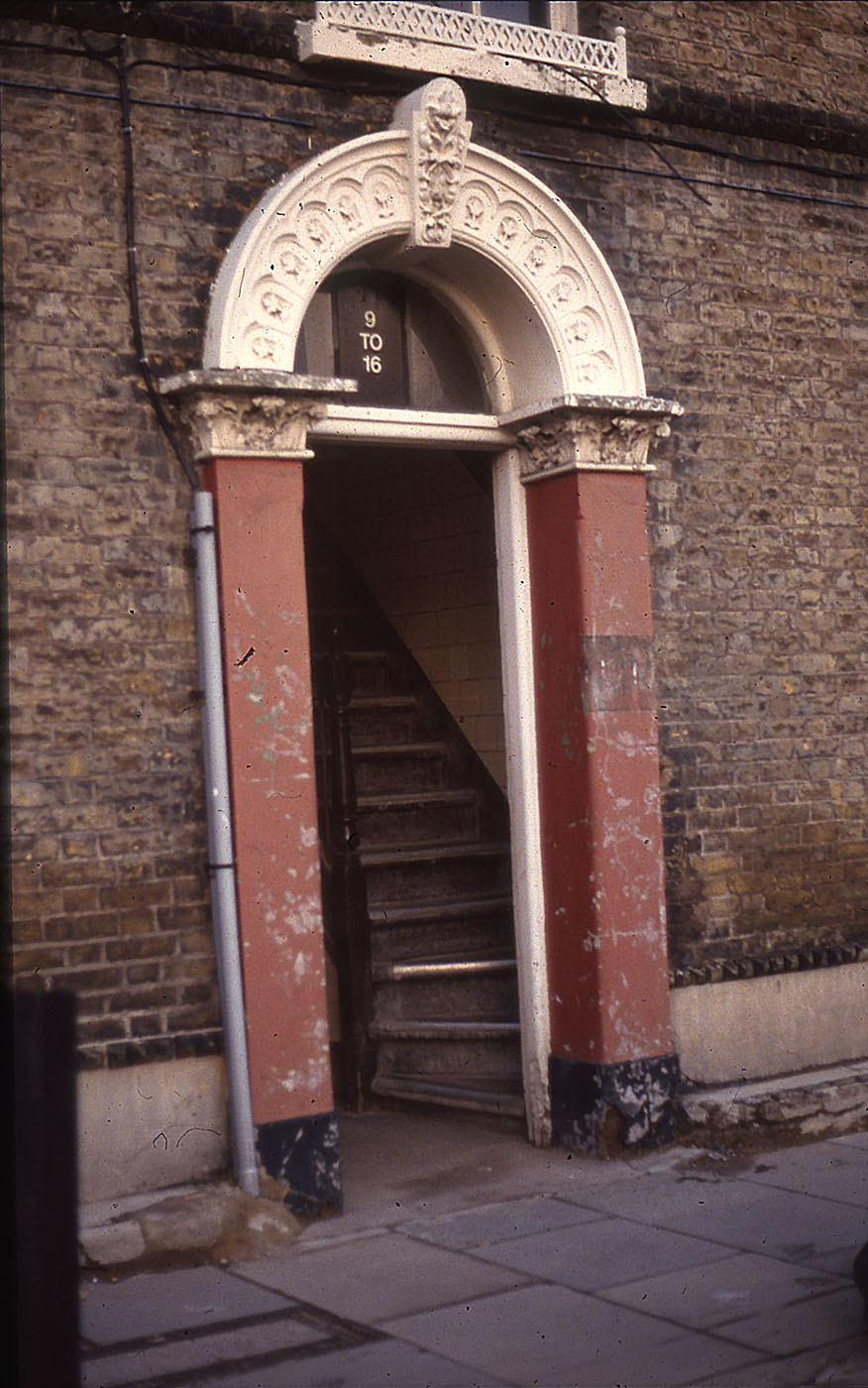
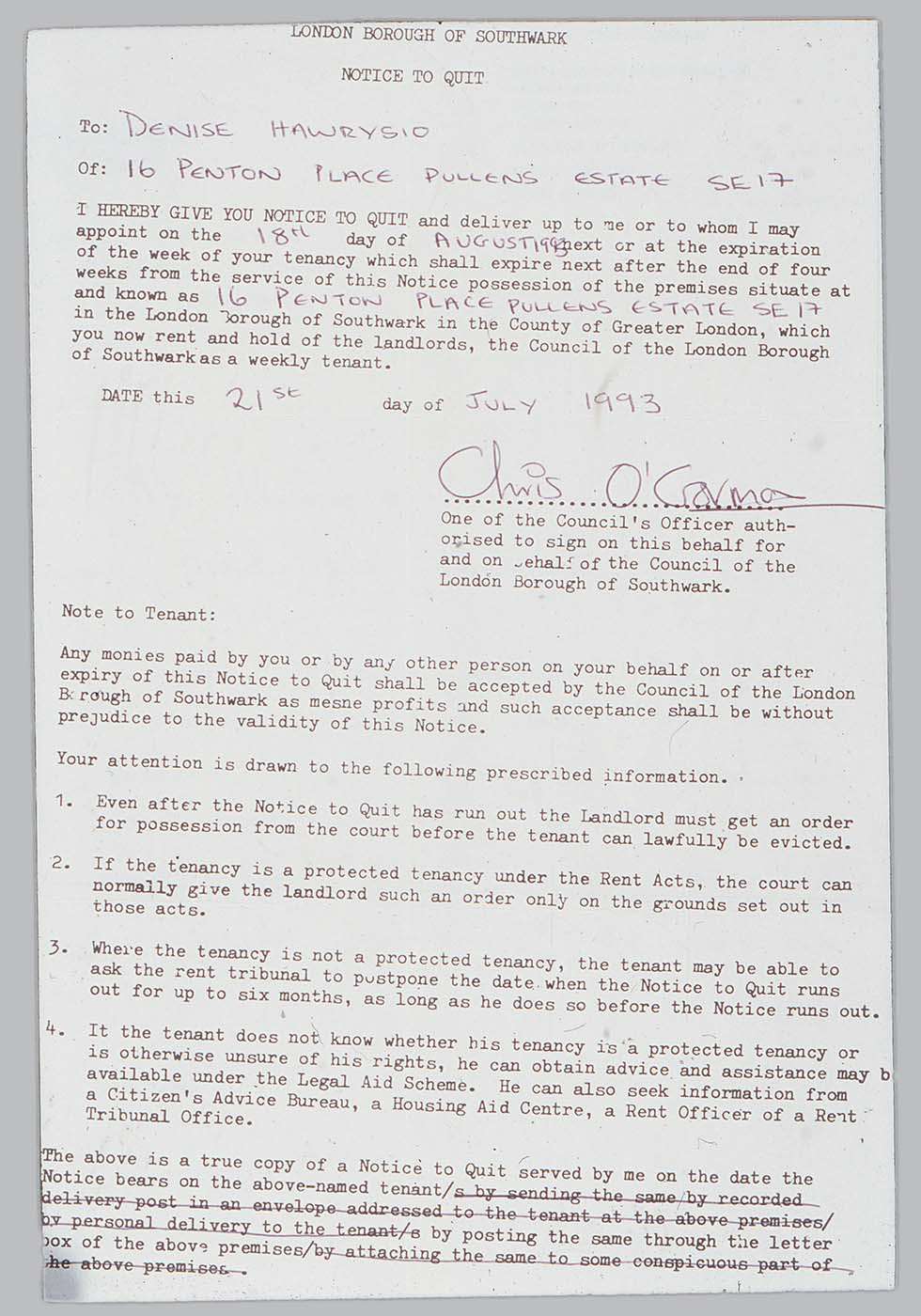
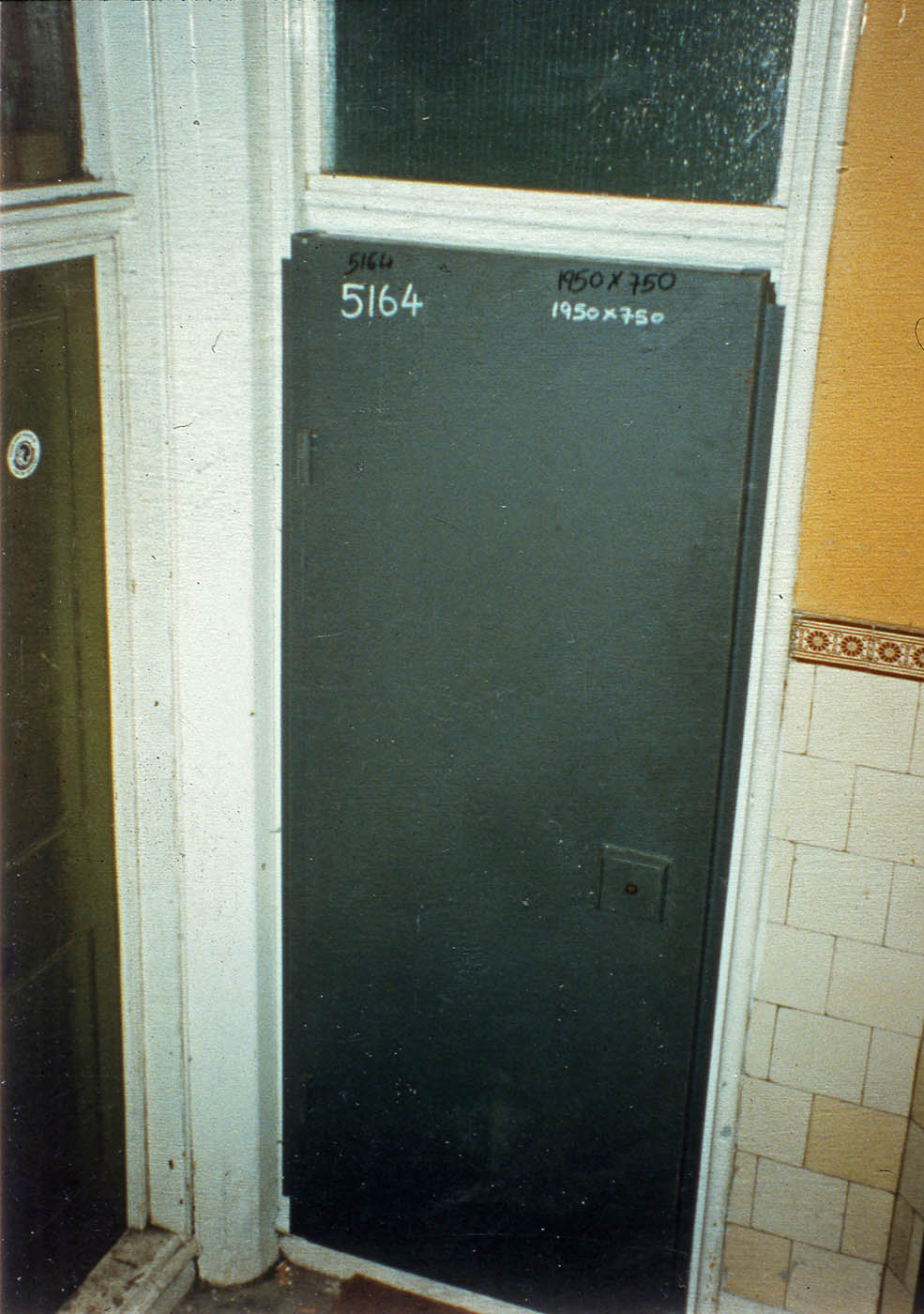
In August 1993, Southwark Council, believing that Denise was not living in the flat, and that she was operating a commercial enterprise — both of which were untrue — unlawfully broke in and locked her out by installing a steel door. Denise got a solicitor and, without having to go to court, was given her flat back. But this marked the end of the Malania Basarab Gallery project.