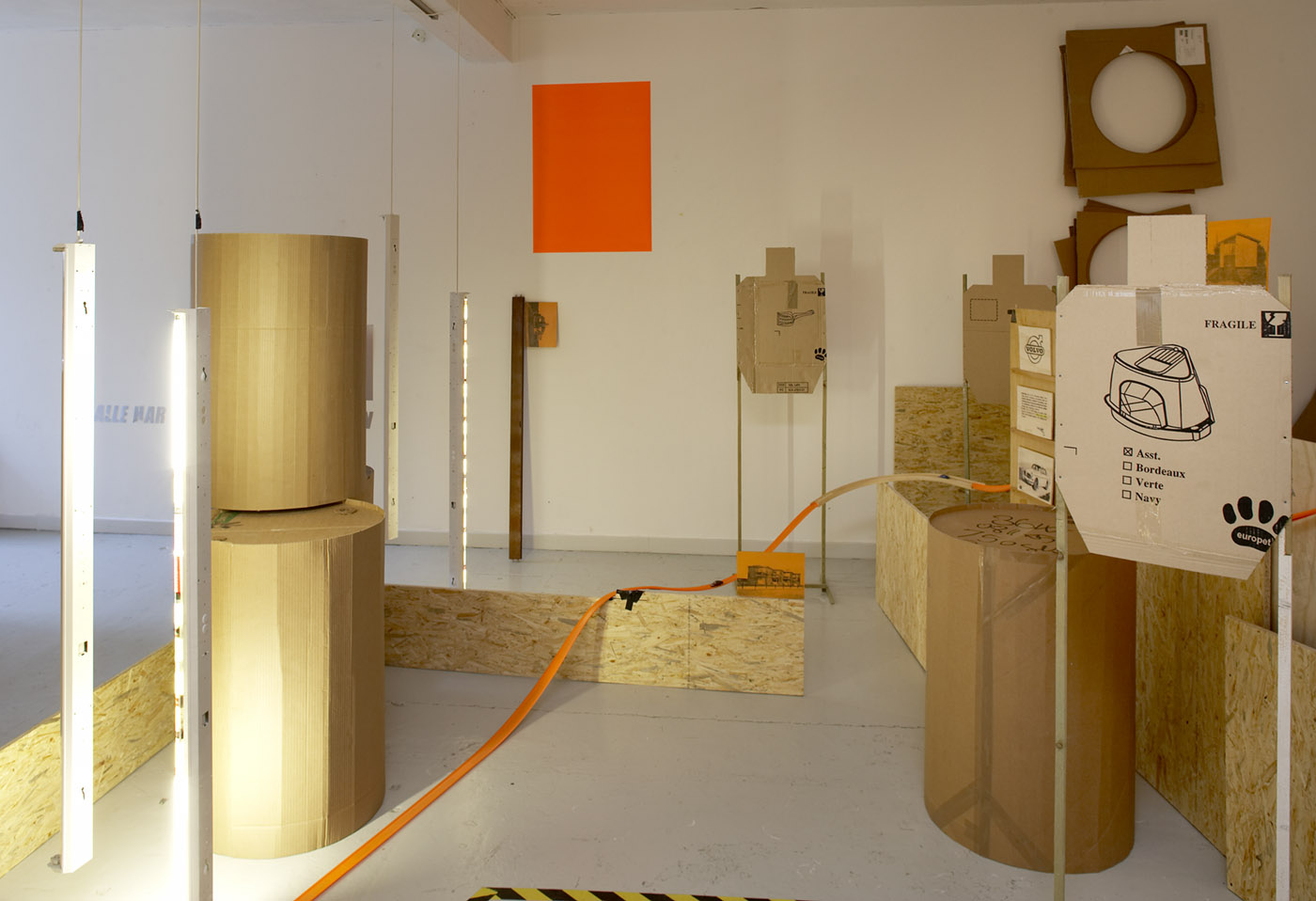
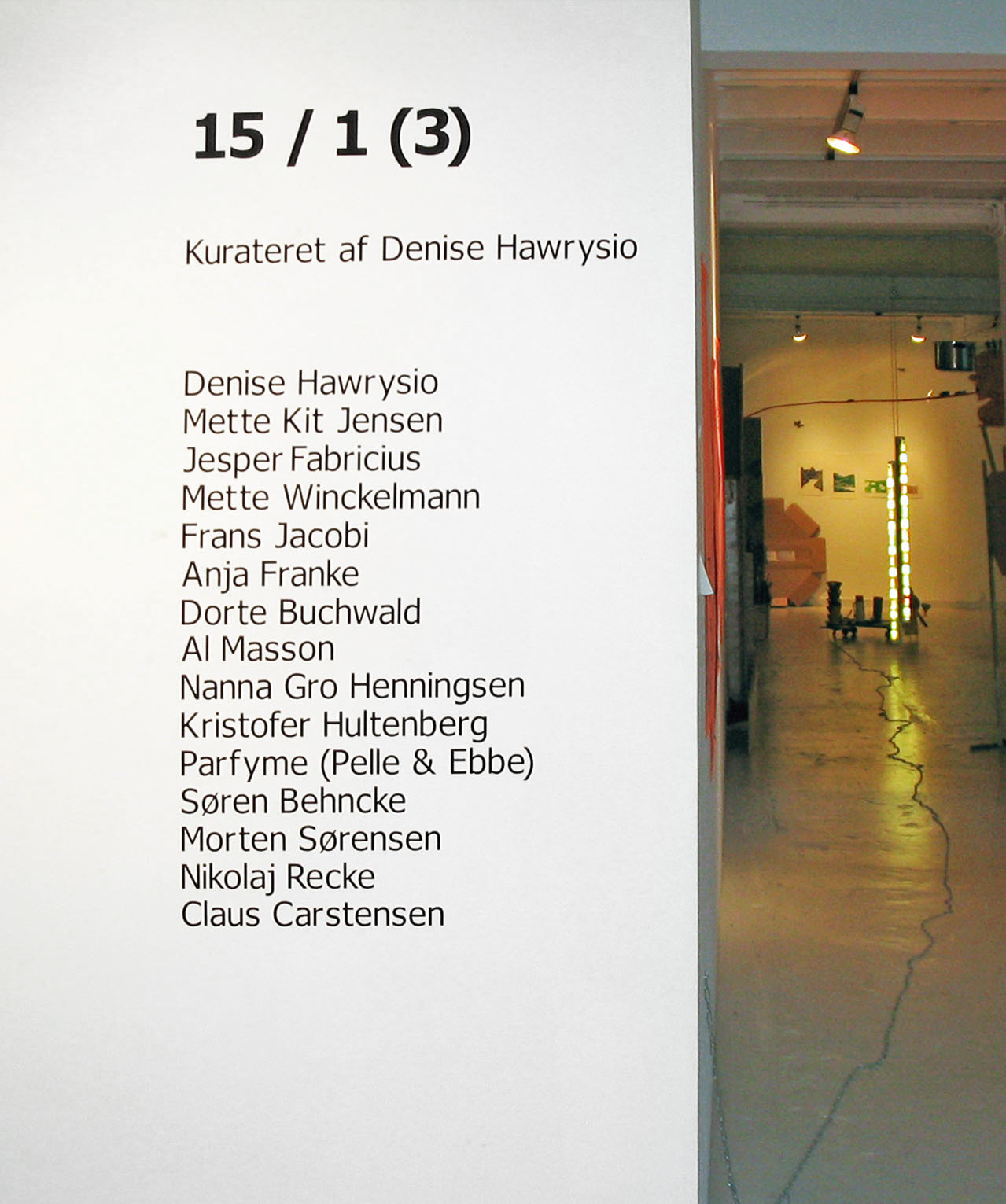
15/1 (3)
Soren Bencke, Dorte Buchwald, Claus Carstensen, Jesper Fabricius, Anja Franke, Denise Hawrysio, Nanna Gro Henningsen, Kristofer Hultenberg, Frans Jacobi, Mette Kit Jensen, Al Masson, Parfyme, Nikolaj Recke, Morten Sorenson, and Mette Winckelmann.
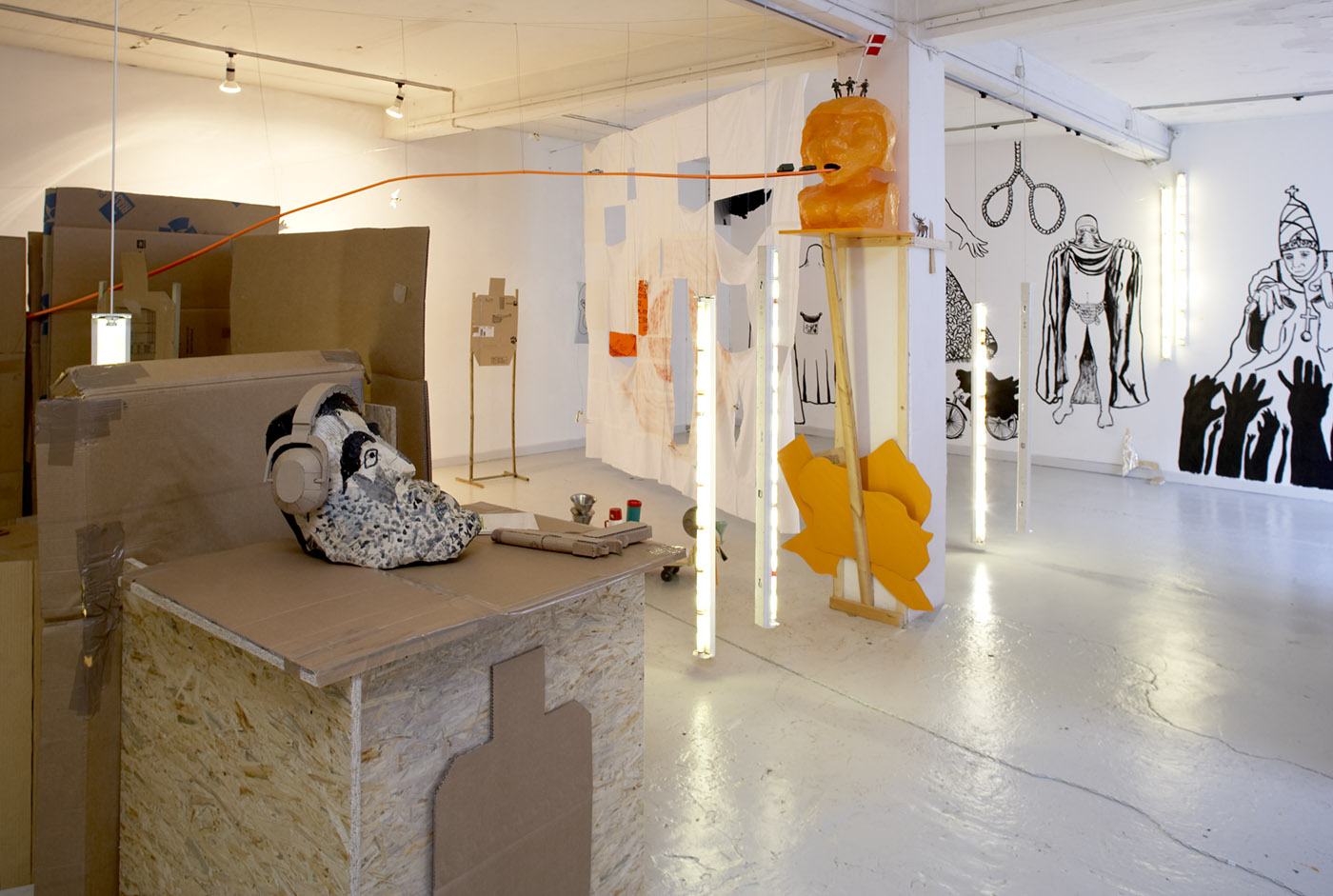
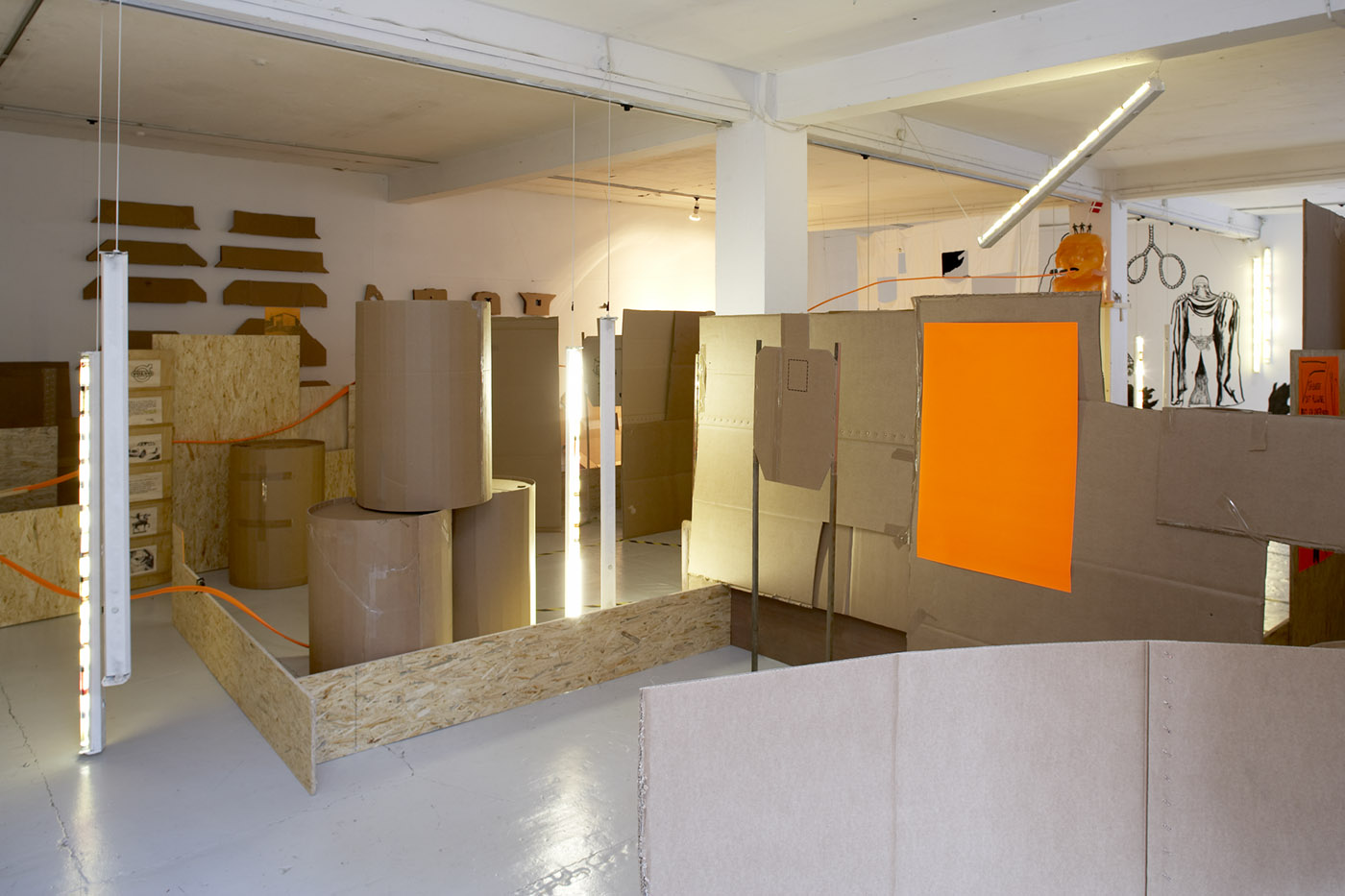
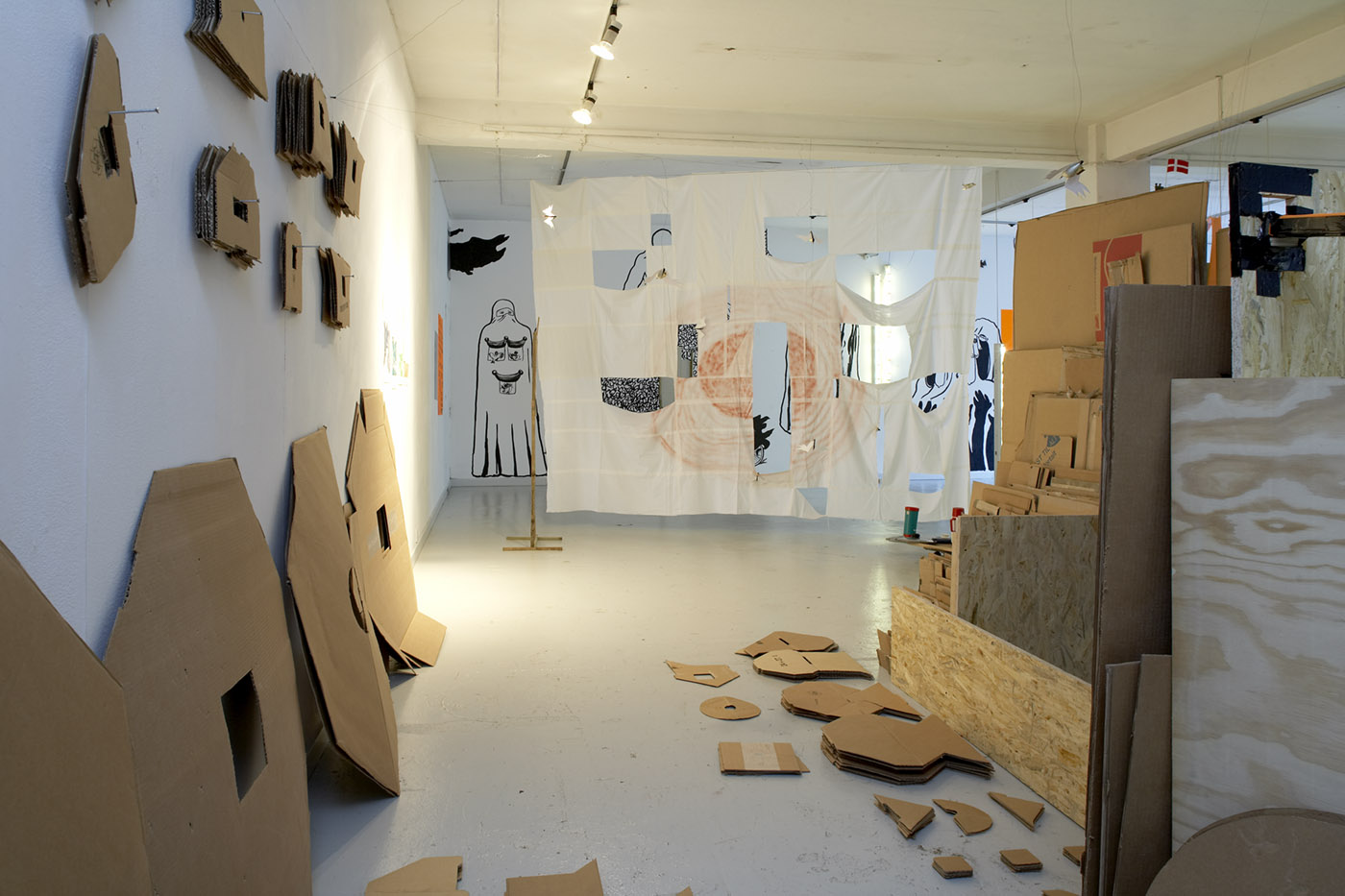
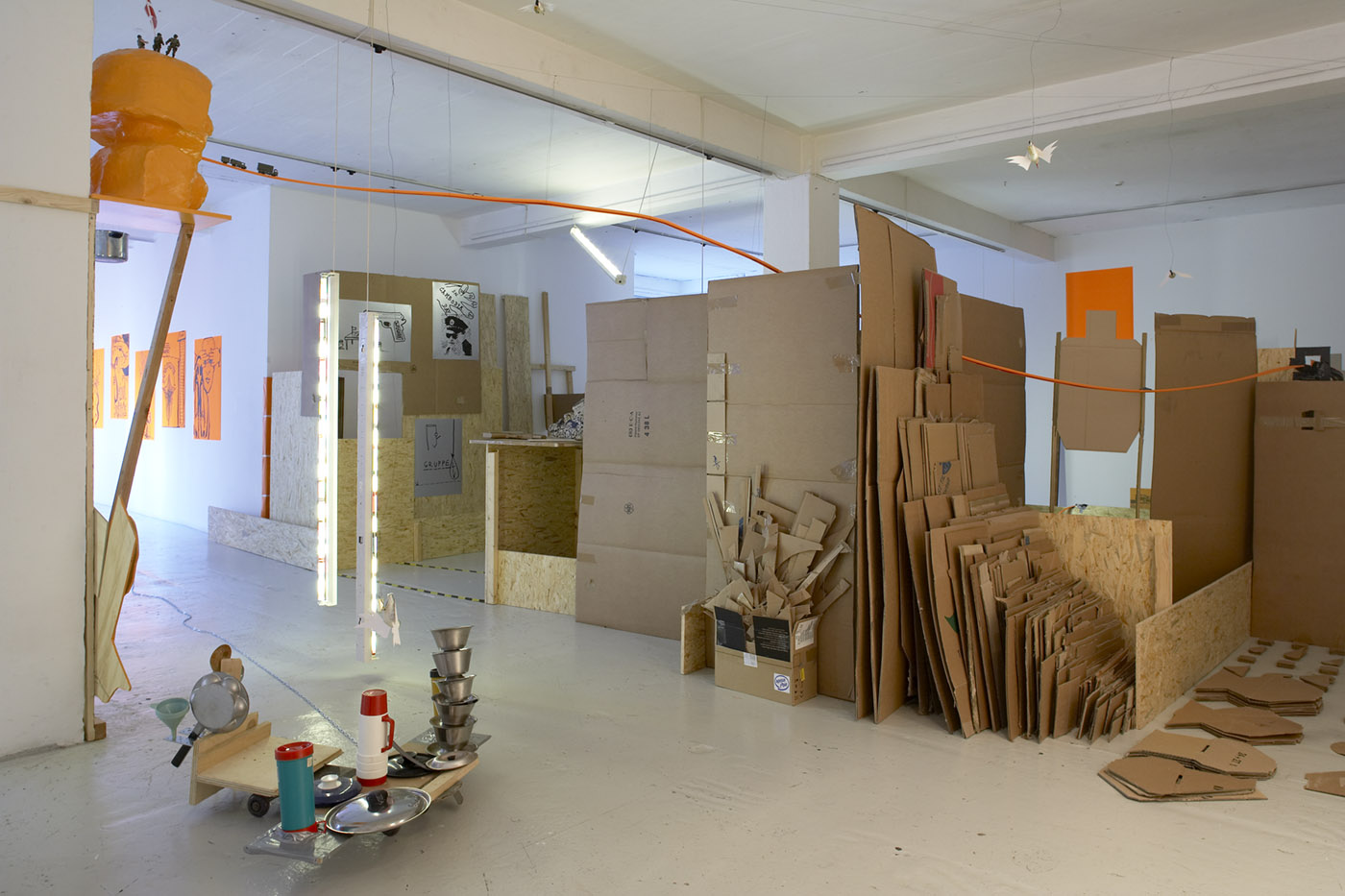
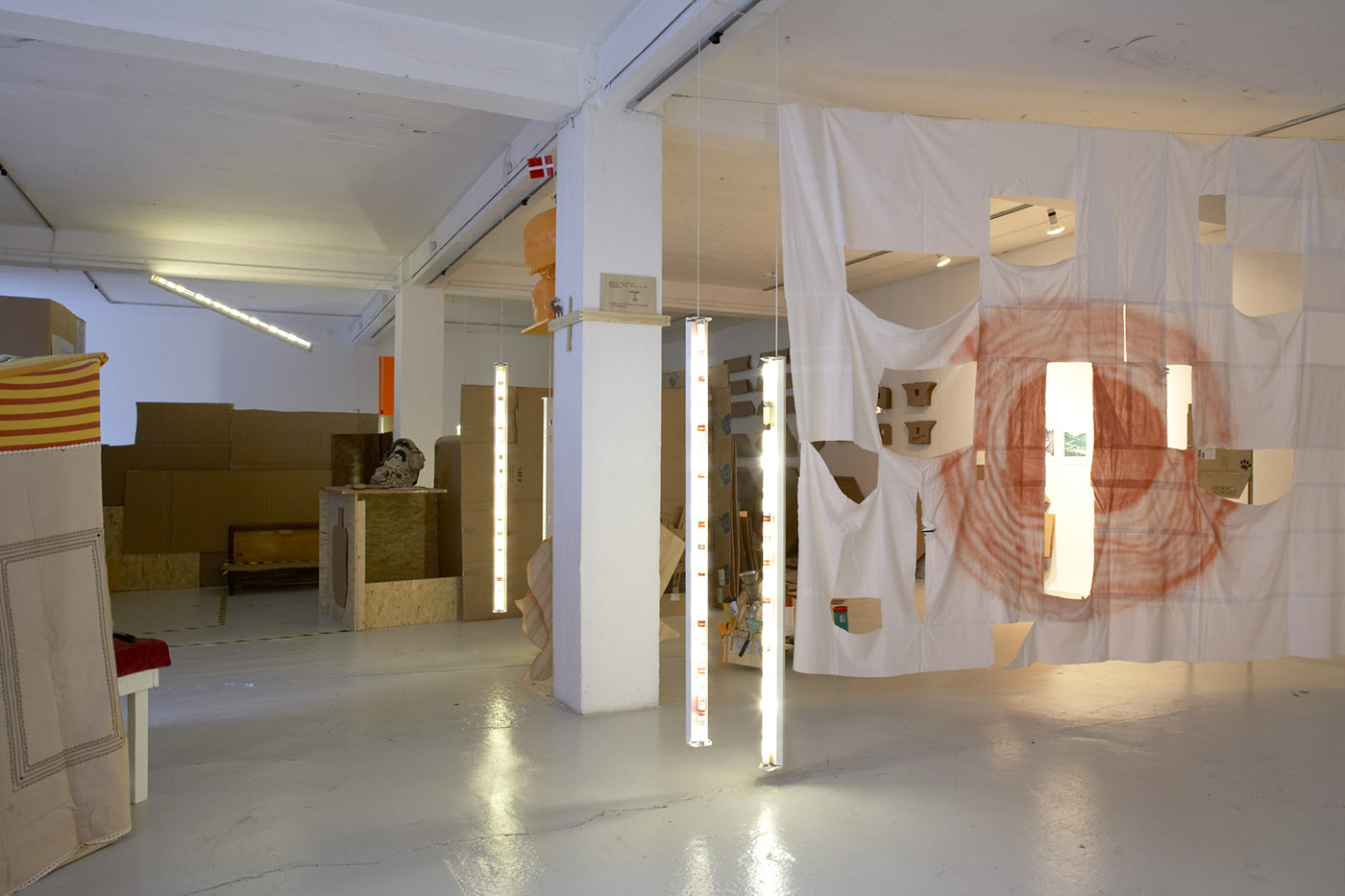
The third and final iteration of the 15/1 project took place in 2006 at O-Overgaden, Copenhagen’s Institute of Contemporary Art. Following the original 1992 exhibition at the Malania Basarab Gallery and its 2003 successor, 15/1 (2), this instalment concluded a decade-spanning social and conceptual experiment devised by Denise Hawrysio.
The project’s core premise was a rigorous exercise in “compositional anarchy”. Fifteen artists were each given two days to work within and respond to the state in which they found the gallery. While participants were free to alter, move, or respond to any work left by their predecessors, they were bound by one non-negotiable rule: no work could be removed from the space.
This process-led approach transformed the gallery into a cultural laboratory. By prioritising the act of making over a fixed outcome, the project explored the friction between individuality and community, and between collaboration and competition. As Emma Dexter noted in 100 Reviews Backwards, the result “conveys a sense of infinite possibility — there is none of the sense of closure associated with conventional exhibitions”.
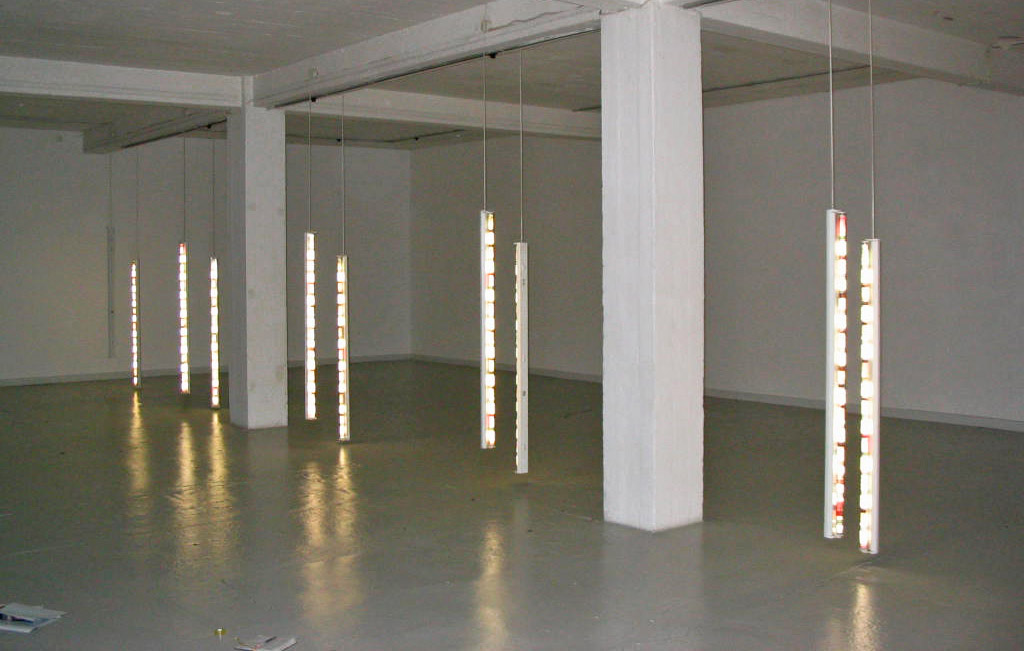
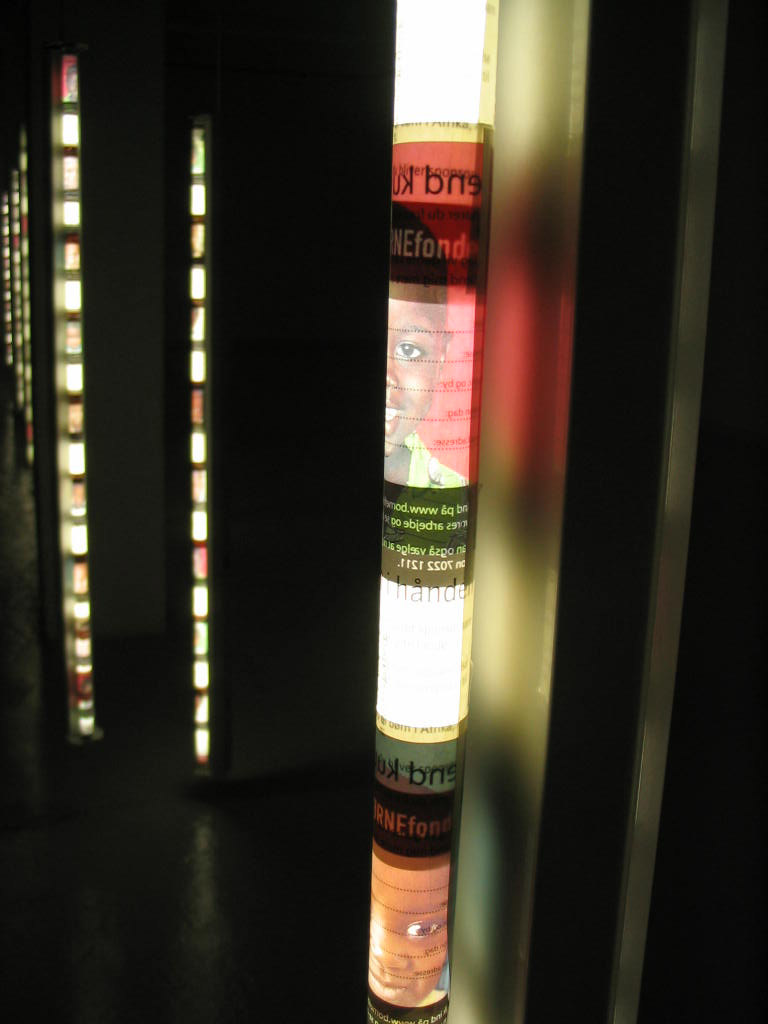
A central element of the 15/1 trilogy, defined by a relinquishing of traditional curatorial control, was Hawrysio’s dual role as both curator and participating artist. In each of the three shows, she was the first artist to enter the gallery. This placed her work in a uniquely vulnerable position; as the foundational layer, her contributions were subject to a full month of potential “accretion,” “obliteration,” or “negation” by the fourteen artists who followed. While the second London iteration reached a level of density that made it difficult to untangle individual histories, the first and third shows remained more legible, allowing more of the specific artistic contributions of each artist to be identified. Hawrysio’s first mark provides a hint of narrative for the exhibition, illustrating how subsequent participants chose to navigate the tensions inherent in collective practice — a challenge that saw the “implicit egotism” (Dexter) of authorship, most prominent in the second show, significantly tempered in Copenhagen.
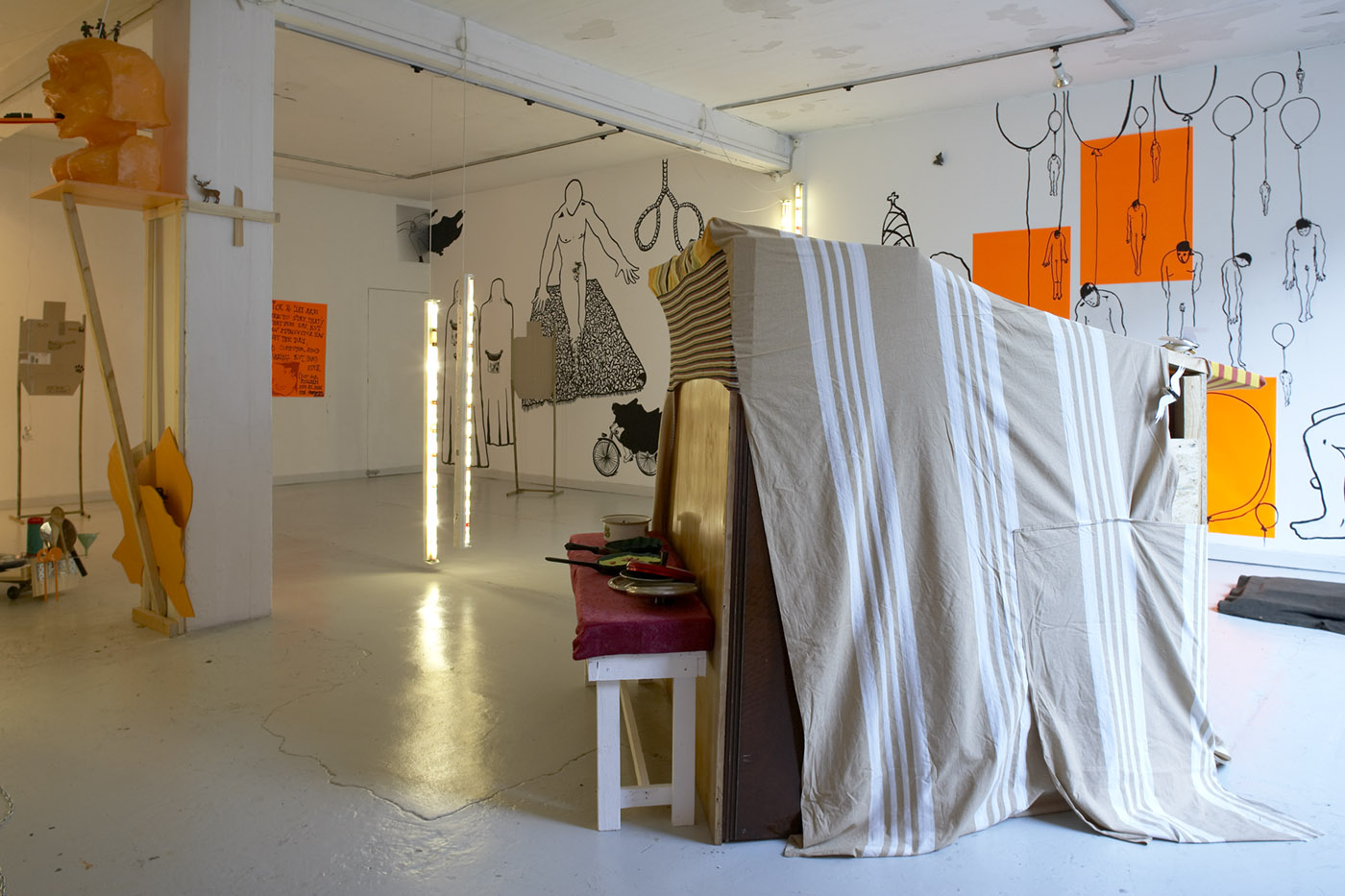
While the second London exhibition, 15/1 (2), was characterised by a “Dadaist anti-aesthetic” and a “battle of wills” (O’Reilly), the Copenhagen iteration took a markedly different tone. Drawing perhaps on the long history of Danish artistic alliances — from the Cobra movement to the Danish Situationist International — 15/1 (3) acted as a binding agent for disparate art communities.
Frans Jacobi’s contribution was a live performance enacted within the gallery once the first four artists had completed their interventions; his props were subsequently left in situ as traces of the event.
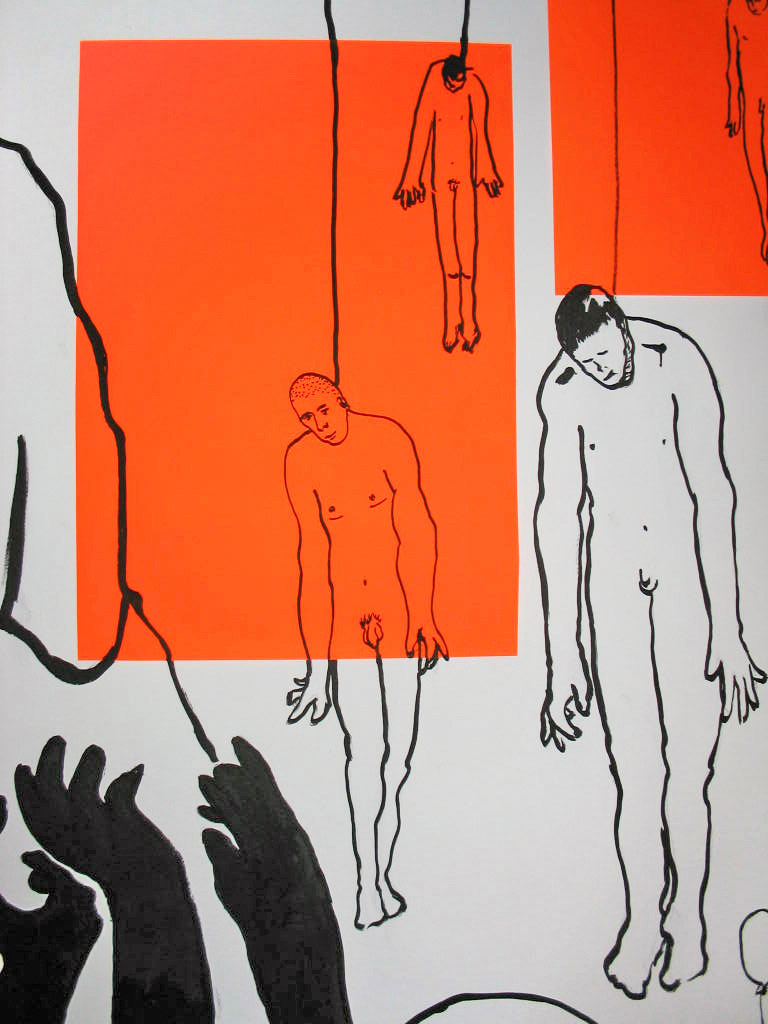
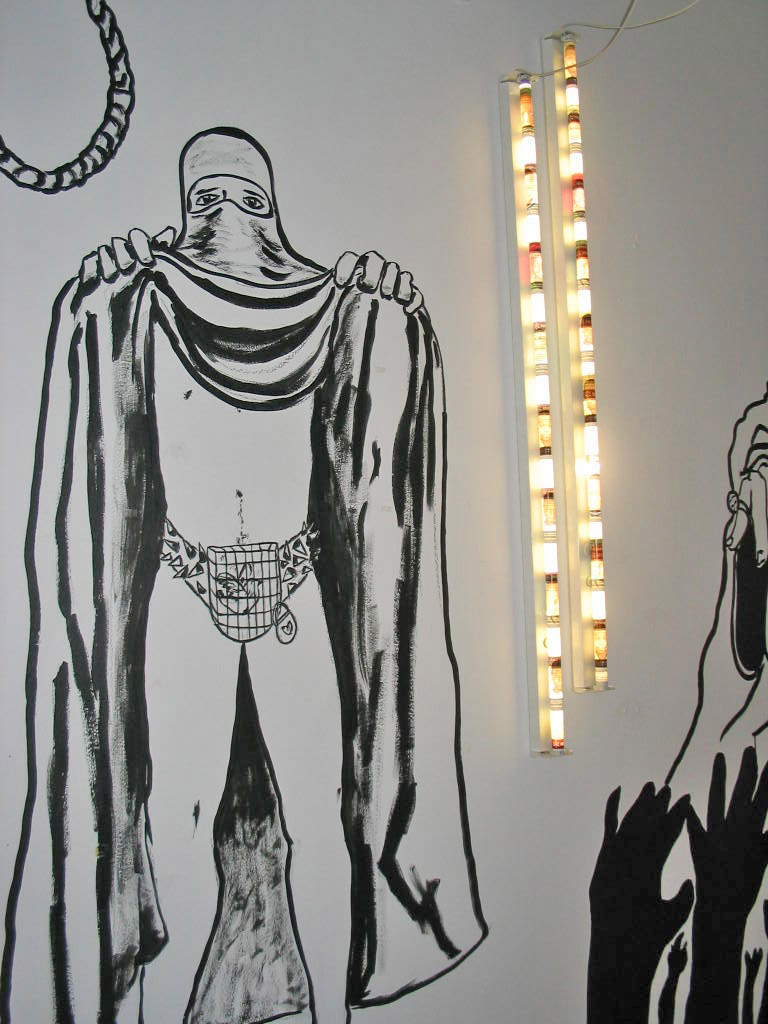
In a fascinating divergence from the London shows, several artists in Copenhagen took it upon themselves to “clean up” after others or to harmonise what they saw as incongruent aesthetic elements as the installation progressed. Indeed, two artists, Nikolaj Recke and Claus Carstensen, decided to share their days and worked together over the final 4 days of the installation period. Rather than the “collective strategy of negation” noted in 15/1 (2) by Sally O’Reilly in Art Monthly, this final chapter of the project was characterised by cooperative partnership. It successfully functioned as what Nicolas Bourriaud describes as a “model of action within the existing real world,” questioning our definitions of success, failure, and the social engagement that shapes creative practice.