An Etching Plate Feels No Pain
- SNAP Gallery, Edmonton, 2011
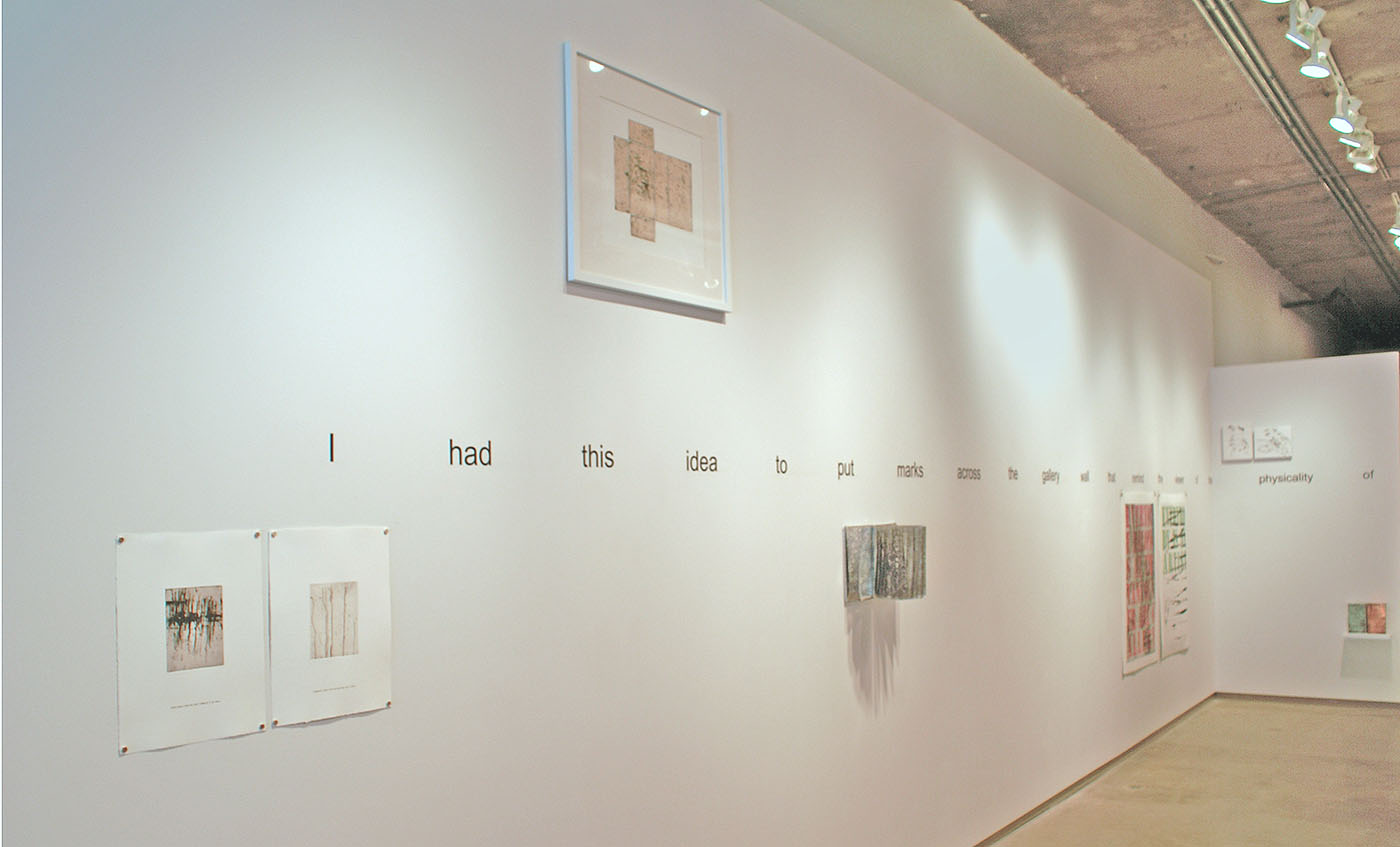
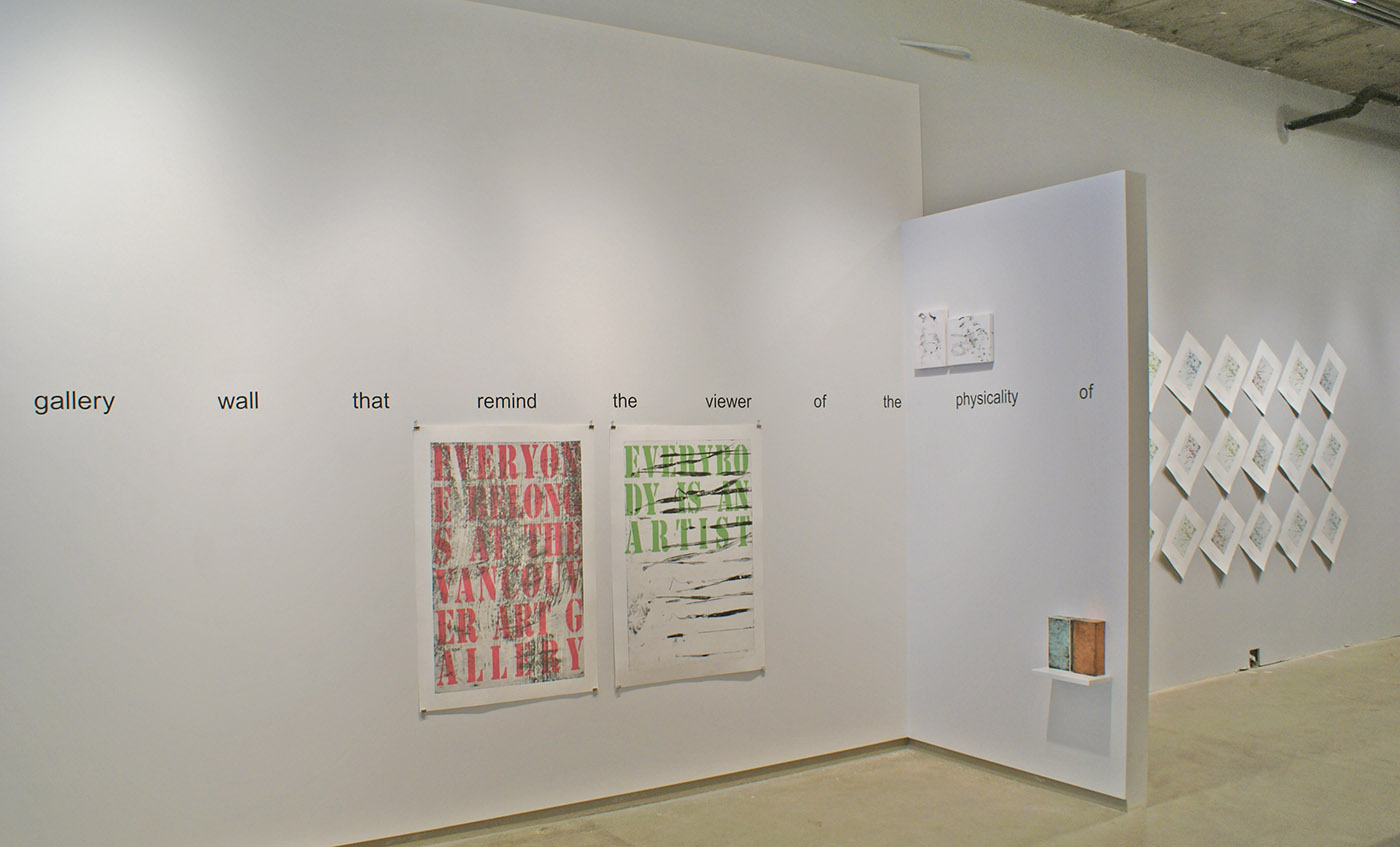
An Etching Plate Feels No Pain presents a site-specific recontextualisation of Denise Hawrysio’s conceptual print practice, disrupting the clean architecture of SNAP Gallery with deadpan humour, interventionist text, and unconventional installation methods. While sharing some of the core print content with her earlier Toronto and Vancouver exhibitions, Situational Prints, this iteration directly responds to the spatial and physical environment of the Edmonton gallery.
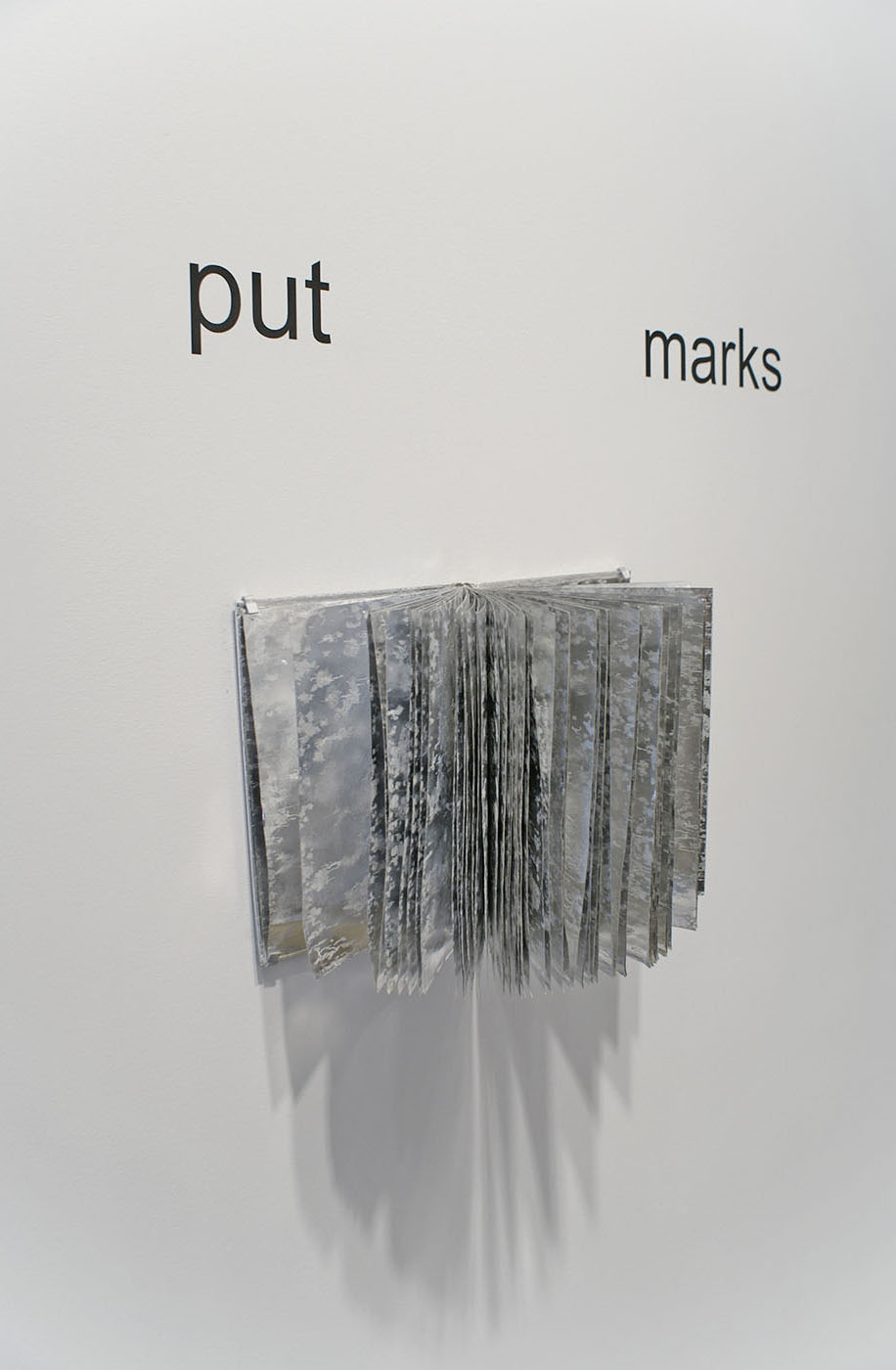
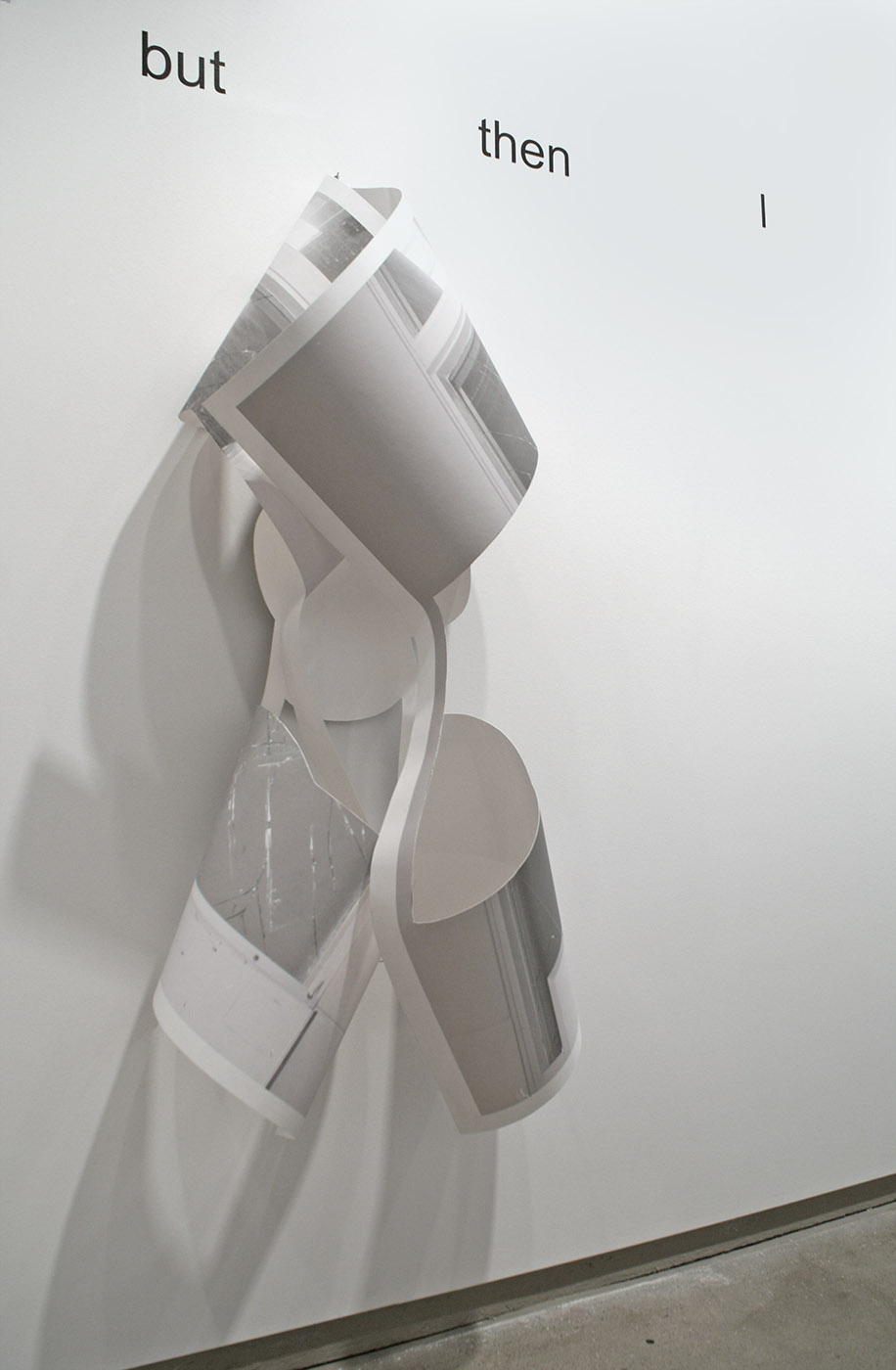
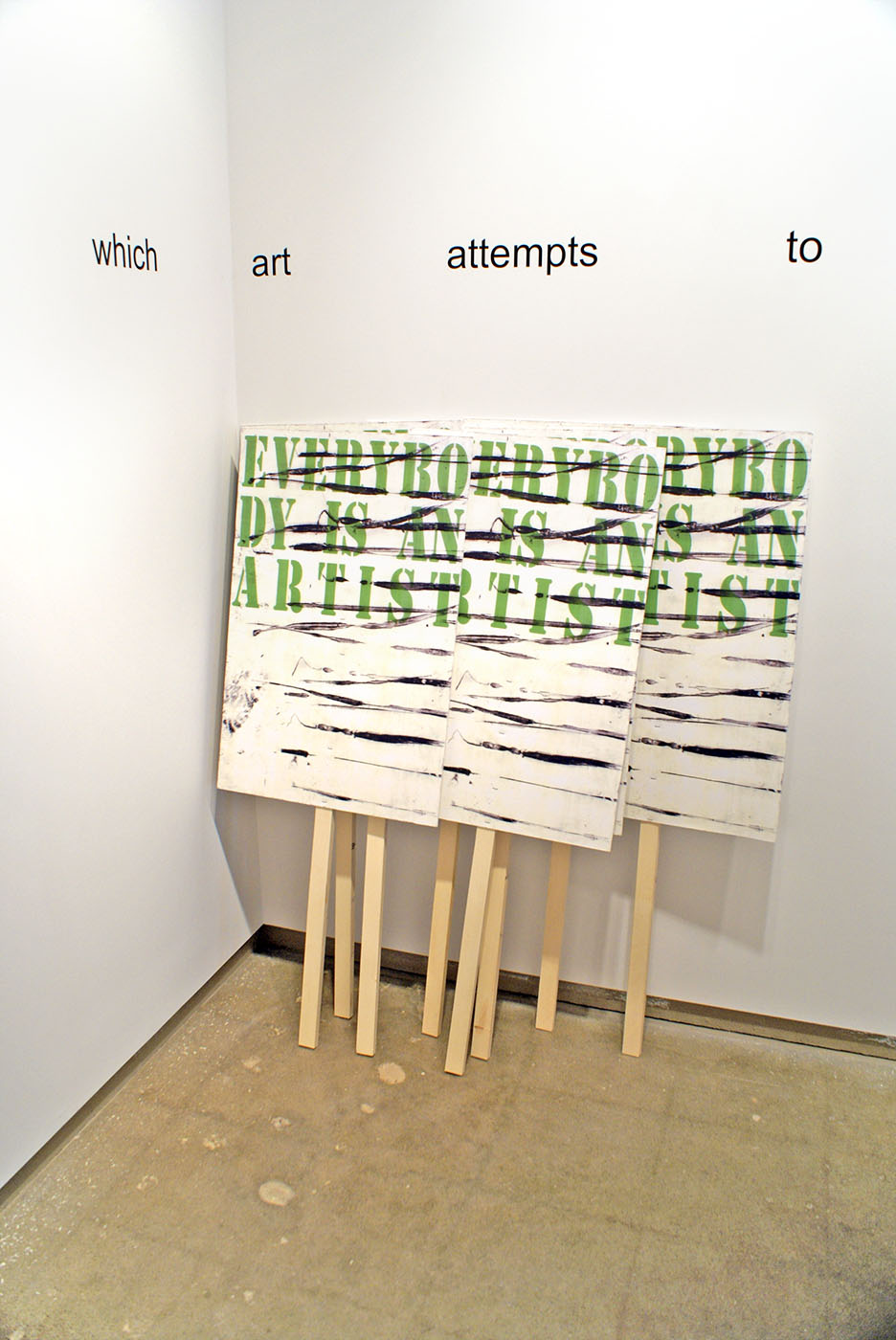
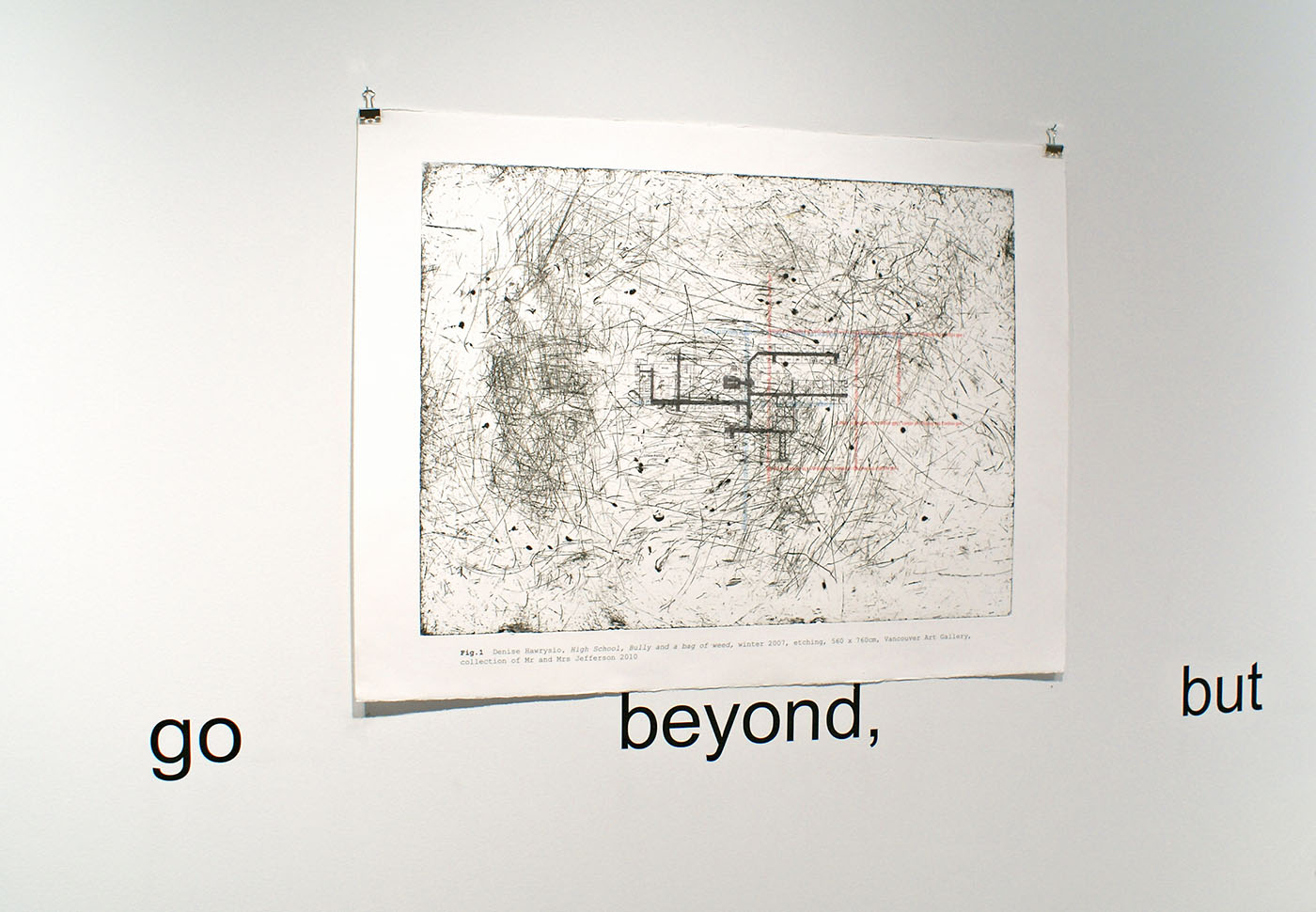
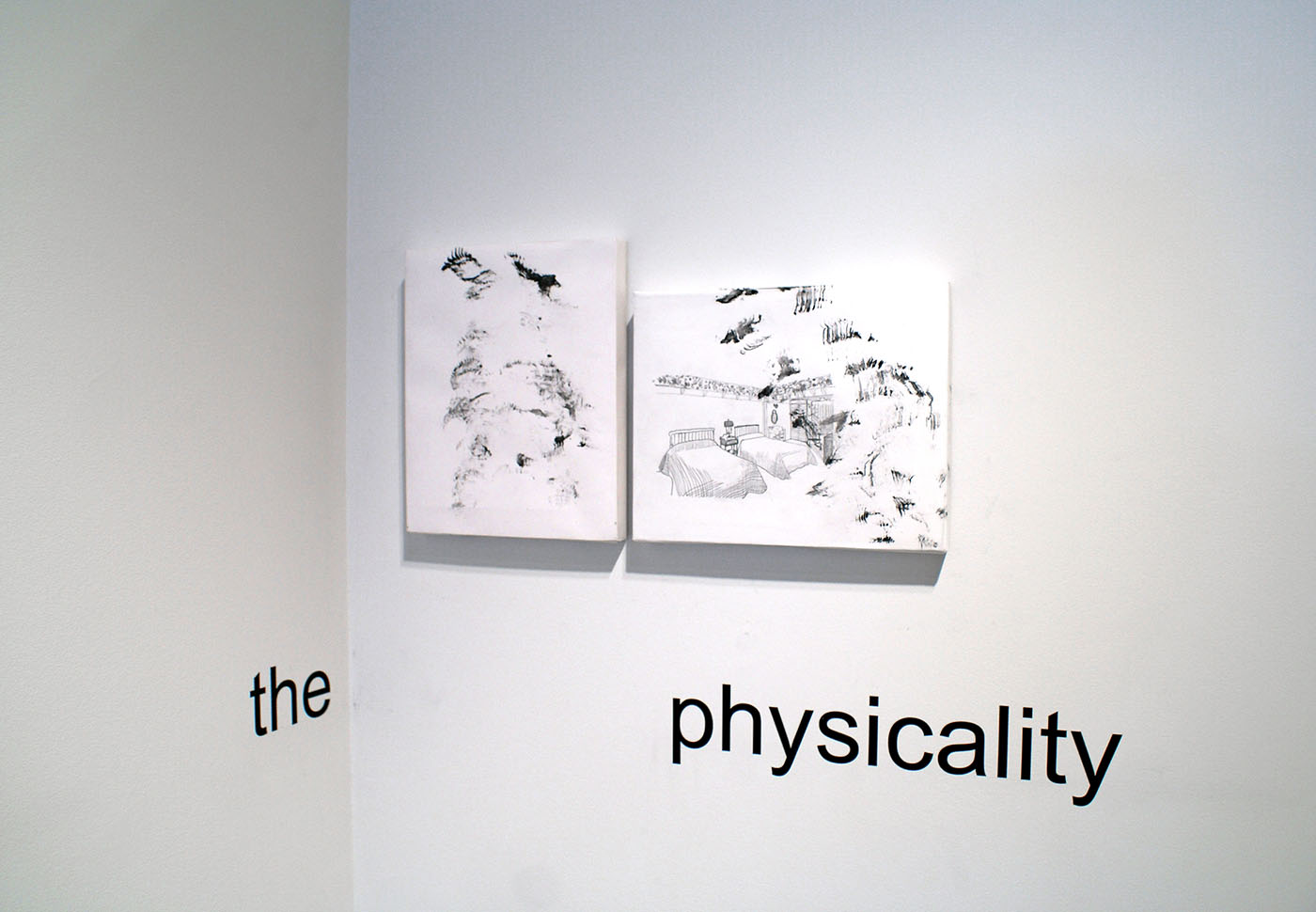
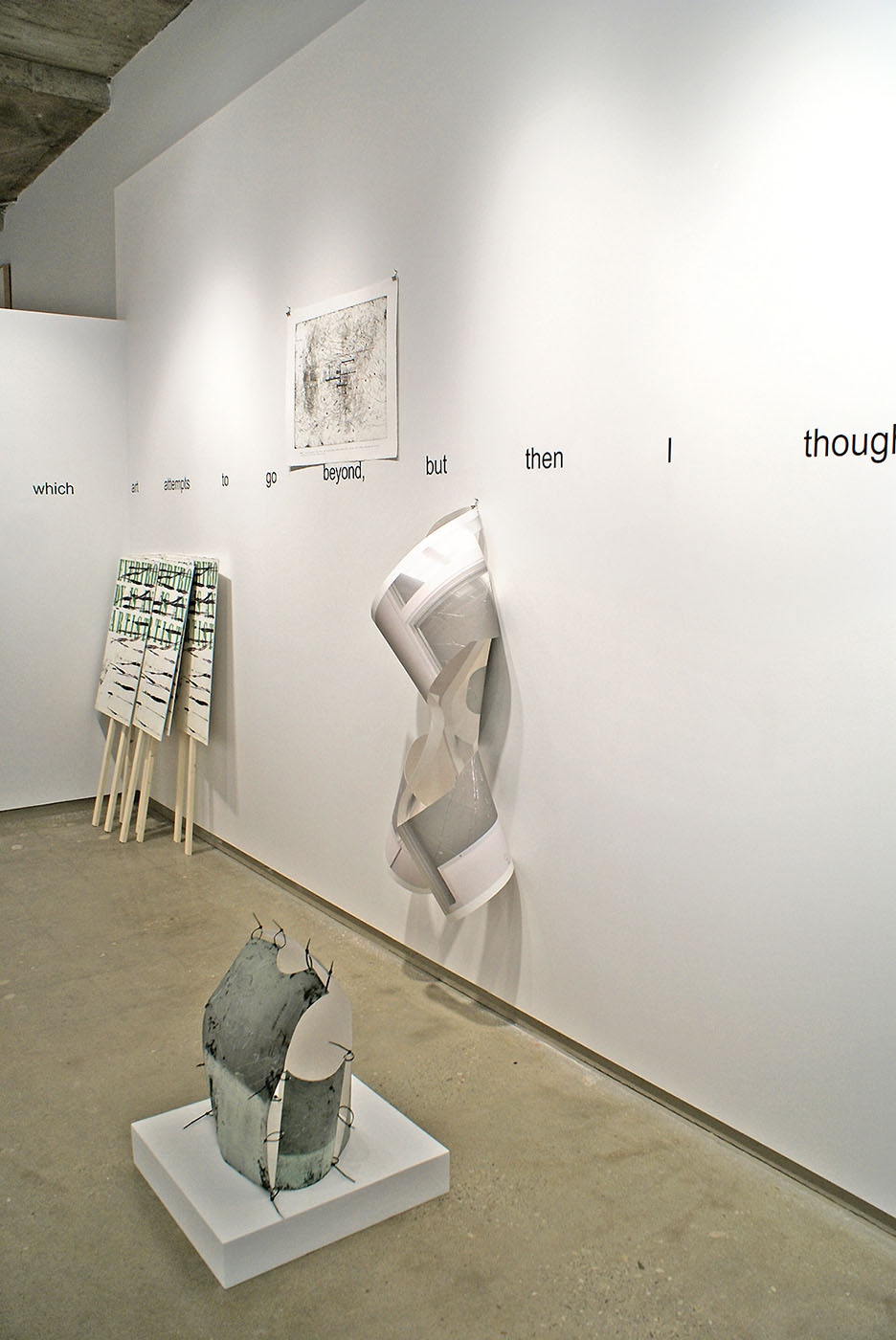
A vinyl text wraps continuously around the gallery walls, serving as both an architectural anchor and a self-reflexive joke: “I had this idea to put marks across the wall that remind the viewer of the physicality of looking, which art attempts to go beyond, but then I thought better of it.” This text intersects directly with the physical positioning of the work. Rather than following traditional, flattened gallery framing, the prints are subjected to sculptural and spatial manipulation. Large, unframed prints are contorted into suspended, free-hanging forms, small works are nestled tightly into architectural corners, and a heavy, metallic bookwork is mounted directly beneath the running wall narrative.
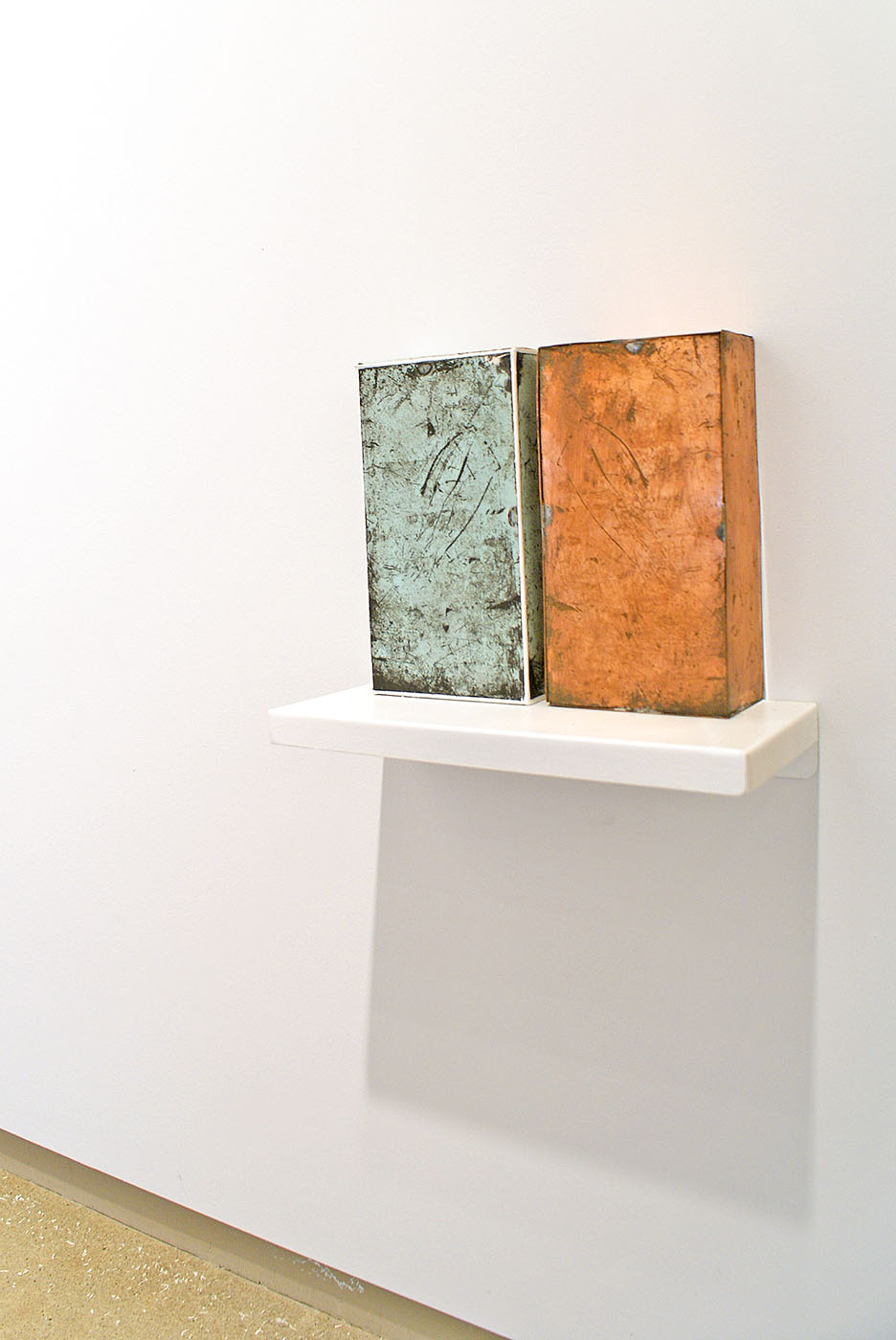
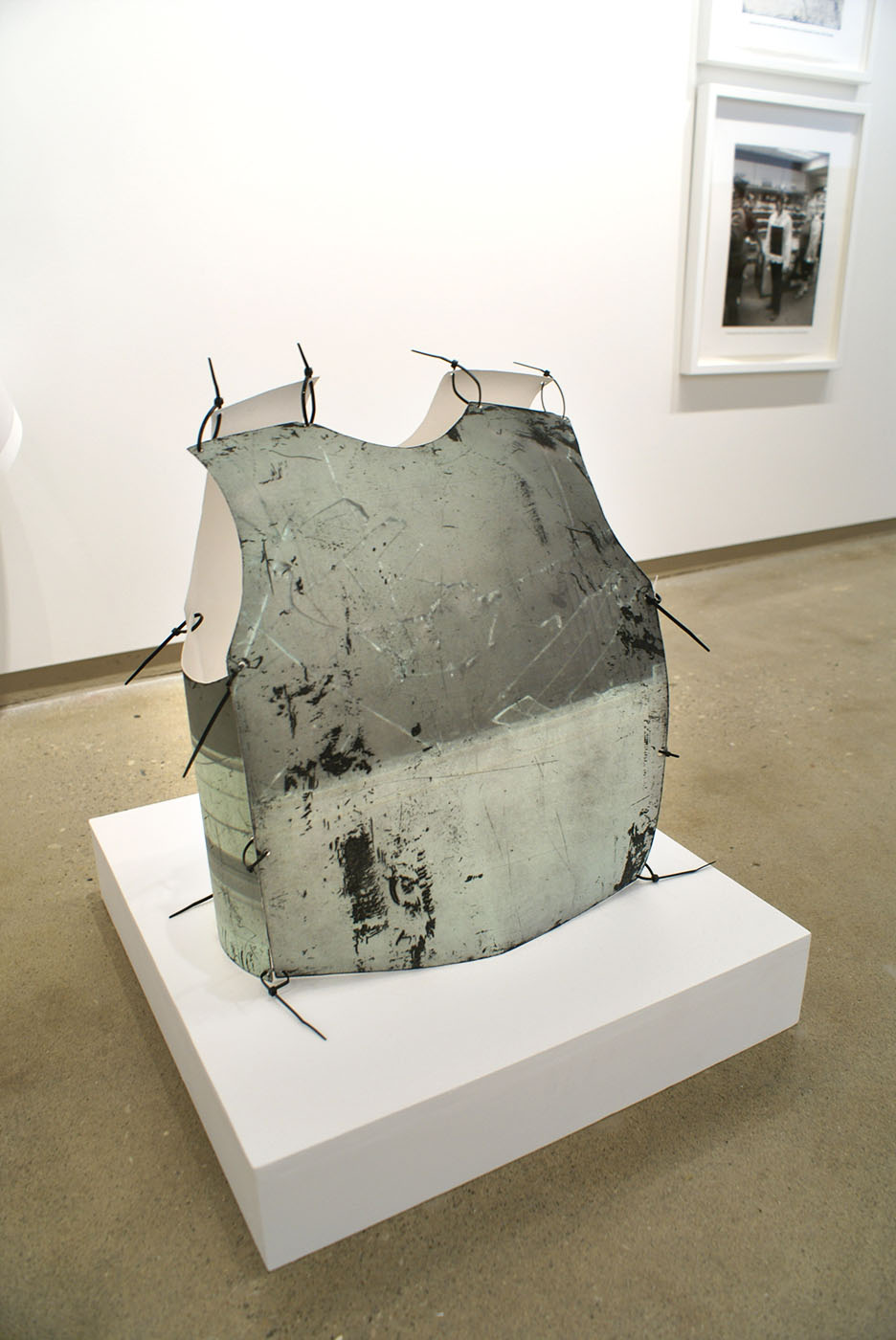
The exhibition focuses heavily on the indexical nature of printmaking, treating the etching plate as a passive repository for real-world encounters and casual trauma. Works in the gallery register the physical marks of a plate slid down Mount Rundle, run over by a speed bump, or kicked across a schoolyard by a child. In the central series Etching Plate as Shield, alongside pieces tracking “latch marks from the door slamming in my face,” the forensics of the scarred surfaces take on a distinctly anthropomorphic quality. The work balances the genuine anxieties of urban vulnerability — which Dean Kenning’s accompanying publication text links to Freud’s psychological “protective shield” — with a comic deflation of artistic heroism.
Leaning casually against the walls, protest-style placards reading EVERYBODY IS AN ARTIST frame the gallery intervention through the lens of “direct visual action” (see A User’s Guide to Direct Visual Action). They activate a democratic, Situationist ethos where accidental, non-intentional gestures are elevated to marks of aesthetic merit, directly anchoring the exhibition’s friction between rigorous print formalism and everyday social realities.
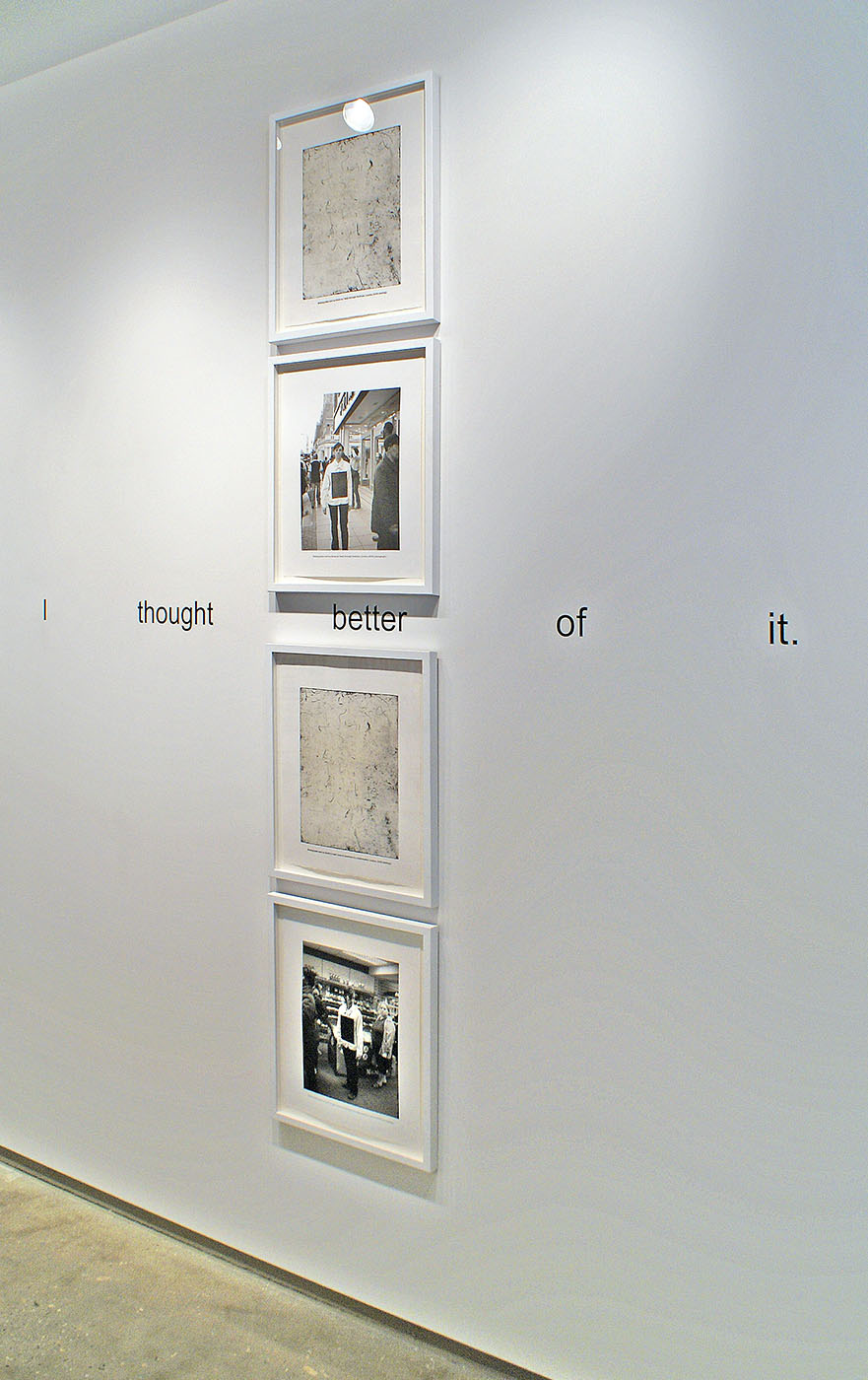
In April 2008, the British newspapers were lapping up a publicity photograph of Harriet Harman, Deputy Leader of the Labour Party, touring her socially deprived South London constituency of Peckham wearing a stab-proof jacket. Amidst a spate of teenage knifings in London, Harman’s photo op alongside neighbourhood officers in their ‘stab-vests,’ seemed both an unconscious admission of policy failure, and a misguided gimmick which placed the politician beyond the lives of the people she represented, who, after all, went about Peckham in broad daylight without the benefit of body armour. I was reminded of Harman’s PR gaffe when I saw Denise Hawrysio’s series of works Etching Plate Used as Shield, respectively followed by the clauses: as I walk through Peckham; as I accidentally step into rival territory; and in case I have to intervene in a confrontation. Each title is printed once below an etching, and a second time below a juxtaposed, identically sized photograph of the artist in a mundane public setting: walking down a high street, or queuing at a newsagent’s counter; in each shot a dark rectangular plate partially covers her torso. The incongruity of Hawrysio’s protective attire pulls together, and comically deflates, the fear-mongering media hysteria about crime, and the heroic, or socially conscious artist’s imperative to be ‘in the thick of it,’ located where the real action is. This ‘reality’ is vouched for through the medium of photography — yes, Hawrysio was really there. But in the bare abstract marks of the juxtaposed etchings, we have a yet more viscerally direct relation to the real.
A metaphorical violence runs throughout Hawrysio’s prints through an analogy with the process of etching, one that involves exposure and abrasion. It was the mental after-effects of trauma that lead Freud to speculate, in Beyond the Pleasure Principle, about the origins of organic life and their instructive value for thinking about a defensive psychological anatomy: a ‘vesicle’ (all surface), a ‘little fragment of living substance suspended in the middle of an external world charged with the most powerful energies…would be killed by stimulation if it were not provided with a protective shield against stimuli.’ As anyone who lives in London knows, it’s not a good idea to leave home without at least putting on your psychological body armour. — Dean Kenning, An Etching Plate Feels No Pain
Press