A User’s Guide to Direct Visual Action
L’Atelier Circulaire, Montréal
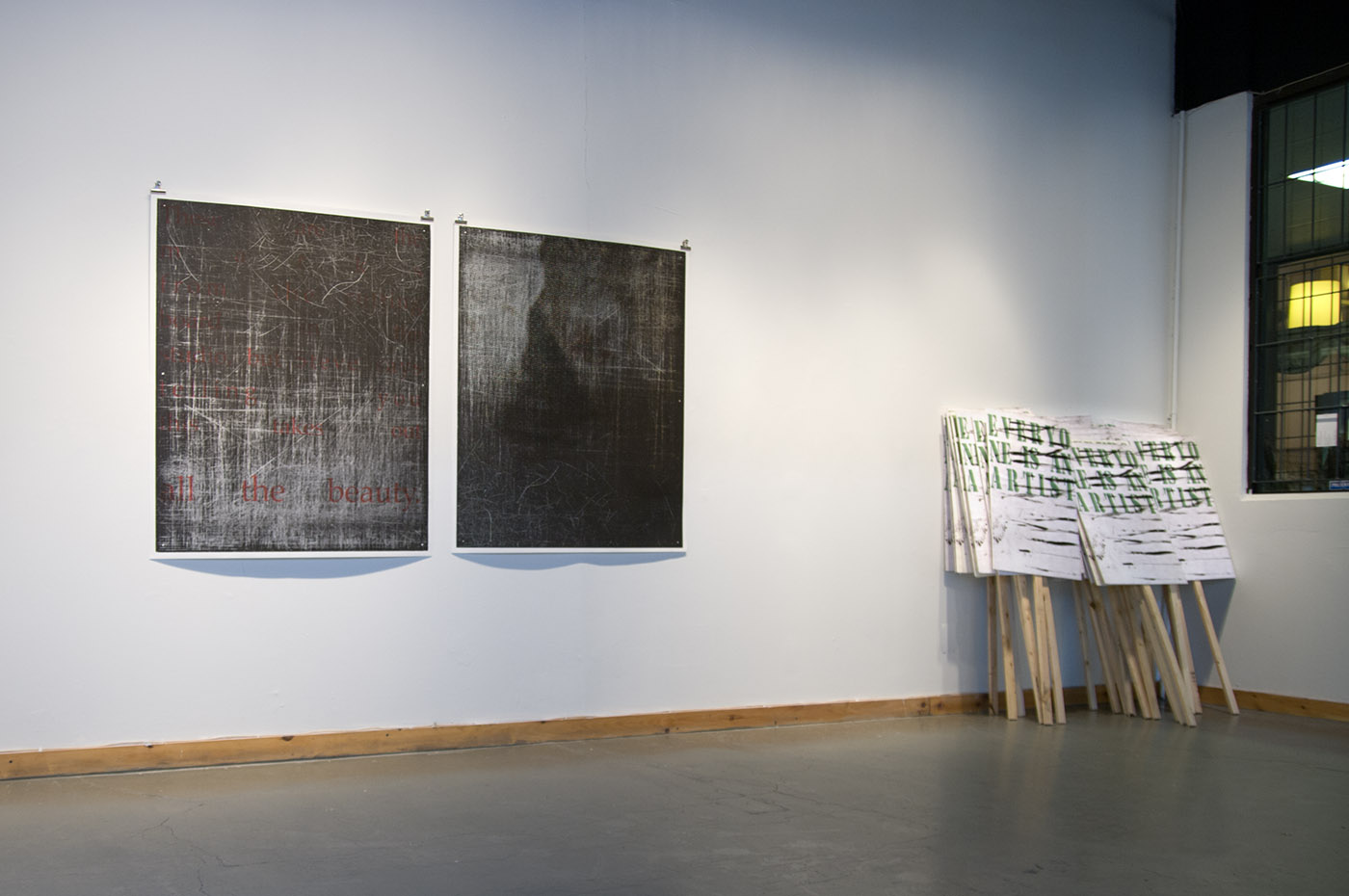
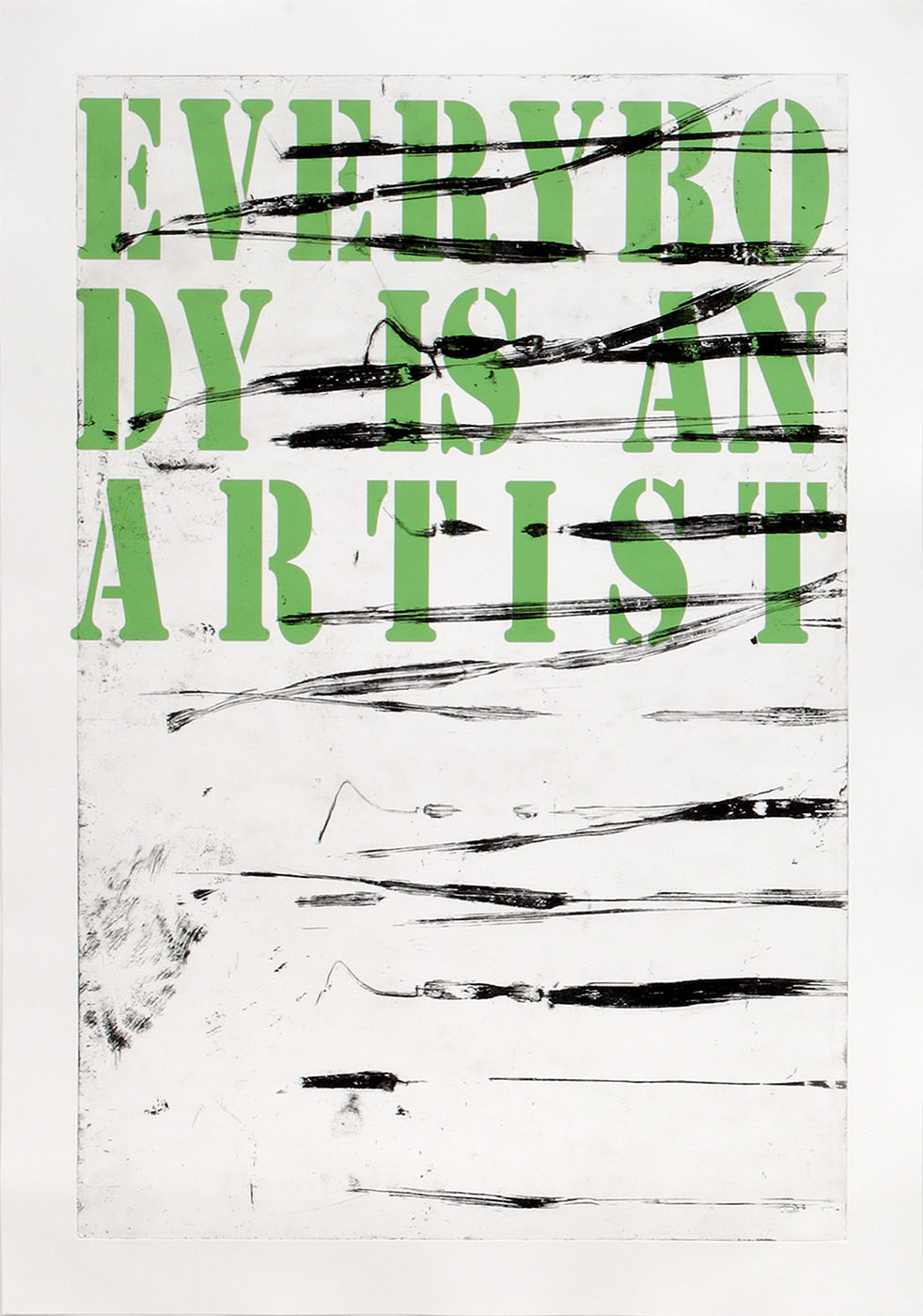
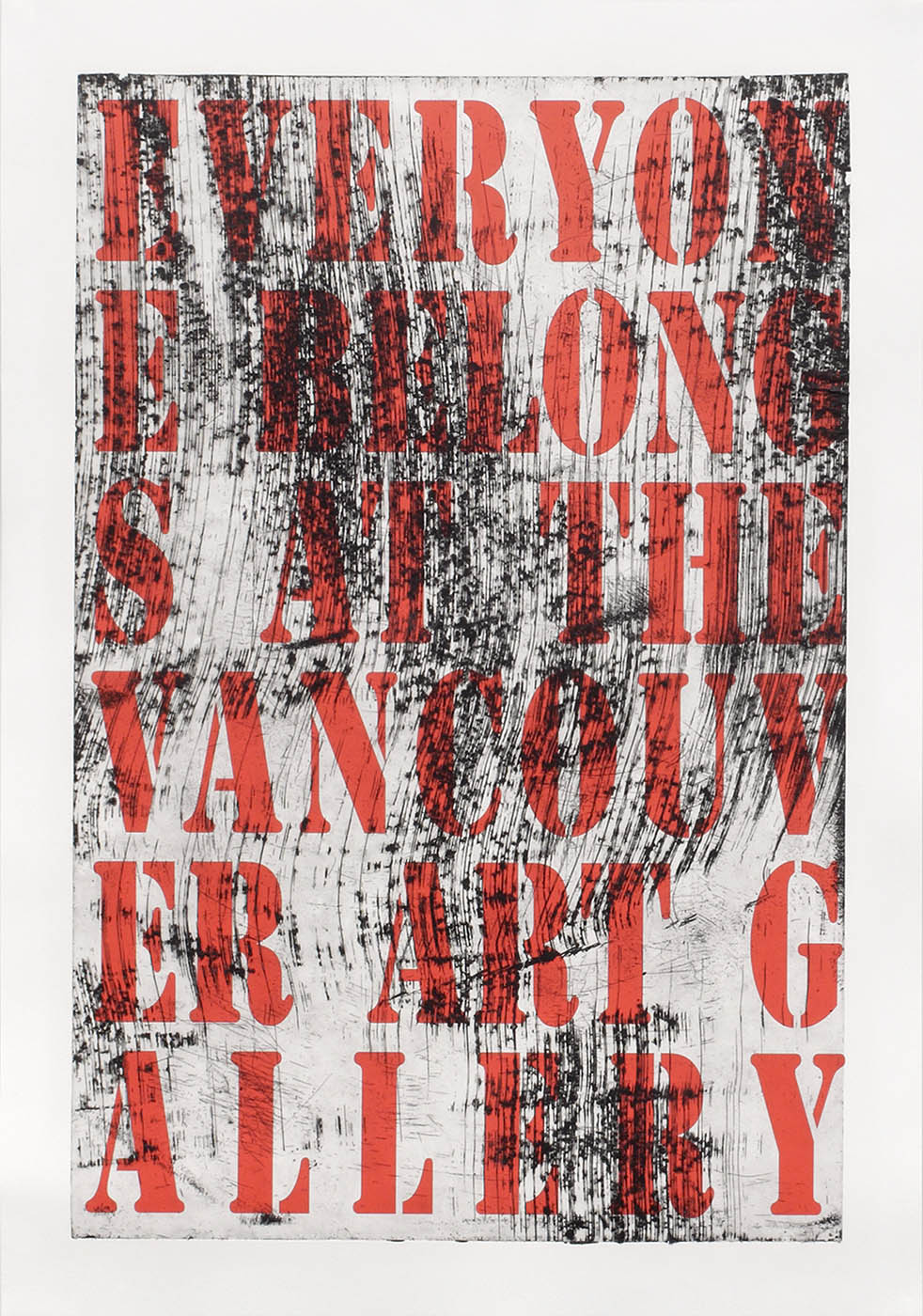
Denise Hawrysio’s exhibition A User’s Guide to Direct Visual Action at Atelier Circulaire in Montréal is predicated on the notion that, as Robert Filliou puts it, “art is what makes life more interesting than art”. Eschewing notions of the gallery as a sequestered temple or a hermetically sealed white cube, the show draws its spirit from the world outside, presenting a series of “event structures” (Ian Wallace) that bridge the gap between industrial labour and aesthetic production. By integrating earlier situational prints with site-specific interventions—including carbon markings that map the gallery’s circumference—the exhibition explores the reciprocity between the world of work and the record of its own making.
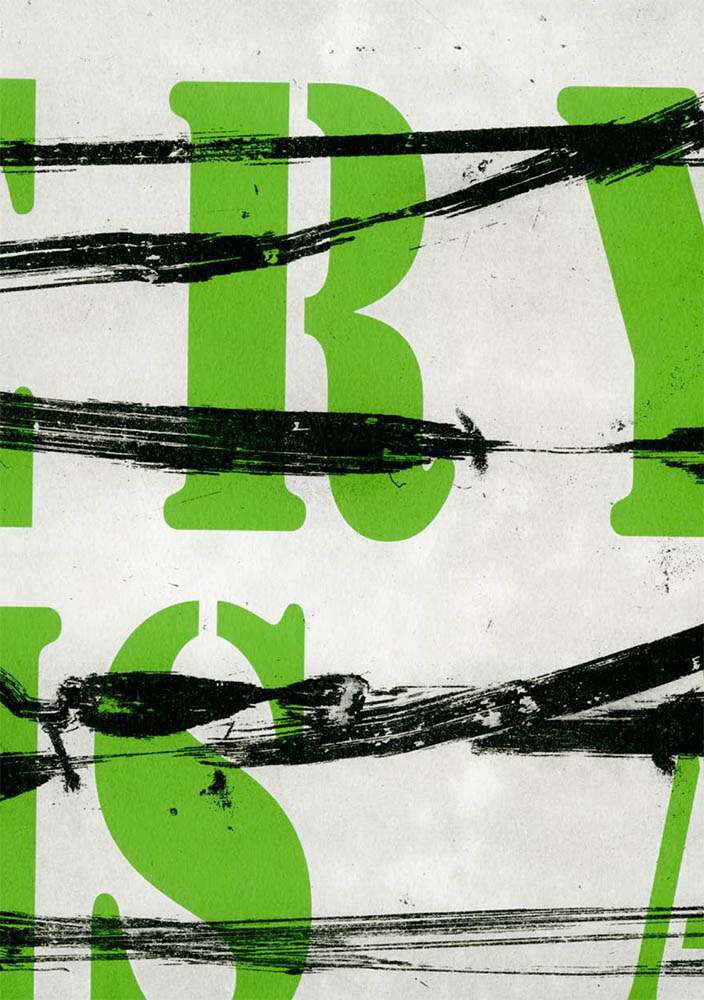
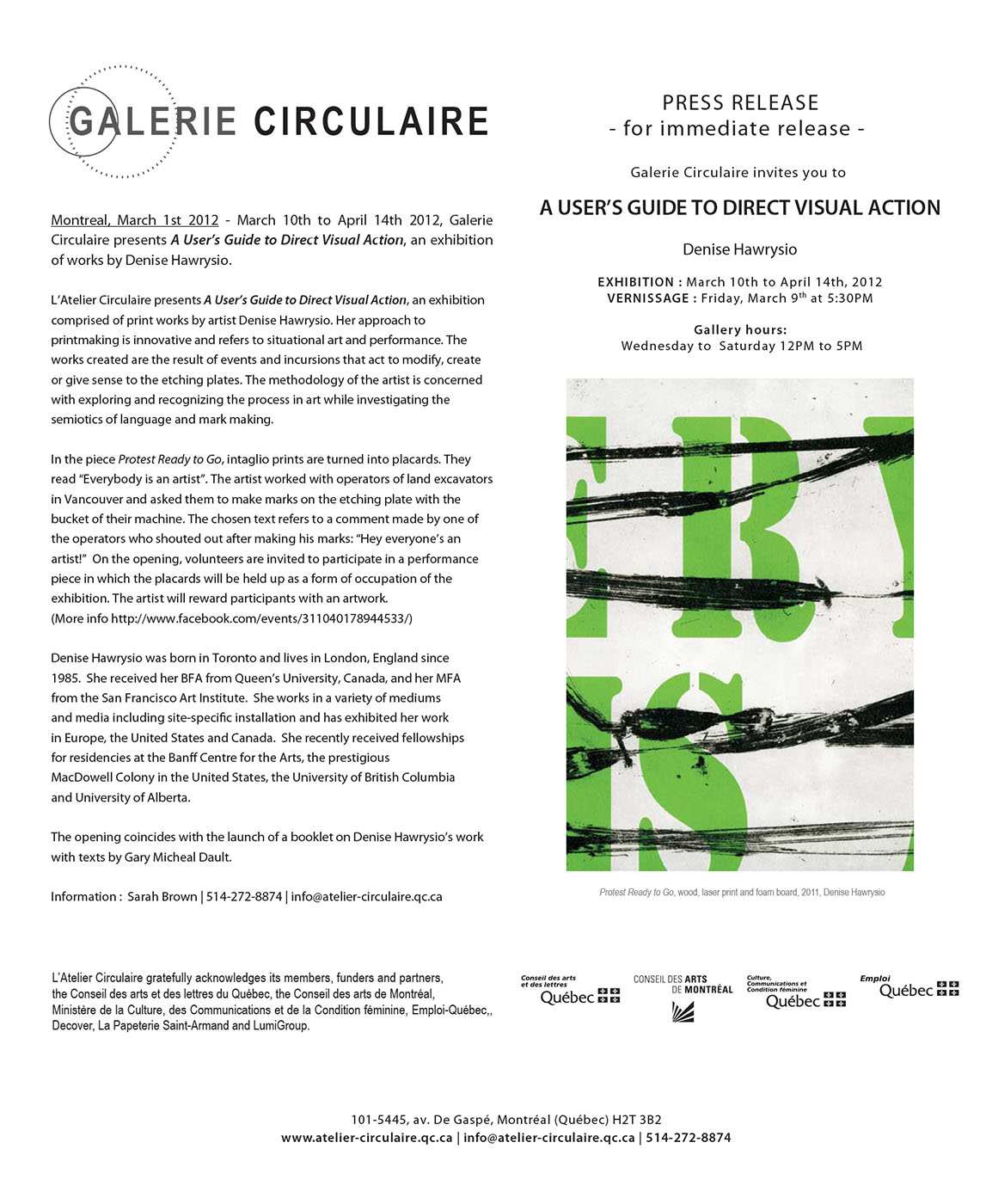
The foundation of the work lies in a unique collaboration with a construction worker tasked with a counter-intuitive mission: to use a massive steel excavator bucket to delicately mark printing plates. This act of brute force recalibrated into a precise gesture resulted in a series of deep, authoritative textures. Upon completing the task with surprising finesse, the worker turned to the artist and remarked, “Hey, everyone’s an artist!” This observation—reclaiming a phrase often associated with Joseph Beuys—re-centres the concept of “artist” within the realm of manual skill and professional pride.
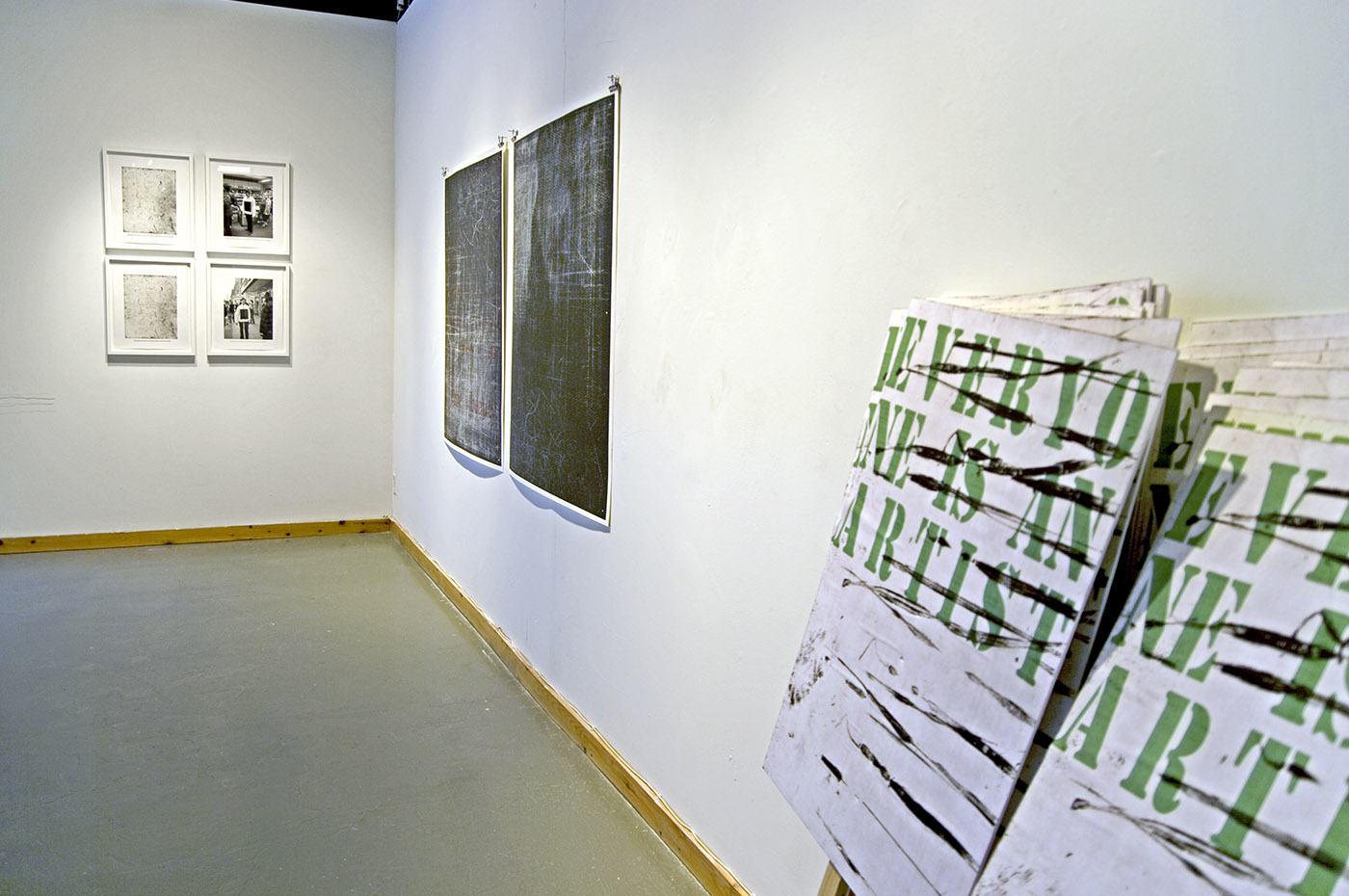
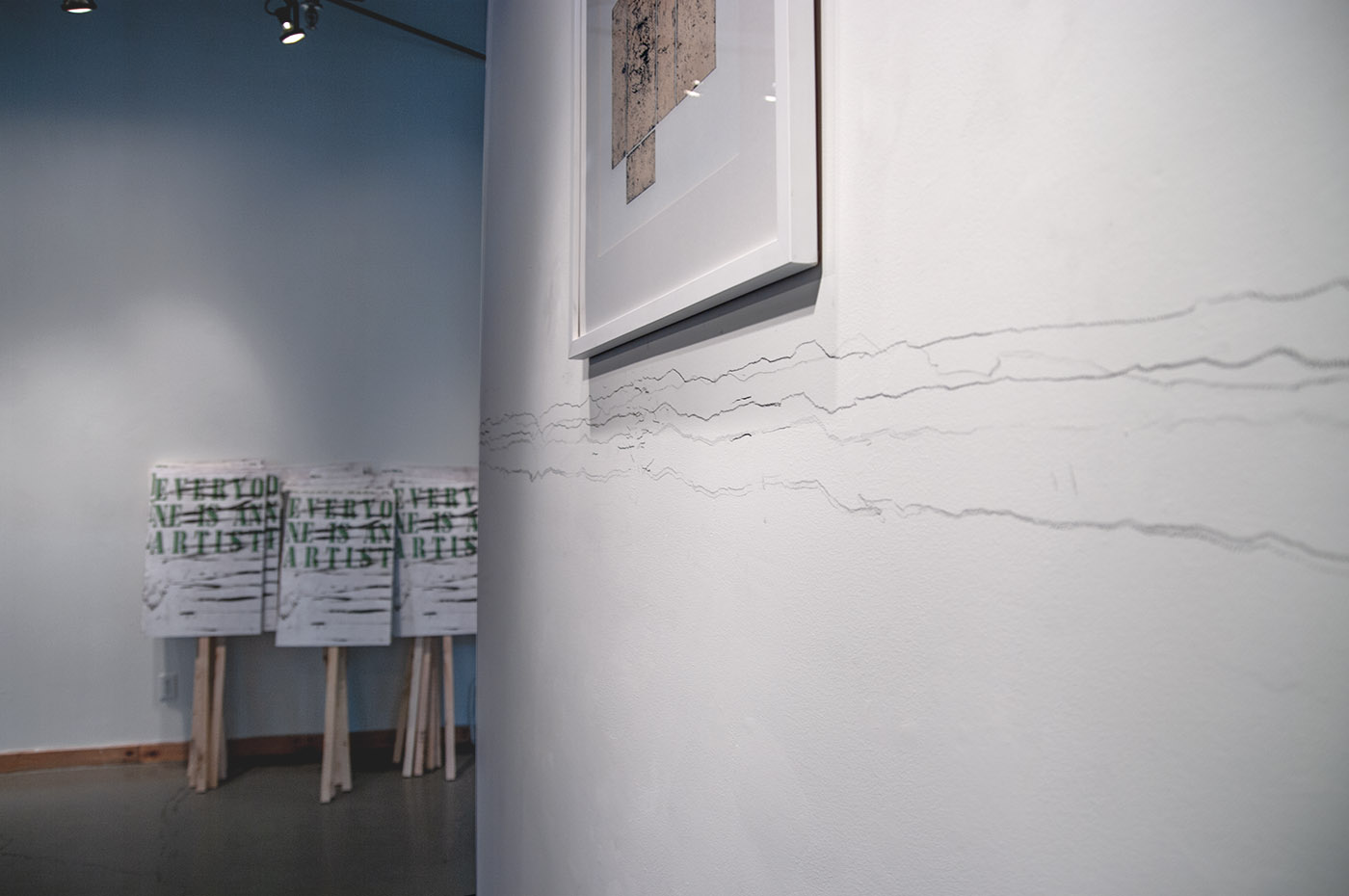
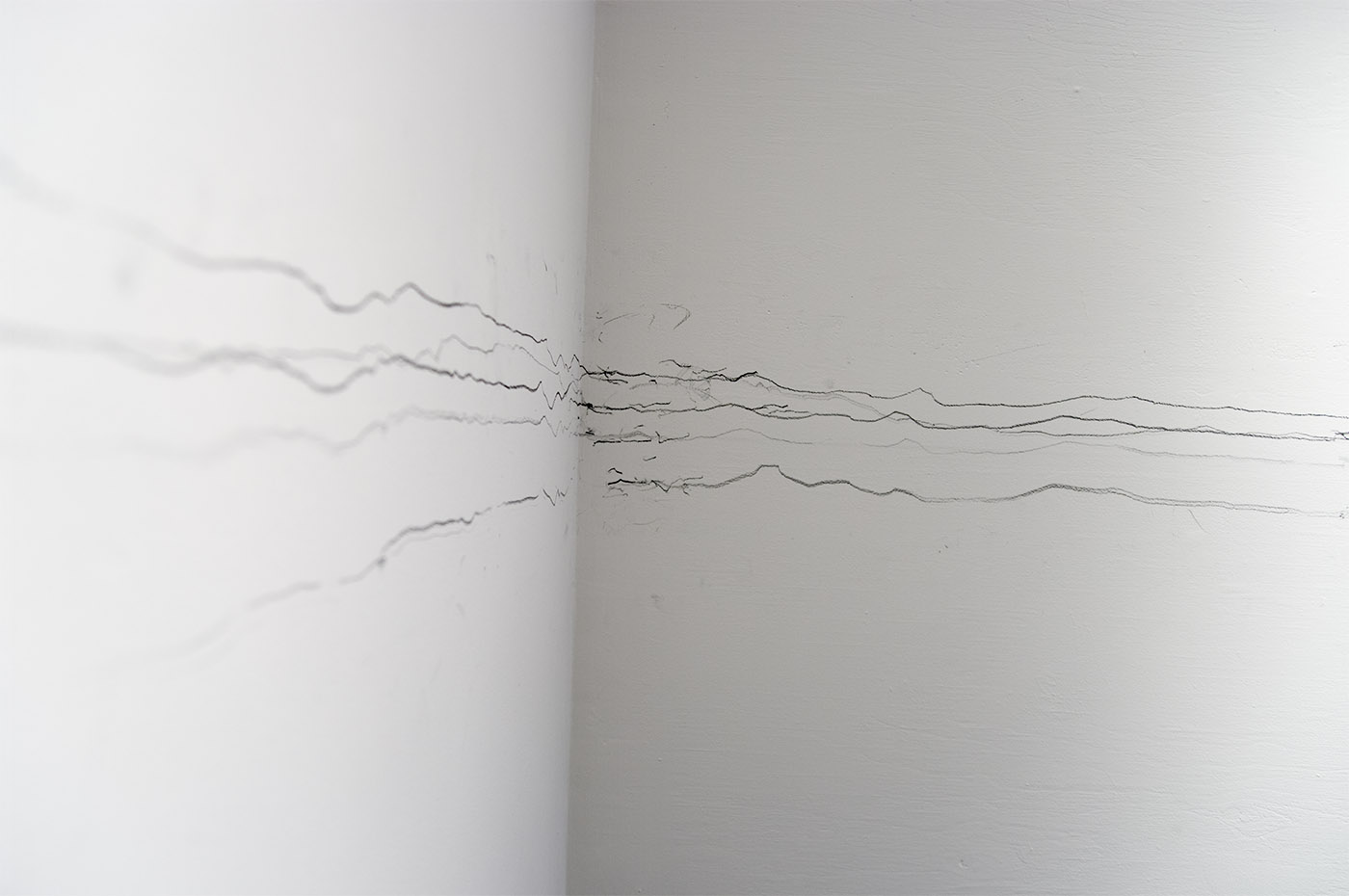
Inside the gallery, the spatial experience is dictated by a continuous line of carbon marks. Created by scratching through carbon paper directly onto the gallery walls, these marks form a dark, granular horizon line that follows the circumference of the space. Acting as a visual trail of crumbs, the line guides visitors through the installation, serves as a temporal record of the artist’s movement, and mirrors the physical immediacy found in the prints themselves.
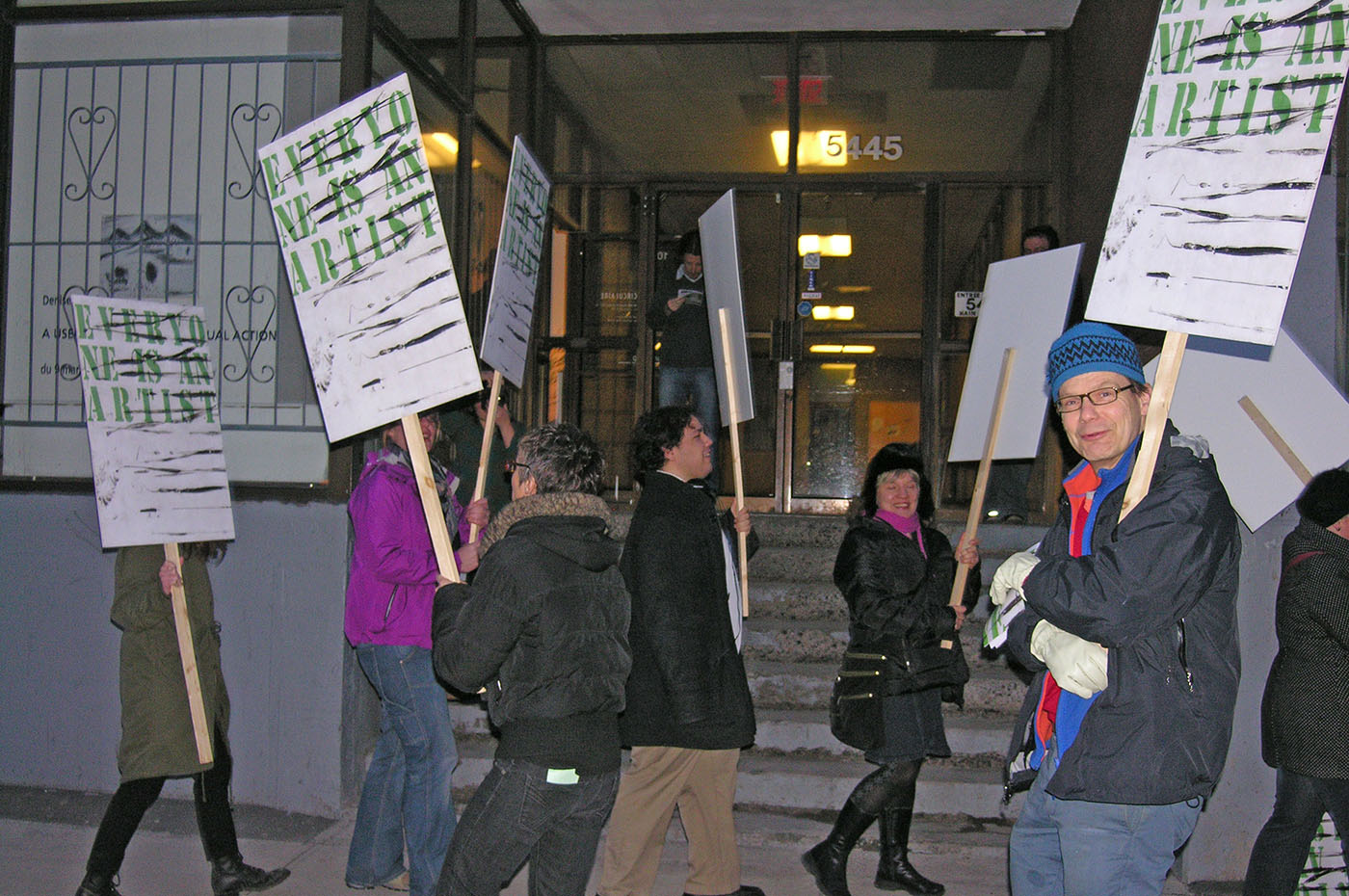
The exhibition extends beyond the walls through a staged collaborative performance. Participants carry placards featuring the excavator-marked prints, marching outside the gallery in a formation that sits somewhere between a political protest and a workers’ strike. The text on the placards—the worker’s own words—transforms a personal observation into a public demand for visibility. Following the performance, these placards return to the gallery, transitioning from tools of “direct action” back into sculptural elements of the installation.
By documenting the excavator’s bucket as a drawing tool and the street as a gallery, the show challenges our perception of who is permitted to make a mark, and what it means to take “direct visual action” in a modern landscape.