Red Period / Blue Period
Staggered Systems, The Showroom, London, 1990
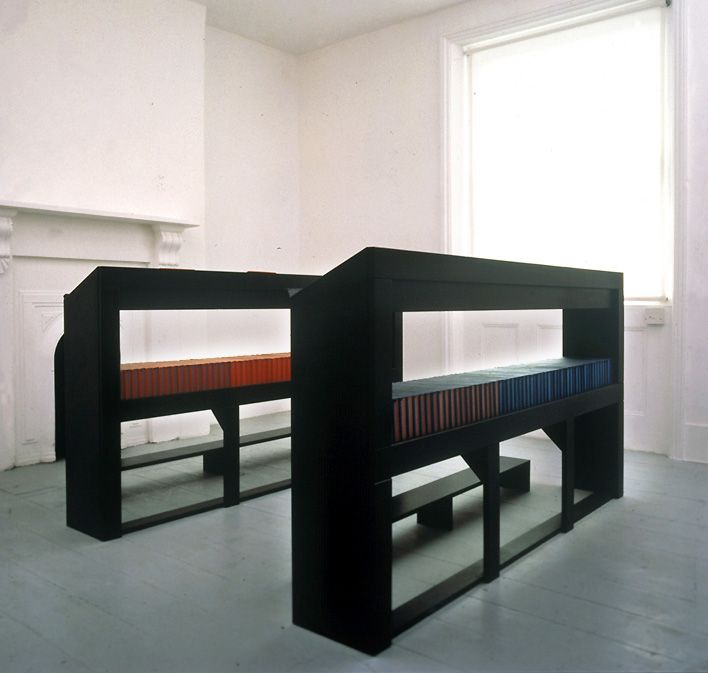
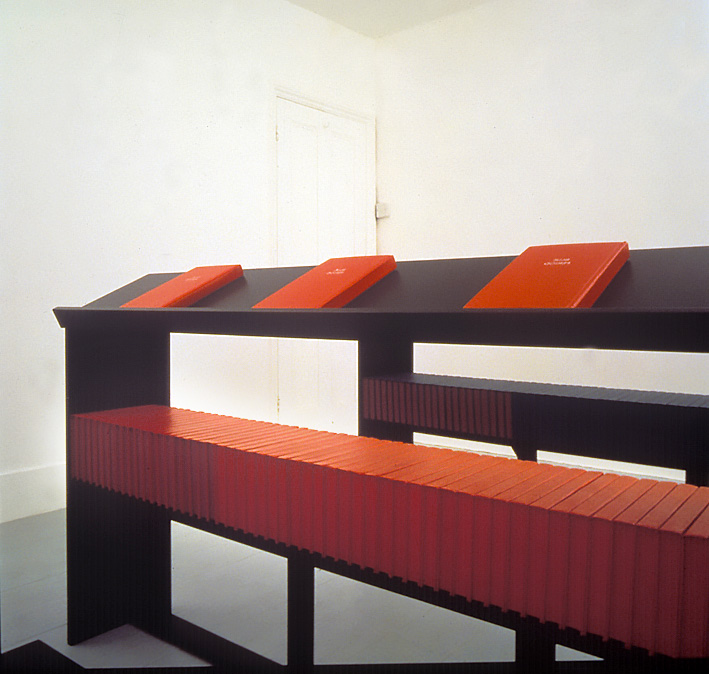
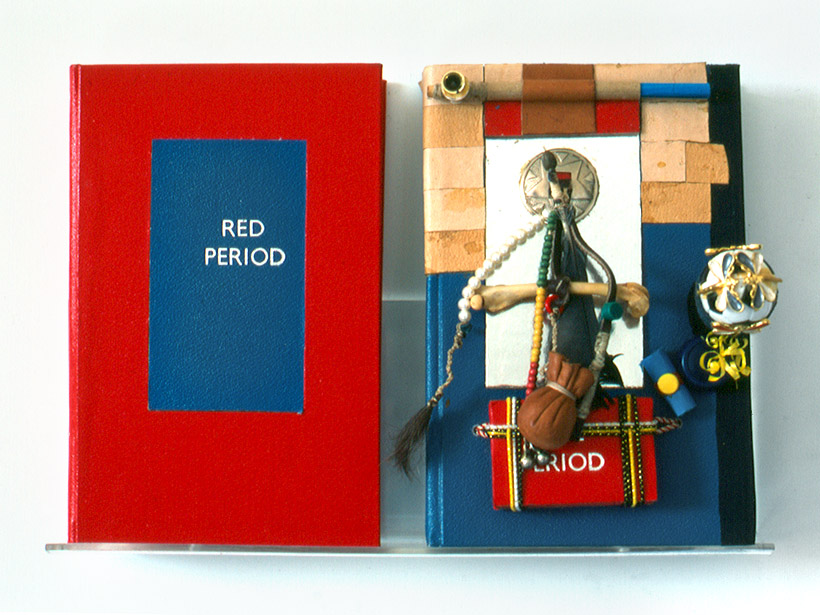
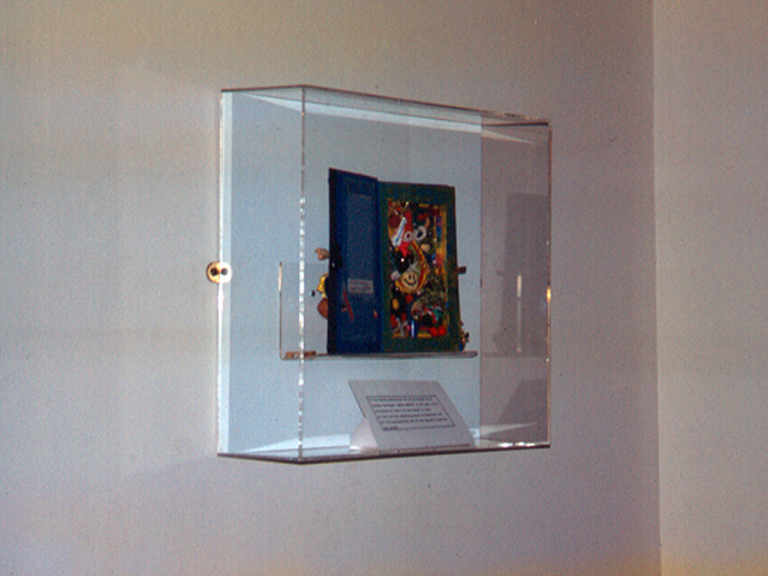
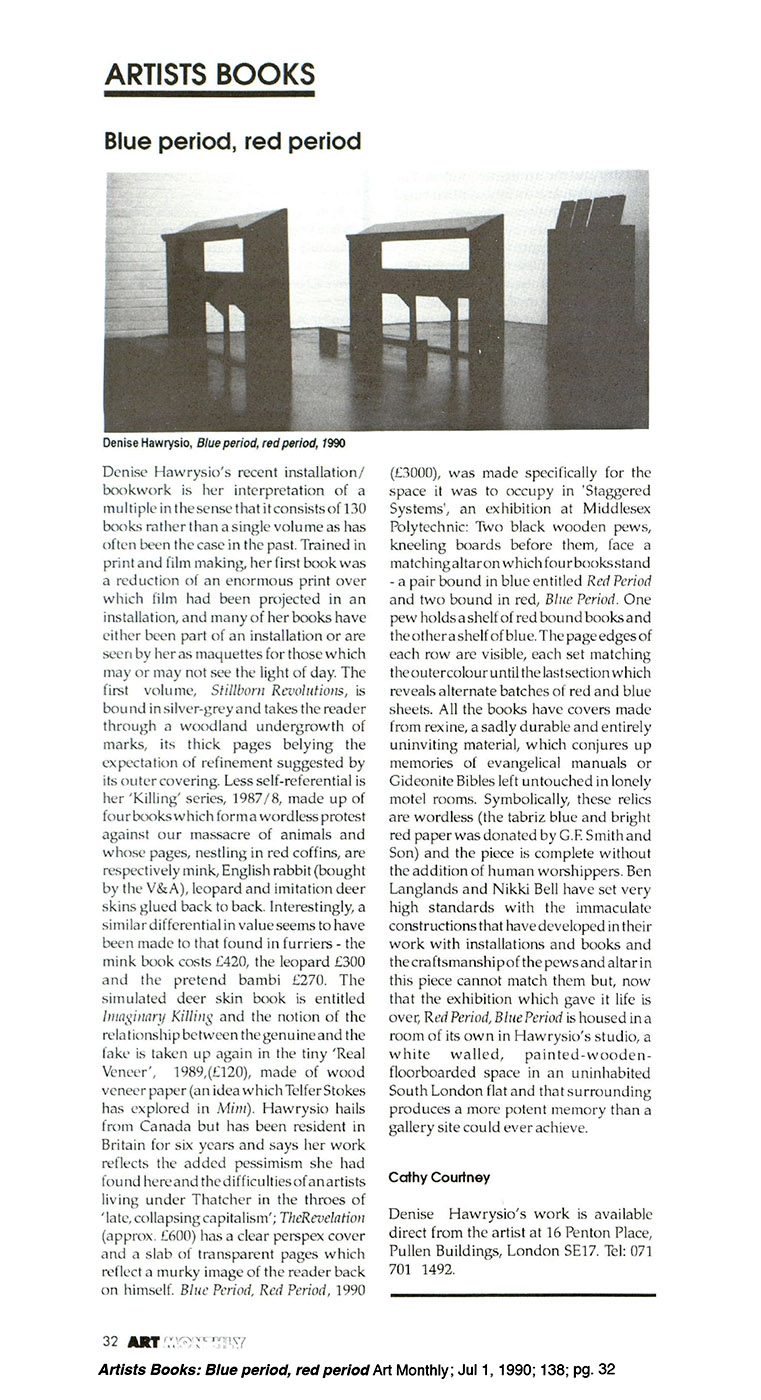
Denise Hawrysio’s recent installation/bookwork is her interpretation of a multiple in the sense that it consists of 130 books rather than a single volume as has often been the case in the past. Two black wooden pews, kneeling boards before them, face a matching altar on which four books stand — a pair bound in blue entitled Red Period and two bound in red, Blue Period. One pew holds a shelf of red bound books and the other a shelf of blue. The page edges of each row are visible, each set matching the outer colour, until the last section which reveals alternate batches of red and blue sheets. All the books have covers made from rexine, a sadly durable and entirely uninviting material, which conjures up memories of evangelical manuals or Gideonite Bibles left untouched in lonely motel rooms. Symbolically, these relics are wordless… and the piece is complete without the addition of human worshippers. Cathy Courtney, Art Monthly
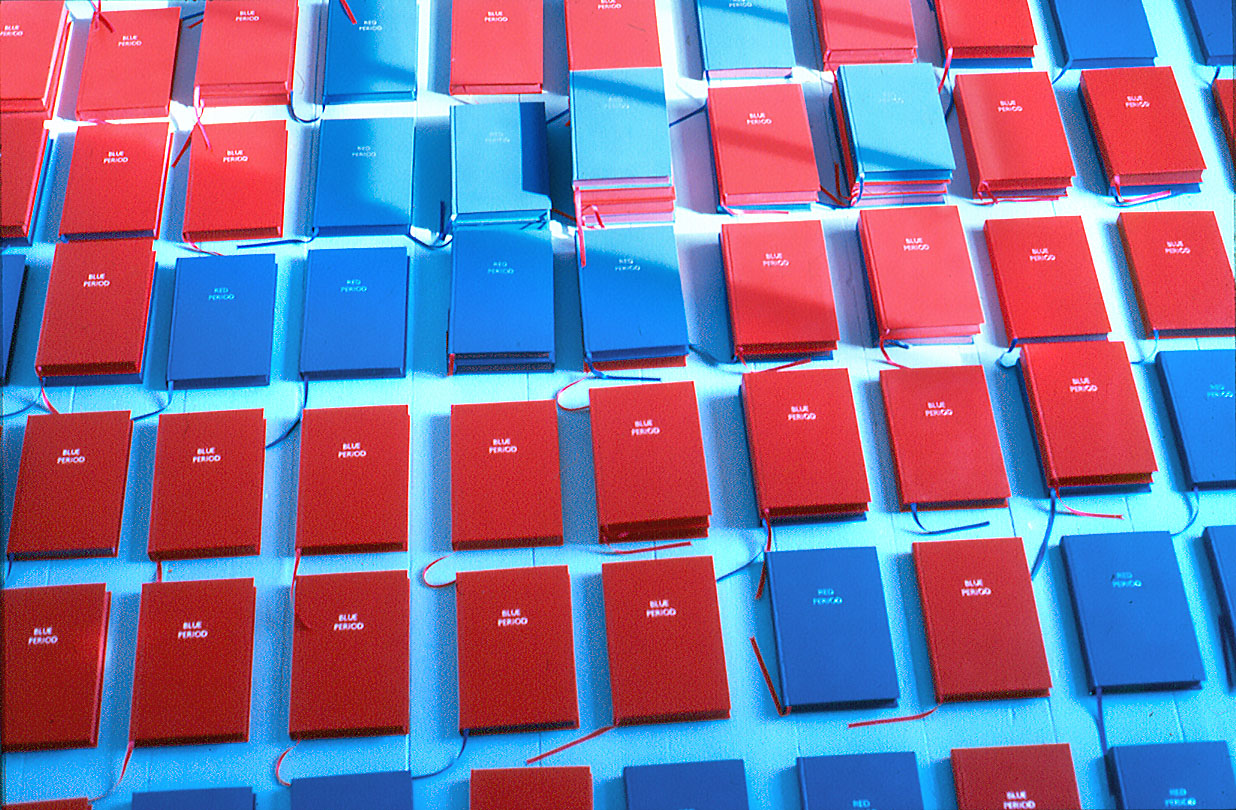
Red Period / Blue Period books in the artist’s studio
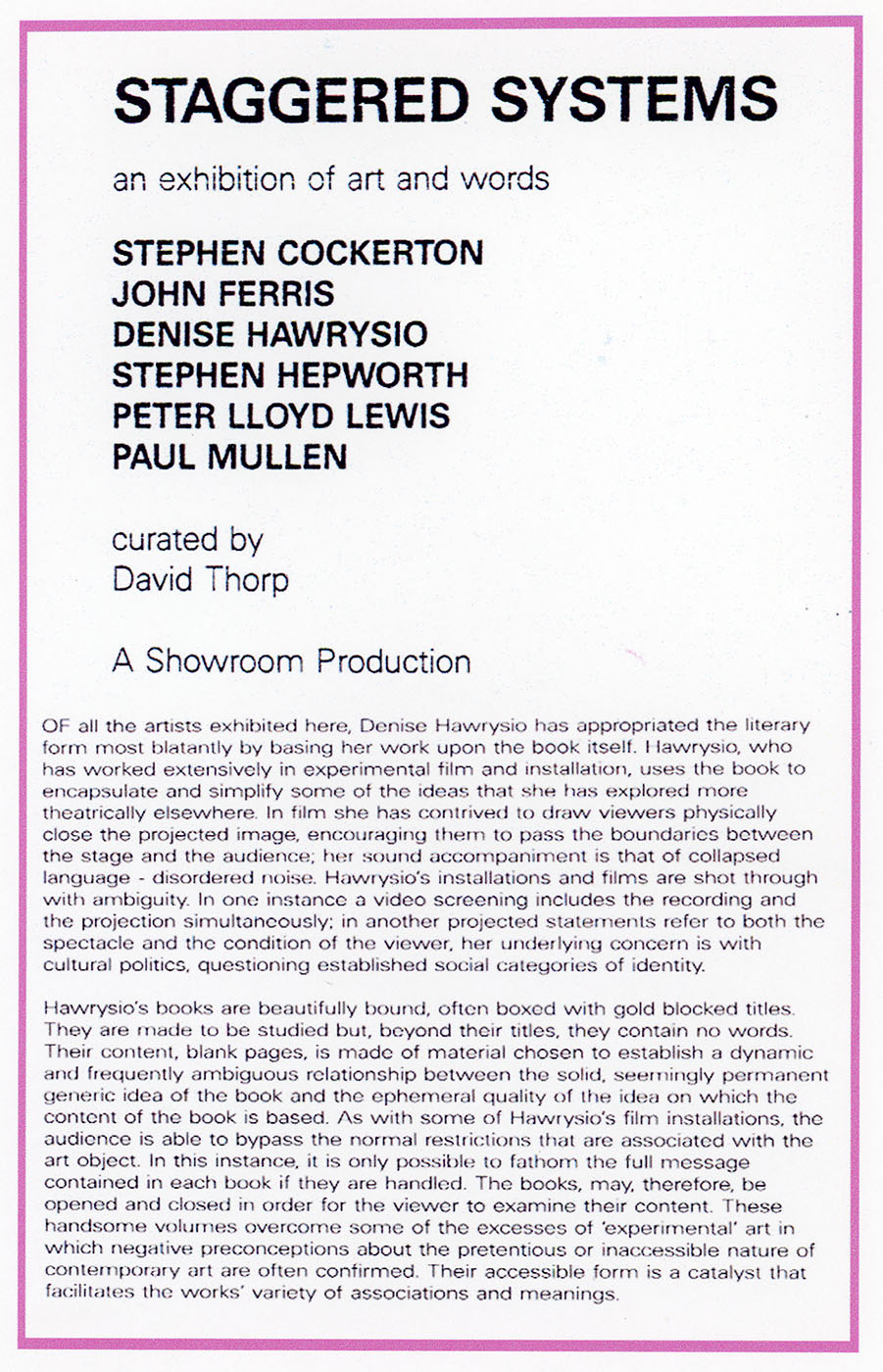
Of all the artists exhibited here, Denise Hawrysio has appropriated the literary form most blatantly by basing her work upon the book itself…. Her books are beautifully bound, often boxed with gold blocked titles. They are made to be studied but, beyond their titles, they contain no words. Their content, blank pages, is made of material chosen to establish a dynamic and frequently ambiguous relationship between the solid, seemingly permanent generic idea of the book and the ephemeral quality of the idea on which the content of the book is based. As with some of Hawrysio’s film installations, the audience is able to bypass the normal restrictions associated with the art object. In this instance, it is only possible to fathom the full message contained in each book if they are handled. These handsome volumes overcome some of the excesses of experimental art in which negative preconceptions about the pretentious or inaccessible nature of contemporary art are often confirmed. Their accessible form is a catalyst that facilitates the works’ variety of associations and meanings. David Thorp, Staggered Systems, The Showroom, London, 1990
The Lifelong Lesson
Paper as Environment, Aalst Paper Biennale, Belgium, 1994
Collection: Dendermonde Prison*
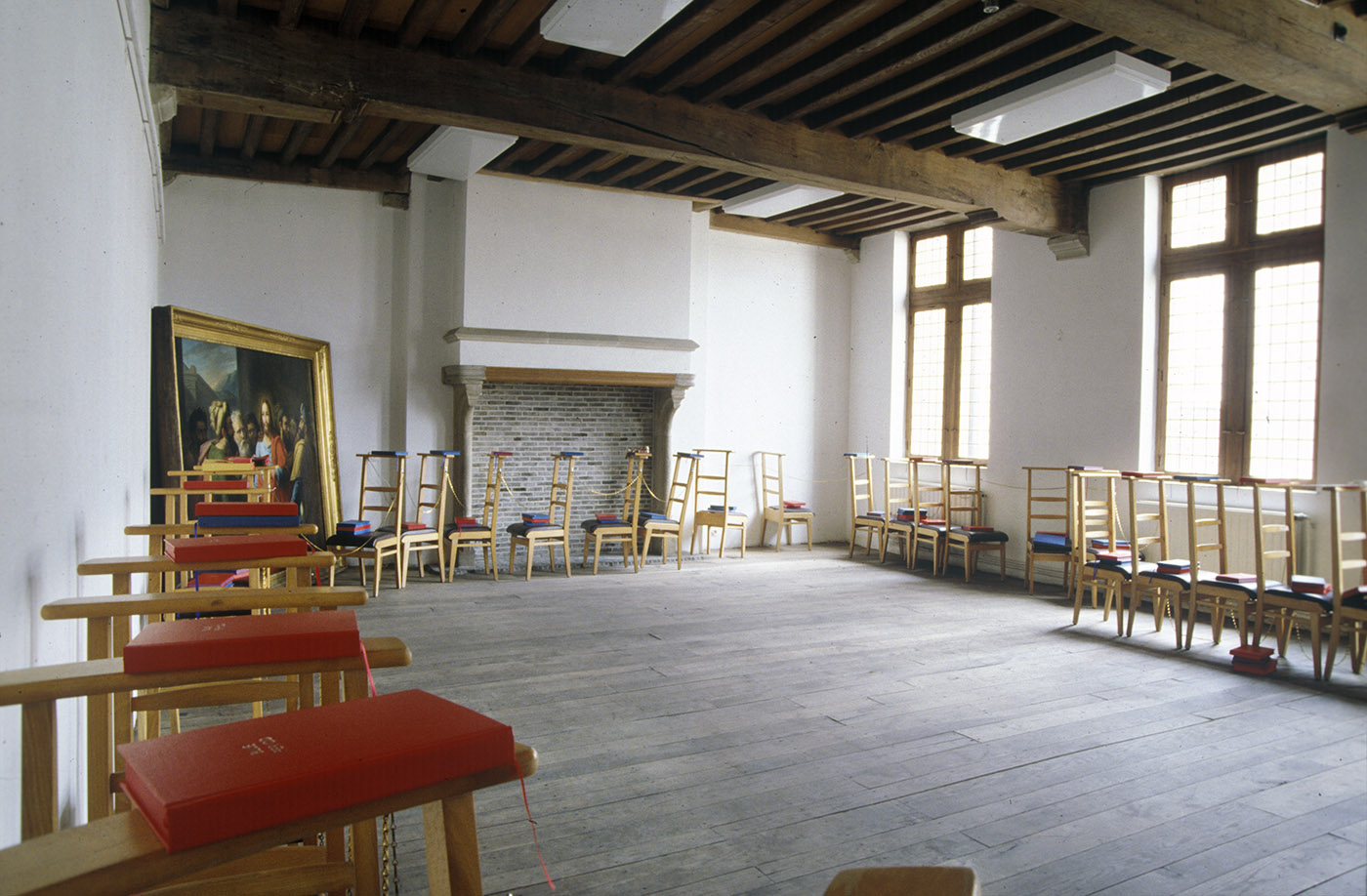
“Hawrysio leaves a large, kitschy painting with a biblical theme standing in the corner of the room, where it slightly reinforces the sultry religious accent of her installation” Jan Braet, Art on Paper: Presses and Cries of Despair
* Collection: Dendermonde Prison
Four years after the original Red Period / Blue Period installation, the same set of books was used for a piece commissioned for Paper as Environment at the Royal Museums of Fine Arts of Belgium, as part of the 1994 Aalst Paper Biennale (Paper, Image, Ground).
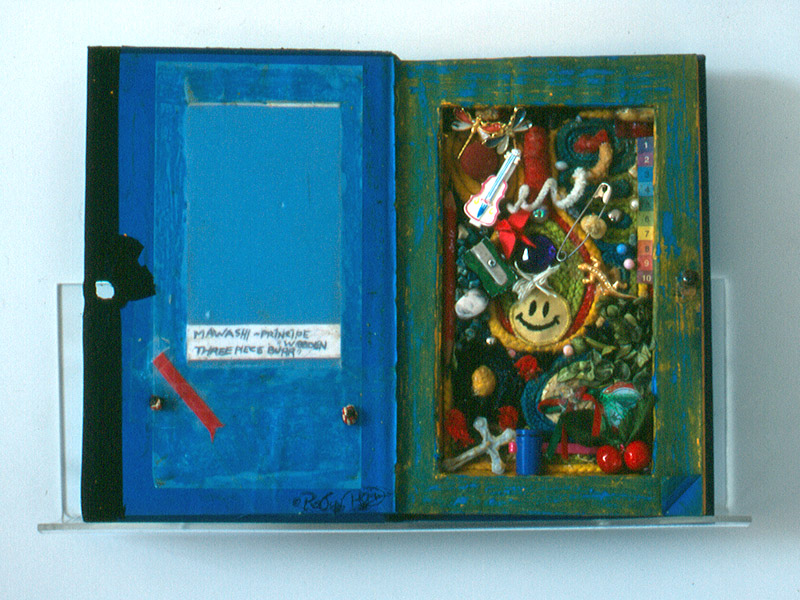
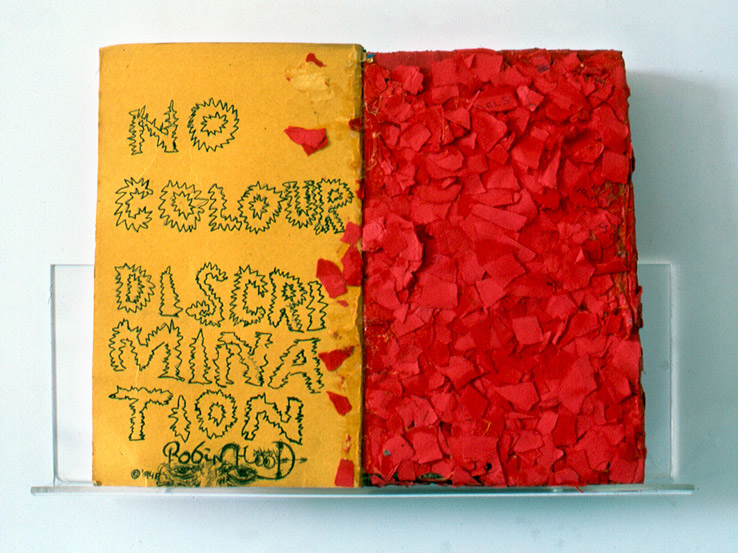
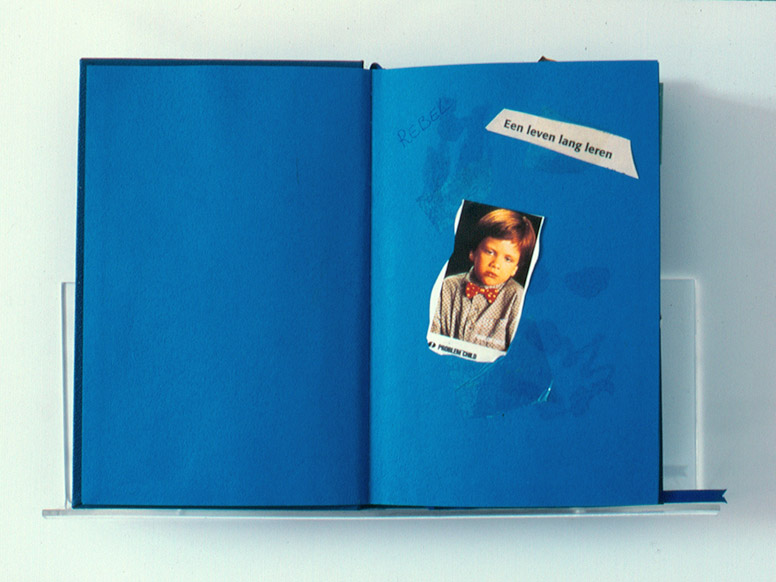
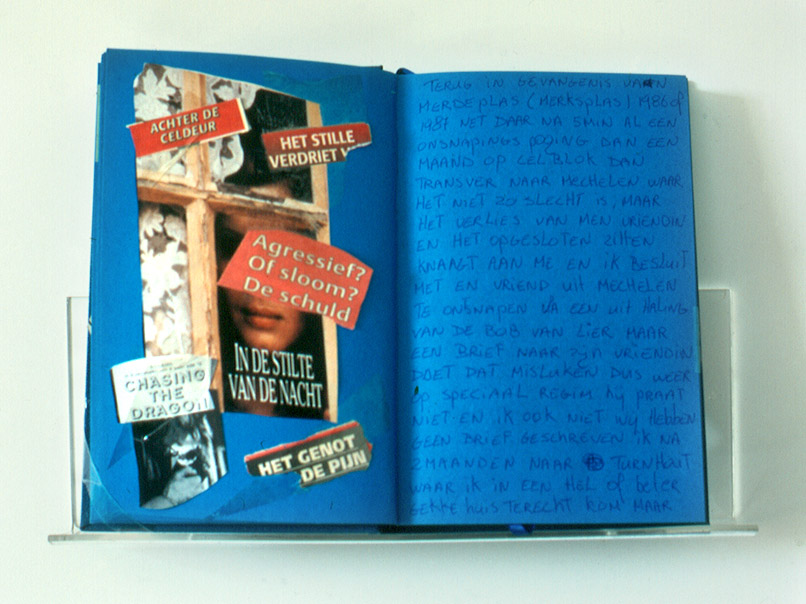
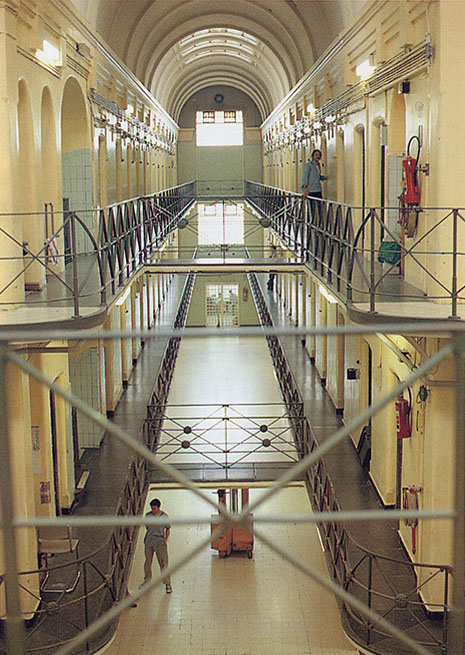
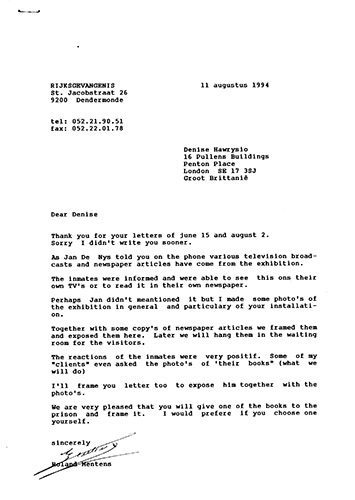
The project—entitled The Lifelong Lesson, after an entry in one of the inmate’s books—involved distributing 120 handmade books to prisoners at the medium-security state prison in Dendermonde. Initial expectations from the prison director, Roland Mentens, were low; he cautioned that previous creative projects had failed to gain traction with his “clients”. Despite this scepticism, the response was significant: 60 prisoners volunteered, with some requesting multiple books, and ultimately 110 books were returned for the installation.
A defining feature of the project was that the inmates insisted on anonymity. This requirement led to a significant breach in the traditional prison hierarchy, as the director himself collected the finished works to ensure the guards were not able to see who had produced which book. The resulting works varied wildly in form and intensity, defying the expectations of both museum and prison staff; books were transformed into sculptural puzzles with hidden mixed-media collages, while others were slashed, burned, tied, or entirely reconstructed. Some were returned blank; some went missing altogether.
In an article whose title was taken from another prisoner’s book—FTS (Fuck The System)—published in the 1996 edition of CONTROL magazine, Hawrysio writes: “As sites of domination and conquest, cultural institutions often determine who gets to speak and who gets silenced: this piece lays bare the act of judgment itself in regard to the work of art and the traditional role of mastery in art practice”. By exposing these power dynamics, the installation highlights the stark gulf between the ‘high’ culture of the museum environment and the perceived vulgarity of prison culture.
By involving a group living within a particularly rigid social milieu, the project facilitated a collective activity the nature of which could not have been predicted or controlled. For the participants, the ability to ‘remake oneself’—even if only symbolically within the pages of a book—became a vital factor in defining a secure identity and asserting an existence that the institution otherwise overlooked. The project’s success eventually prompted the prison director to advocate for permanent art programmes, acknowledging the profound effect the process had on both the staff and the prisoners.
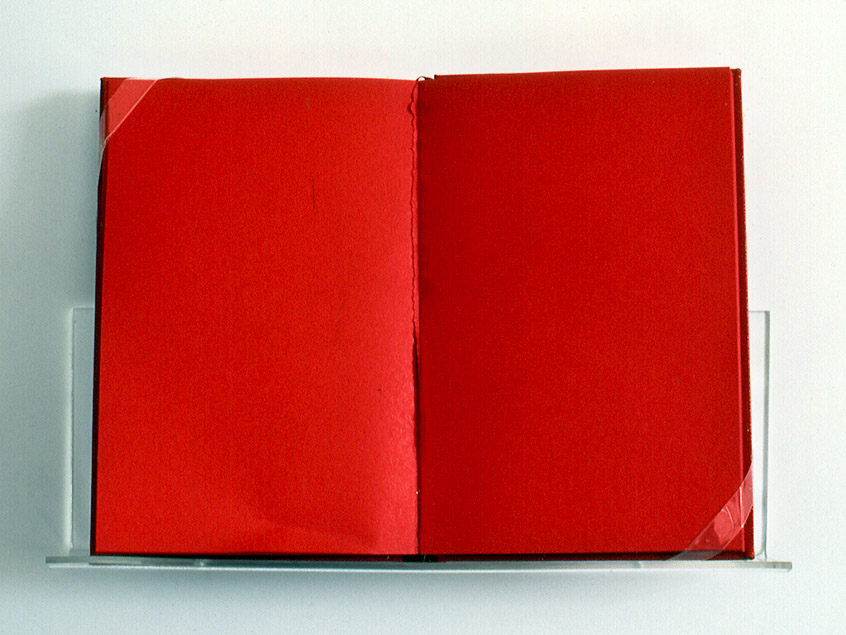
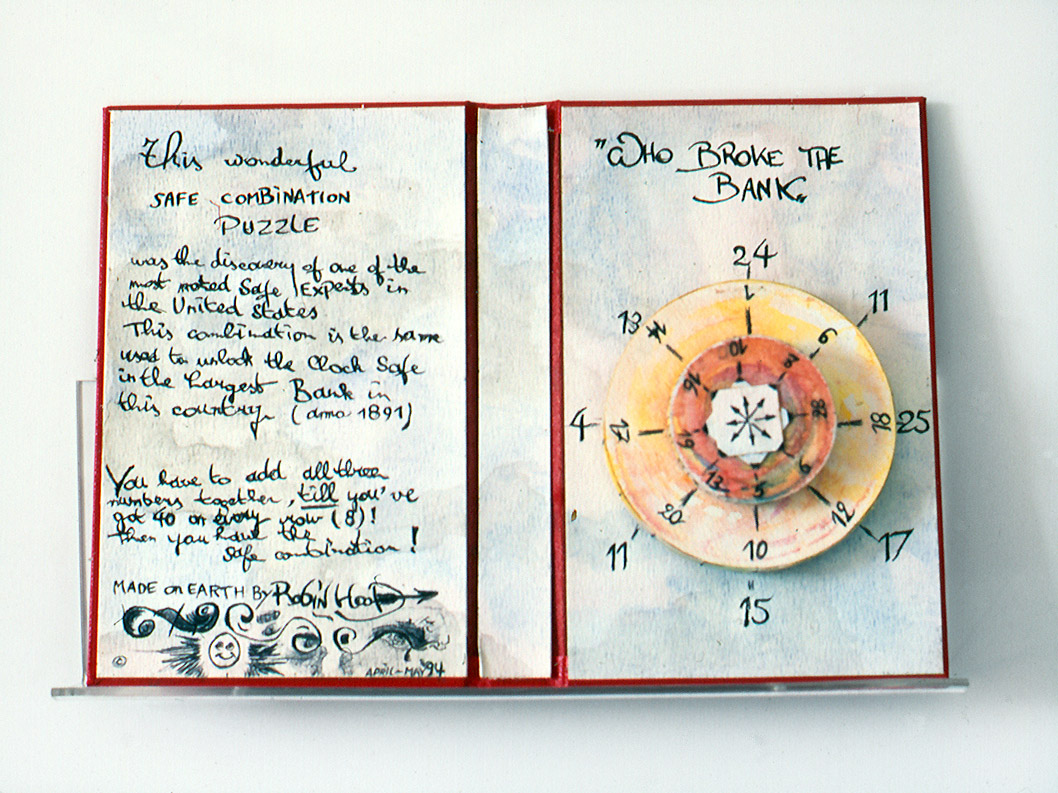
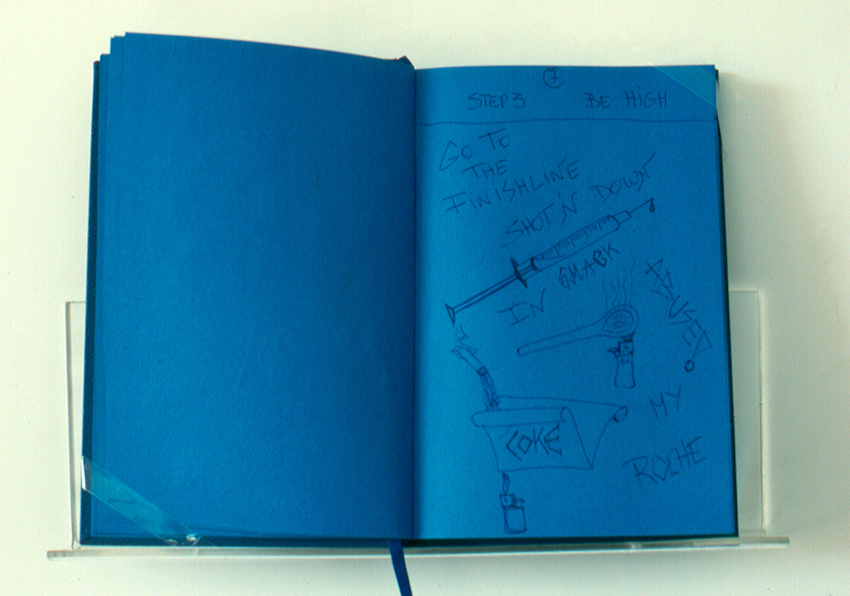
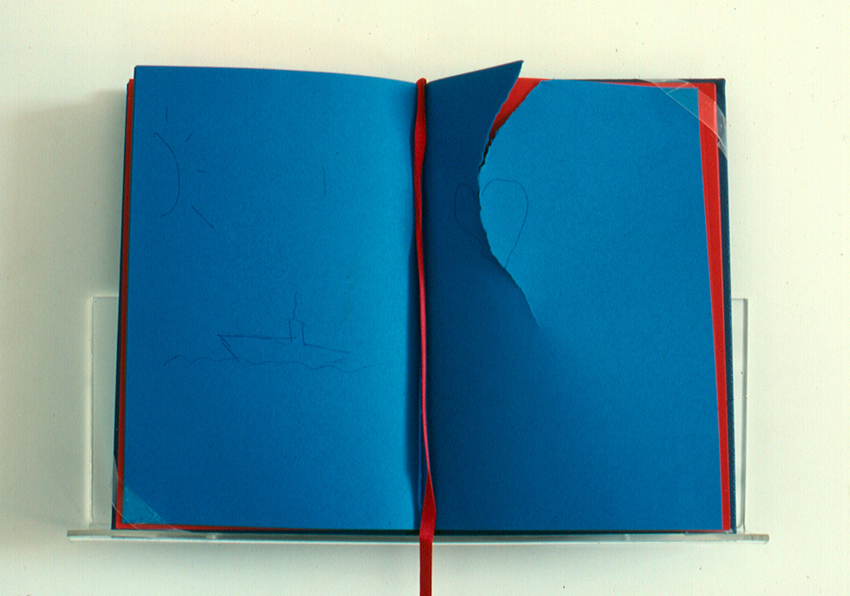
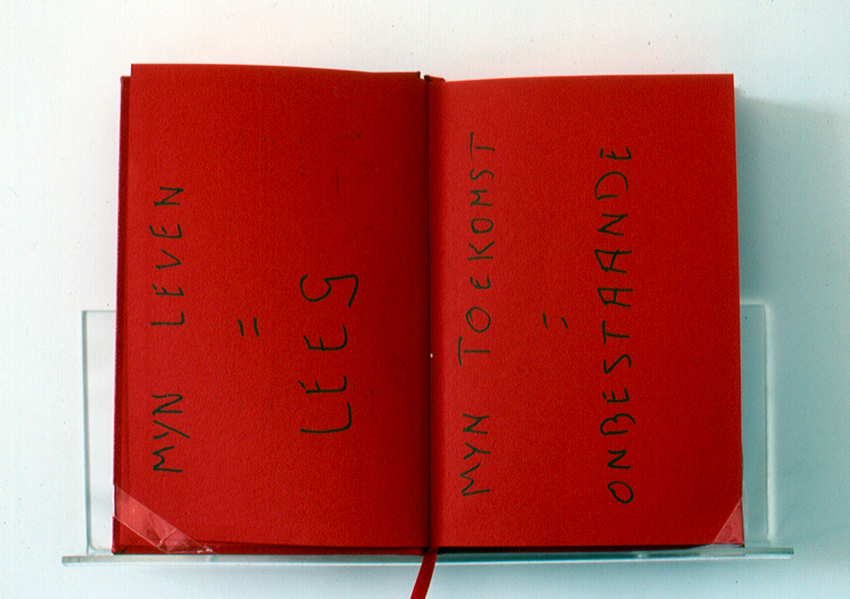
Painfully human, then, is the work of Canadian artist Denise Hawrysio. In the Dendermonde State Prison, sixty inmates were found willing to fill, creatively manipulate, and ‘live through’ a blank book over the course of a month. It became an outlet—an escape from their confinement. Some prisoners relived their youth through bouts of unbridled creative play. Most moving of all are the diaries. ‘Those memories, I can’t get rid of them,’ reads one open page. ‘Perhaps it’s just as well. It reminds me why I’m here…’ Peter-Paul Geubels, Paper as Art in Interaction with the Environment
Staggered Systems
Review in Art Monthly
Aalst Biennale catalogue
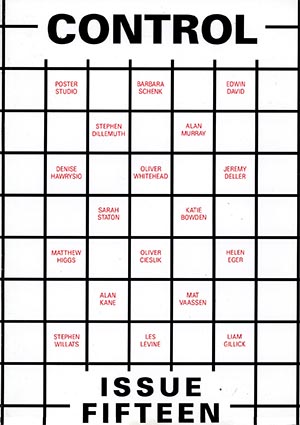
Article in CONTROL magazine
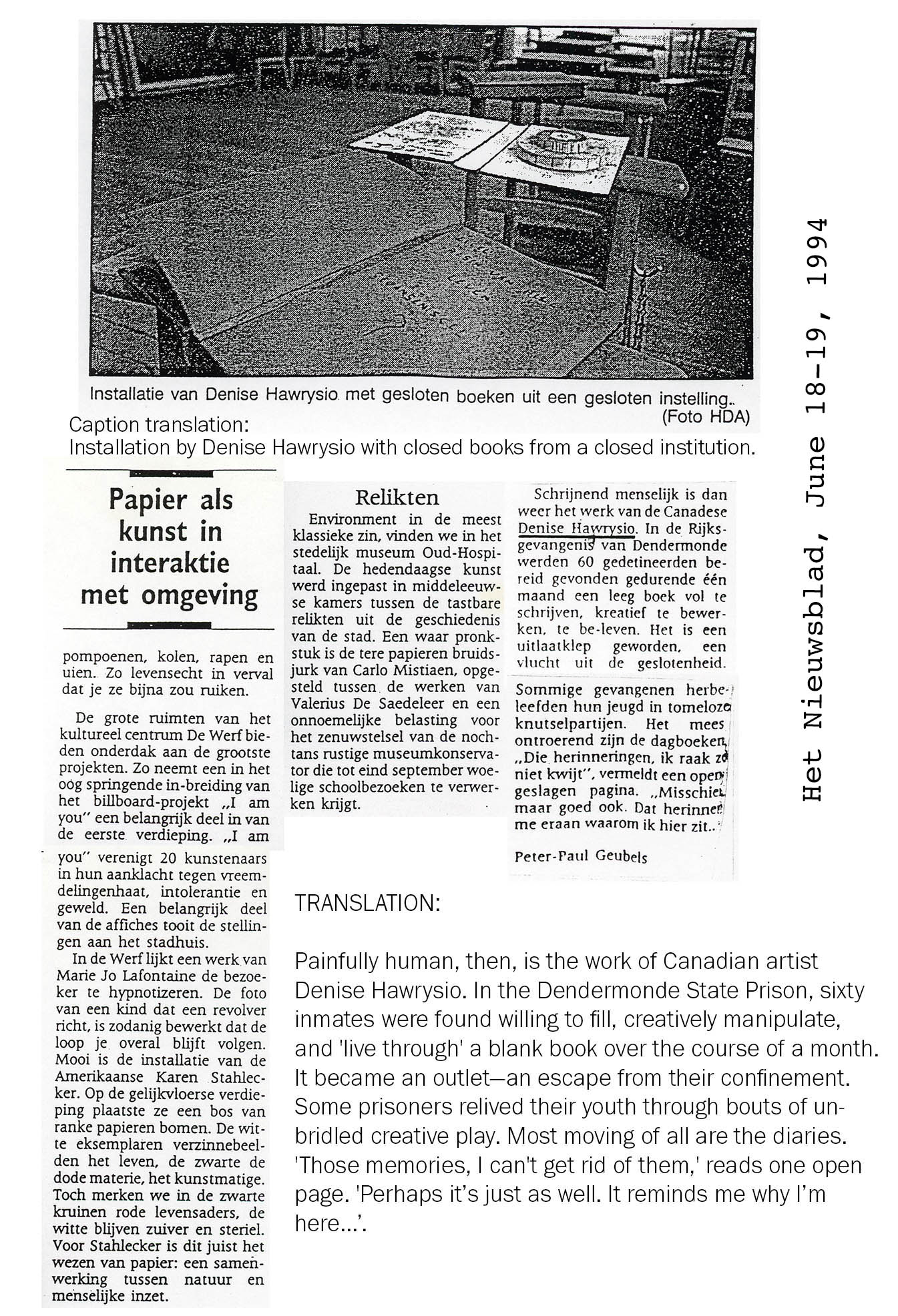
Review in Het Nieuwsblad
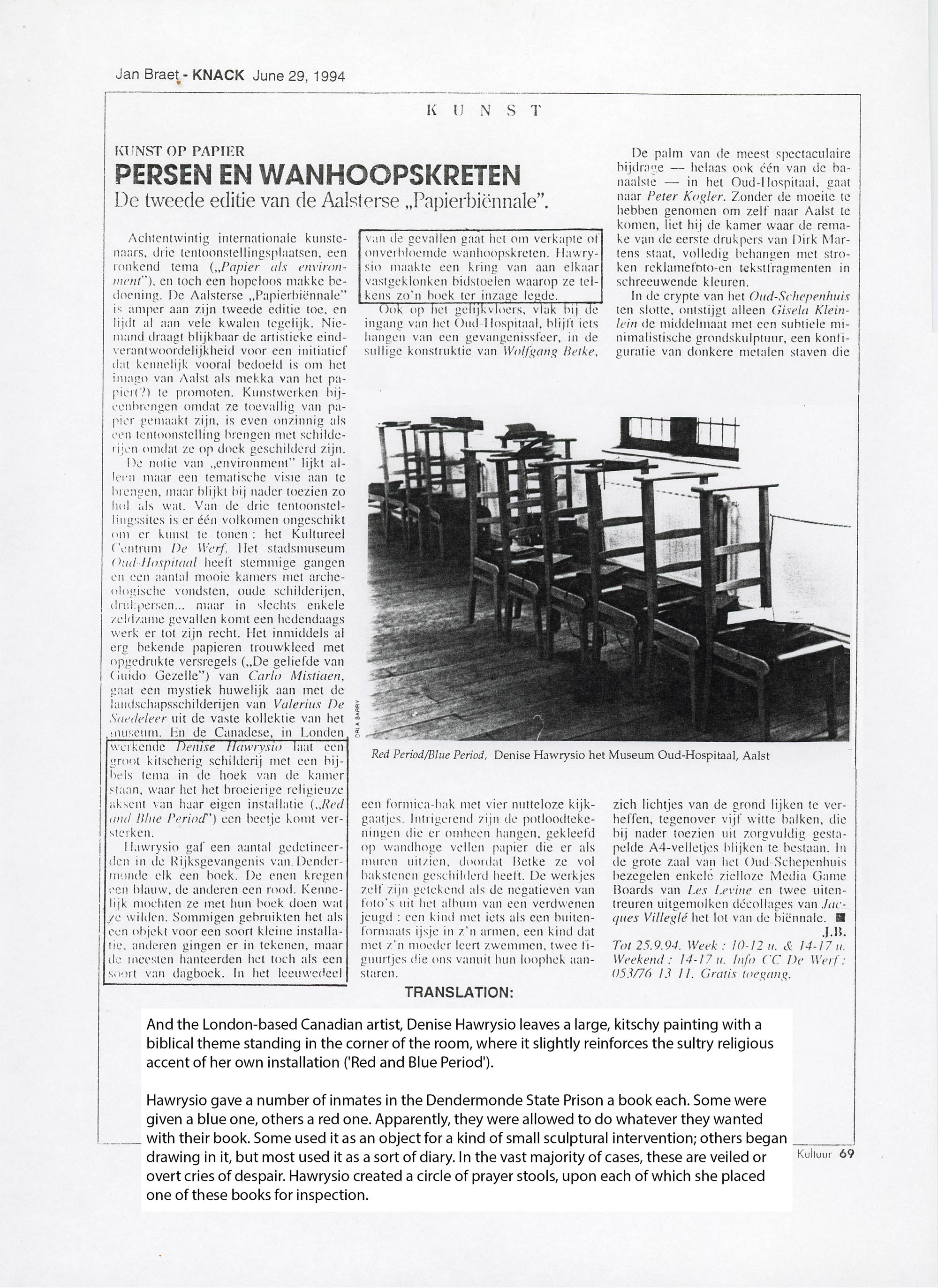
Review in KNACK