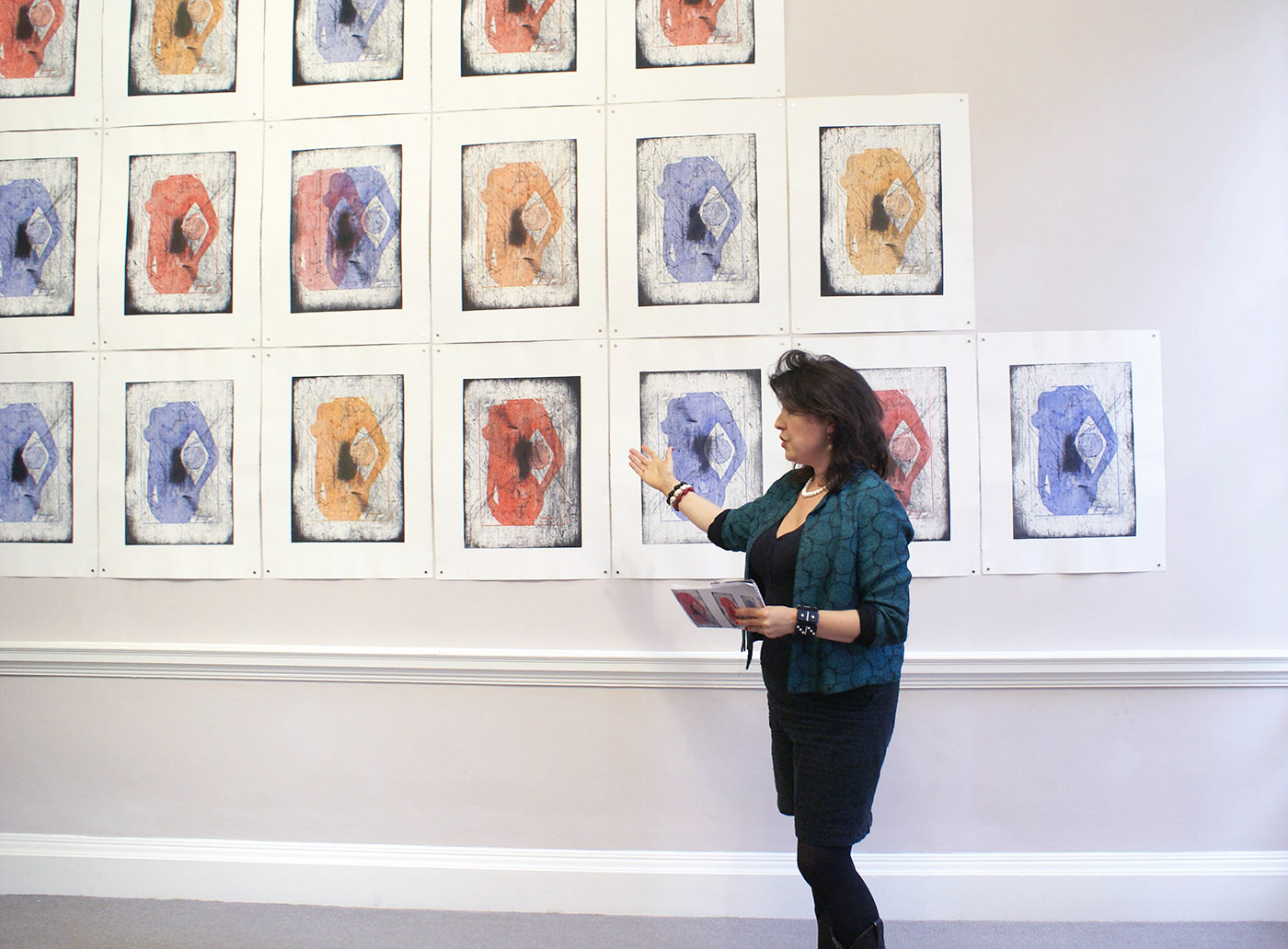
Page 3 Girls
- News in Briefs, Bedford Row Galleries, London, 2009
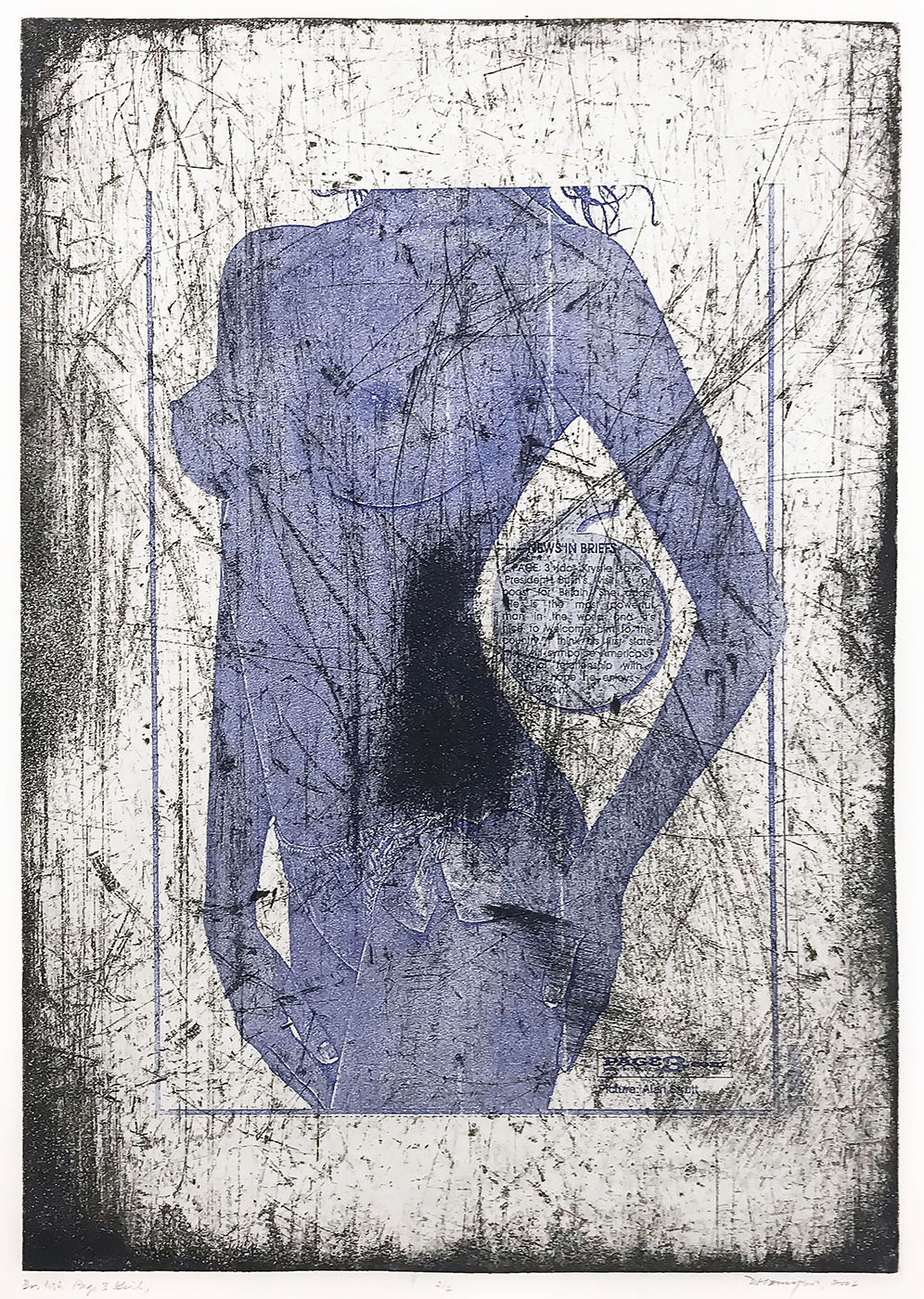
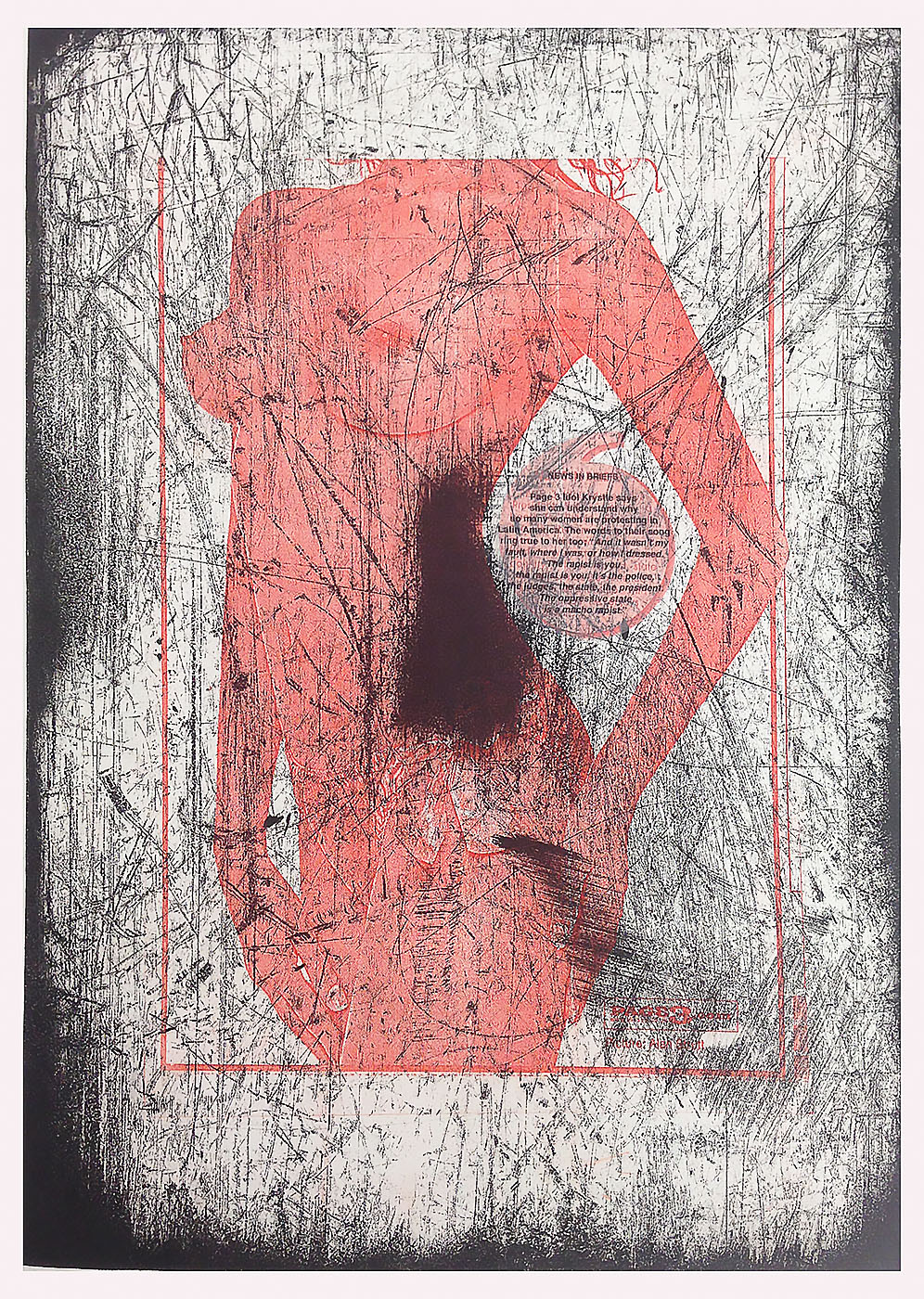
The starting point for this pair of prints was an etching plate I fixed on the work surface of a panel saw in a commercial woodwork shop in Kent in 2006. Over the period of a month, the plate was subjected to abrasions and marks from the wood which was being cut on the saw. When the plate was returned, it was wrapped in a copy of The Sun newspaper; I immediately decided to create a photo etching of the Page 3 Girl, using both that and the marked plate to produce the print.
The resulting print becomes a frozen interface between the materials of art and the physicality of the world, traces of actions and motion contrasted with the stillness of the image of the Page 3 Girl. It also explores the conceptual possibilities of printmaking, especially in relation to the notion of site-specificity.
The Page 3 Girl originated as a feature in The Sun newspaper in the 1970s and since that time has frequently provoked fierce debate about the objectification of women’s bodies. As recently as 2012, Dominic Mohan told the Leveson Inquiry into press standards that Page 3 was “an innocuous British institution, regarded with affection and tolerance by millions.” The Sun discontinued the Page 3 Girl in 2015, partly thanks to pressure from former Labour minister Clare Short, although the Sunday Sport has ensured that topless women have not vanished from British newsstands completely.
Revisiting the work during the COVID-19 lockdown in London, I decided to overprint the Page 3 Girl’s speech bubble with a line from the song A Rapist in Your Path, a Latin American protest song which was used during the feminist uprising of 2019. This intervention to the text bubble, which takes the work in a more critical and perhaps defamatory direction, felt poignant and appropriate in light of the Weinstein scandal and the #MeToo movement.
Like many artists of my generation, my interest in traditional mediums like printmaking was tempered by issues that emerged from the conceptual art of the late 1960s and 1970s. Through conceptual art, artists questioned formalist approaches and developed critical methodologies that challenged notions of ‘touch’ and ‘imprint’ that had preoccupied gestural painting throughout the modern period. My printmaking continues to address the conundrums of this historical rupture while addressing contemporary issues.