Photography for John Wynne
Anspayaxw
- Museum of Anthropology, Vancouver, 2010
- ‘Ksan Museum, Hazelton, BC, 2011
- Alley Cat Gallery, San Francisco, 2012
- MoA Satellite Gallery, Vancouver, 2013
- Surrey Art Gallery, Vancouver, 2015
Collection: Museum of Anthropology, Vancouver
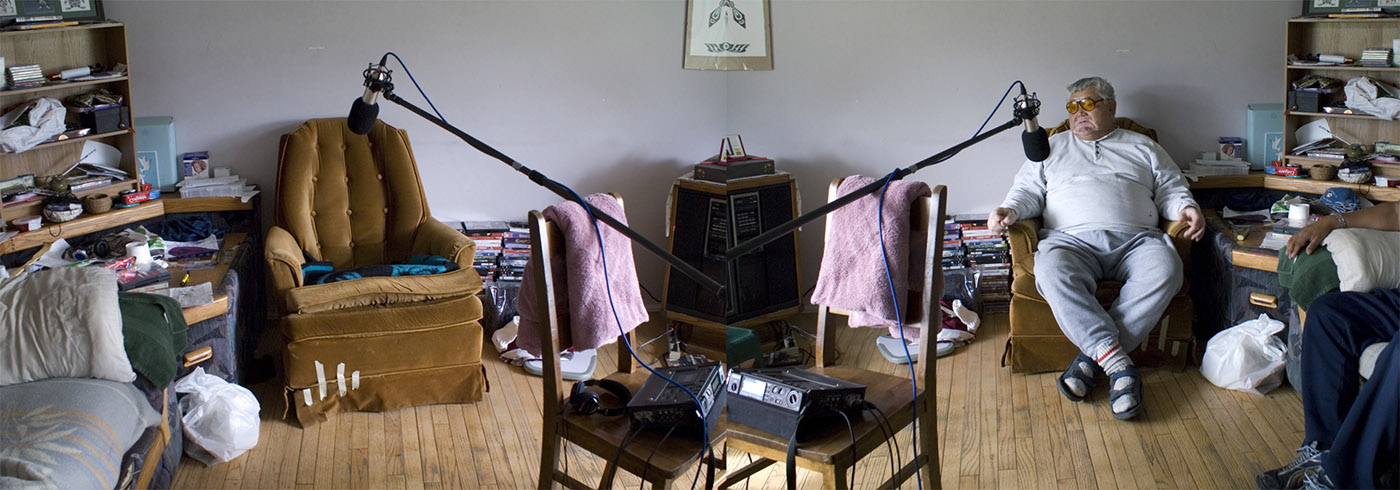
Bob Wilson, Kispiox, British Columbia
Anspayaxw is a 12-channel sound and image installation by John Wynne, developed through fieldwork conducted with Hawrysio and linguist Tyler Peterson, working with speakers of the endangered indigenous Gitxsanimaax language in British Columbia, Canada. The visual foundation of the work consists of 12 large-scale photographs by Denise Hawrysio, which are printed directly onto the flat-panel speakers that project the installation’s soundscape. These panels—six measuring two metres in width and six measuring one metre—are suspended to delineate a space of active listening and observation.
The photographs document both the residents of the Anspayaxw reserve and the hand-painted road signs that mark the reclamation of indigenous place names. Wynne juxtaposed Hawrysio’s images as “asymmetrical reflections”: by mirroring the photographs of participants in their homes with the same scene with its subject absent, the work creates a visual metaphor for presence, absence, and the “imperfect” nature of cultural translation. Through this integration of Denise’s imagery, the project reframes the act of recording not as an unmediated record, but as a subjective and relational encounter.
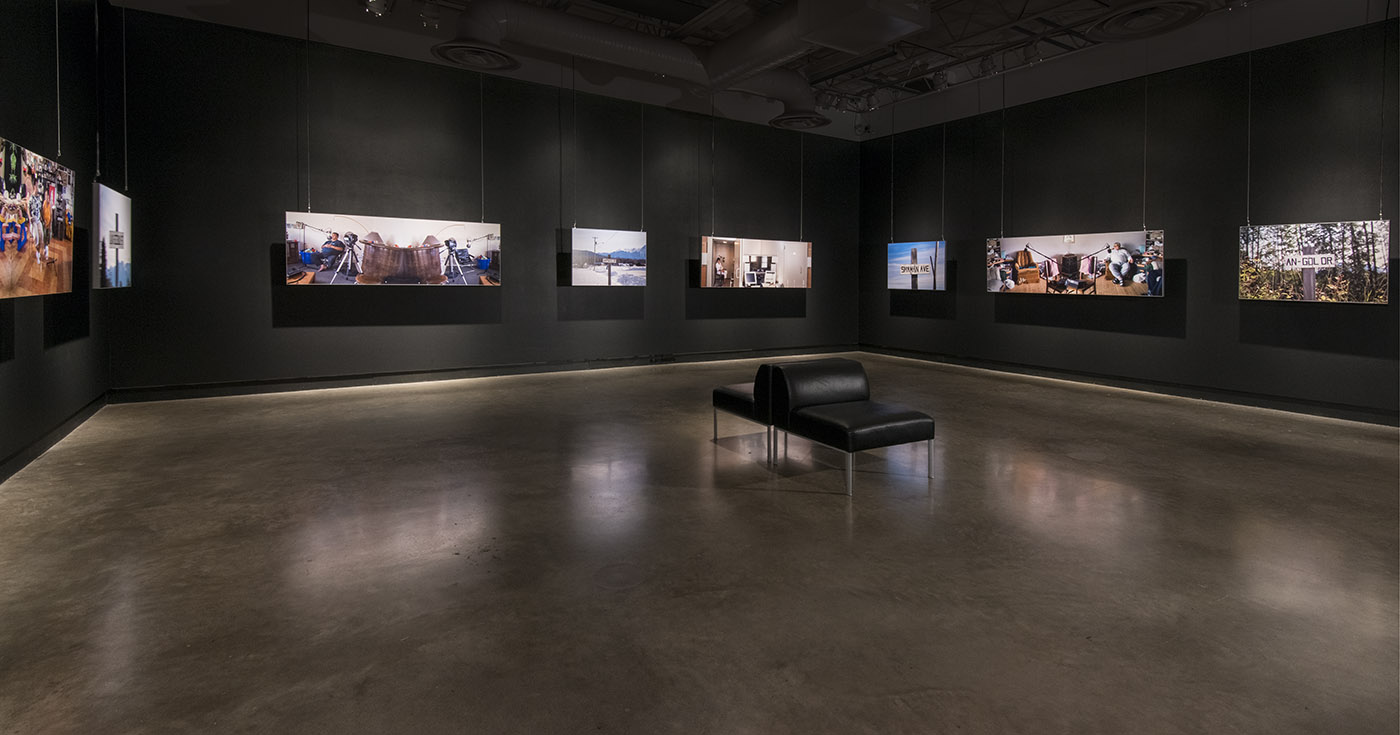
Anspayaxw at the Surrey Art Gallery, Vancouver, 2015
Hearing Voices
- Brunei Gallery, SOAS, London, 2005
- Botswana National Museum, Gaborone, 2005
- National Art Gallery of Namibia, Windhoek, 2005
- P3 Gallery, London, 2008
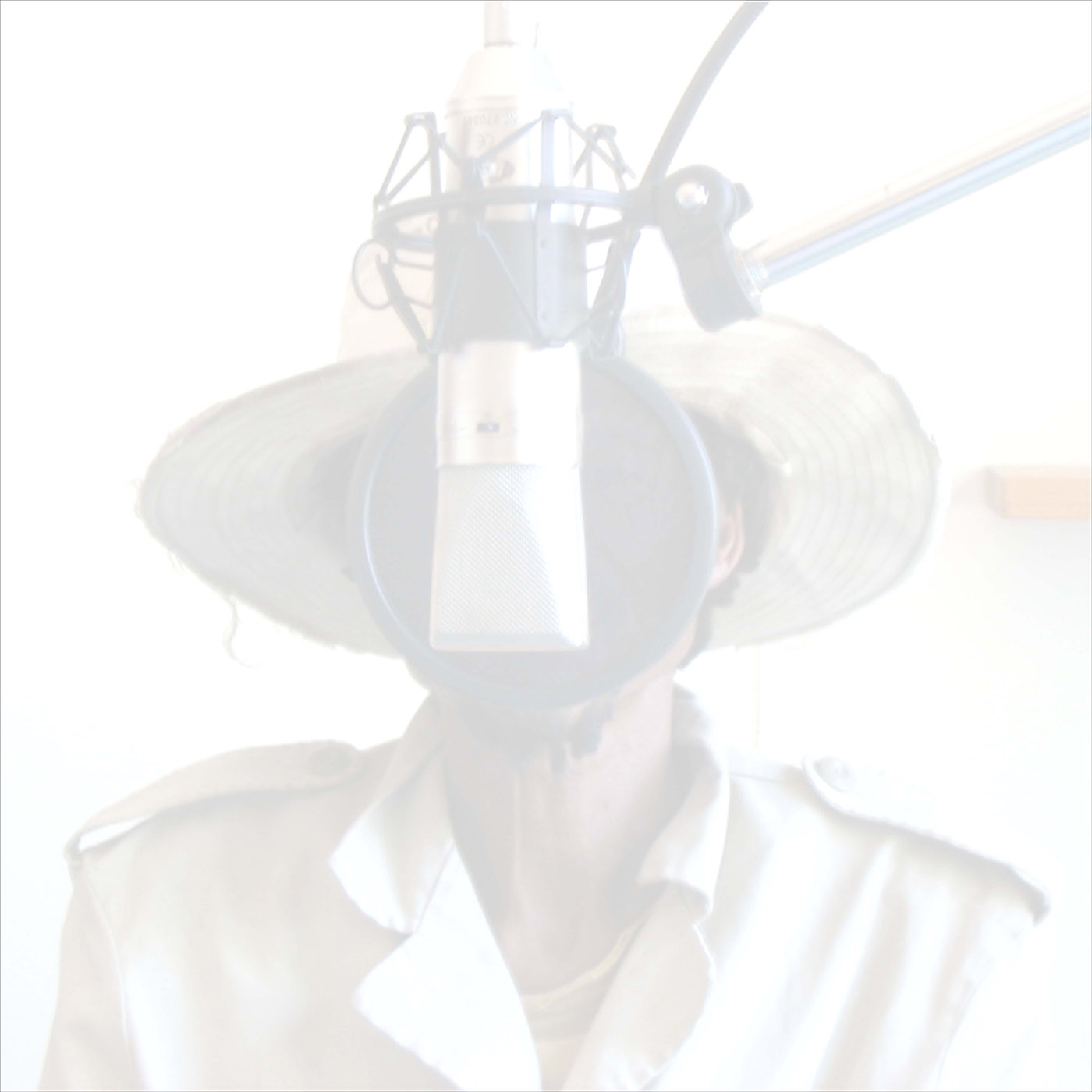
Thamae Sobe
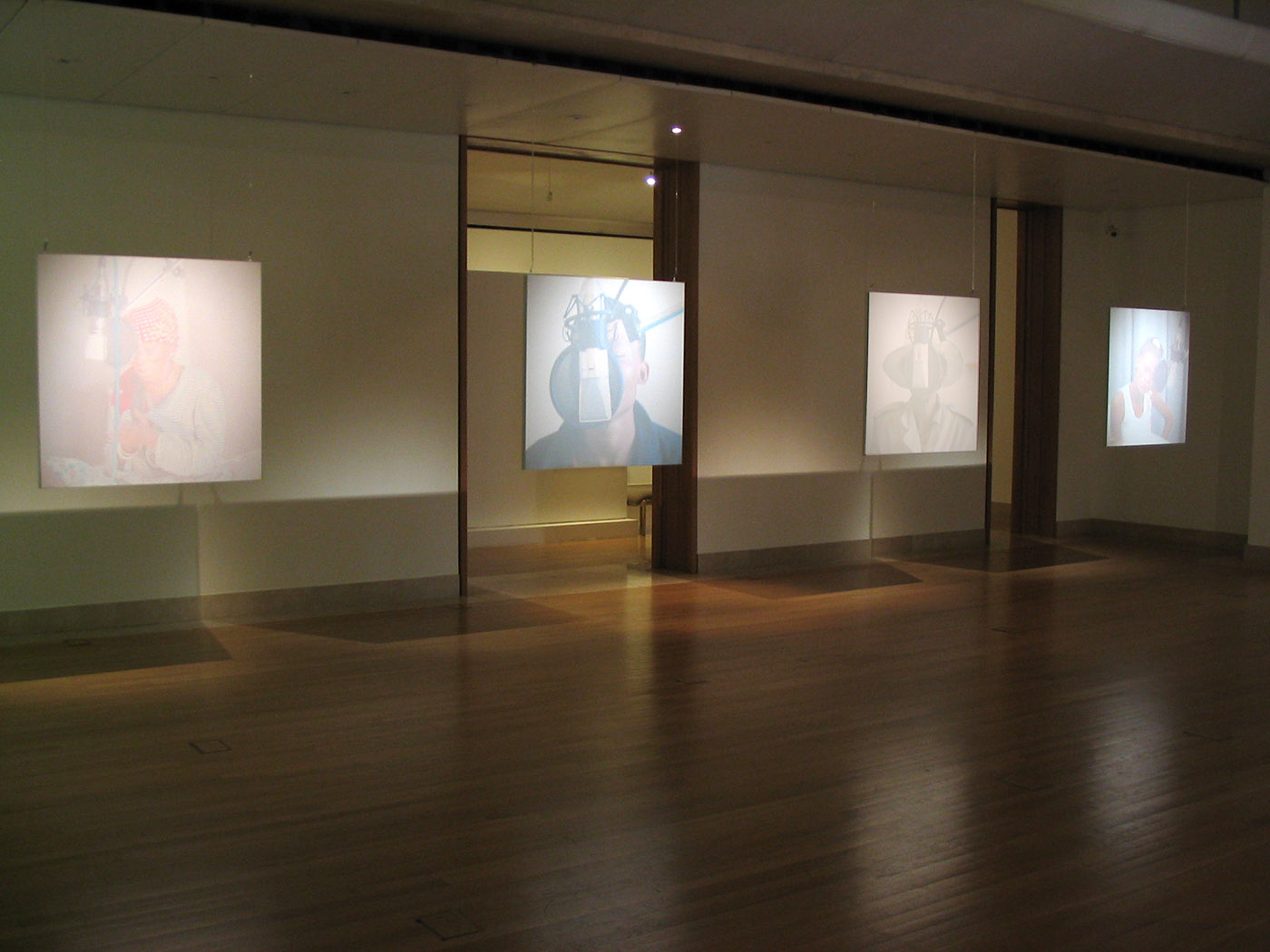
Hearing Voices at the Brunei Gallery, SOAS, London, 2005
Based on highly endangered indigenous “click languages” spoken by Khoi and San peoples in the Kalahari Desert, Hearing Voices is a project developed by John Wynne through fieldwork conducted in collaboration with Hawrysio and linguist Andy Chebanne. Hawrysio’s photographic portraits are mounted directly onto flat-panel speakers, allowing the imagery to function as the physical source of the sound. As in the later Anspayaxw project, these photographs were altered by Wynne—in this case they were printed faintly, to echo the fading of these small-scale languages and the cultural knowledge they embody.
The visual composition engages directly with the mediating effects of the recording process, with the participants’ faces partially obscured by the microphones used to capture their voices. As David Toop writes: “The portraiture integrated into the playback system of this installation counters the shift towards a detachment from human agency, yet also engages with the mediating effects of recording technology. Faces are obscured; voices are extended, or filtered, until their meaning is abstracted. These faces, and voices, are both highlighted by the wider world of digital communications, and with conscious irony, absorbed by its power.”